Book Review: The River Has Roots by Amal El-Mohtar

A few months ago, I had the pleasure of reading Amal El-Mohtar’s new novella, The River Has Roots (released in March 2025). Amal El-Mohtar is a Lebanese-Canadian poet and speculative fiction author. Though The River Has Roots is her solo full-length fiction debut, El-Mohtar is a prolific writer of speculative short stories and poetry, as well as the editor of the fantastical poetry magazine, Goblin Fruit. She has received the Rhysling Award for Best Short Poem three times, and her short story, “Seasons of Glass and Iron” won the Nebula, Locus, and Hugo Awards in 2016. She released her collection of short fiction, The Honey Month, in 2010, and has a second short fiction collection, Seasons of Glass and Iron, forthcoming in 2026. However, she is, of course, best known This Is How You Lose the Time War, a romantic science fiction epistolary novella co-written with Max Gladstone that swept the awards season in 2019, winning the Nebula, Locus, Hugo, BSFA, and Aurora Awards for Best Novella/Shorter Fiction. That novella is one of the most beautiful and moving pieces of fiction I have ever read, so I knew that picking up The River Has Roots would be a safe choice.

The River Has Roots is based on the traditional murder ballad known as “The Two Sisters.” Murder ballads are a sub-category of traditional folk ballads that tell narratives about crime, murder, and death, usually of a gruesome nature. Murder ballads most often originated in the areas of England, Scotland, and Scandinavia in the medieval period, and usually relayed both the murder and the justice or revenge that follows. In most cases, the murder victim in the ballad was a woman. The murder ballad of “The Two Sisters” originates in England or Scotland, dating to at least 1656. Several variations of the tale exist, such as “The Twa Sisters,” “Binnorie,” “The Cruel Sister,” or “The Bonny Swan,” among others.

The two sisters of the novella are Esther and Ysabel Hawthorn, who live near the town of Thistleford, where the River Liss runs from the Faerie land of Arcadia, carrying the wild magic of “grammar” in its water. Grammar has the power to transform what it touches and is governed by complex rules of meaning and wordplay. The willow trees along the river filter the wild grammar from the water with their roots, making the water safe and the grammar within willow wood usable by humans. Marking the boundaries between Arcadia and the human world is a wild area called the Modal Lands.

Esther, the elder, and Ysabel, the younger sister, are part of the Hawthorn family, who have cared for their grove of willow trees for generations, cultivating and harvesting the willow wood to be used in magical objects. Esther and Ysabel are tasked with singing to the trees, which strengthens them and keeps them happy. As is often the case in such tales, the elder sister is dark-haired and serious while the younger sister is blonde and playful. Yet, unlike traditional folktales, it is the elder sister Esther who captures the attention of a man, rather than Ysabel. The man, Samuel Pollard is wealthy and charming, but Esther will have nothing to do with him. Both because she finds him dull and obsequious and because she already has a secret faerie lover from Arcadia named Rin, a nonbinary shapeshifter who can appear as an owl as easily as they appear as a man or woman. When Samuel Pollard discovers that Esther has becoming engaged to Rin, his jealousy turns violent.

Though there are many variations of “The Two Sisters” murder ballad, the basic components stay roughly the same. The two sisters visit a body of water, usually a river, sometimes a sea, where the eldest sister drowns the younger sister in a bout of jealousy over a man. El-Mohtar’s version, however, defies the patriarchal themes of the original. Esther explicitly comments in the narrative that many such tales pit women against each other for the sake of man, and usually reduce the older sister to a cruel, selfish stereotype. Instead, El-Mohtar imagines two sisters who love and protect each other, placing a controlling and jealous man in the role of murderer.

This novella showcases what is clearly one of Amal El-Mohtar’s greatest strengths, her absolutely stunning poetic prose. Every sentence is so beautiful that I often simply had to stop reading and stare for a minute or two, admiring the skill, burning with jealousy of her mastery of language. There are some stories that I would be willing to make a deal with the devil in order to have been the one who wrote it. This Is How You Lose the Time War is definitely on that list (so are Gideon the Ninth by Tamsyn Muir and The Spear Cuts Through Water by Simon Jimenez, just name a couple). The River Has Roots is also on that list, because holy wow is it gorgeous. The prose is not only elegant and lyrical though. It is also filled with wordplay, puns, and metaphor turned literal, all of which highlight the primary theme of the novella: the power of language to transform human perception and even concrete reality.

Puns and double meanings appear from the first line of the first chapter, including the interplay of the magic of grammar and its etymological origins, as well as the double meanings inherent in the Modal Lands and elsewhere. By imagining grammar as a kind of transformational magic, the narrative heightens the figurative and symbolic power of language into a concrete force that has real, physical impacts on people and their world. Wordplay and puns quite literally have the power to transform Esther into a swan and a harp. There are, however, as many positive examples of the impact of language as there are negative. Just as words can be used to divide and destroy, they can also bring together. Riddles and wordplay facilitate Esther and Rin’s relationship, allowing them to cross the boundaries between their lands and cultures. Similarly, words, particularly riddles and songs, represent (and help create) the unbreakable bond between Esther and Ysabel, which is instrumental to the plot’s conclusion. The narrative proves again and again that language is a powerful force in the world, both literally and figuratively, that can impact lives for good or ill and must therefore be used with care.

Sisterhood is also crucial to the novella. It is the through the power of sisterly love that Esther and Ysabel defy the patriarchal oppression of Samuel Pollard (and the traditional murder ballad), and death itself. Though the romantic love between Esther and Rin is also an important, it is not the central focus. Instead, the narrative gives primacy to the sisterly love between Esther and Ysabel. Esther, in particular, explicitly rejects the formulaic role usually assigned to eldest sisters in folklore. She is not jealous of Ysabel, but protective, and is willing to sacrifice her life and happiness for Ysabel’s sake.

Because language is so crucial to this story, and because I simply could not stop staring at some of the prose, here are a few of my favorite passages (I could highlight the entire novella, but I’ll do my best to just pick a few):

“There was a time when grammar was wild–when it shifted shapes and unleashed new forms out of old. Grammar, like gramarye, like grimoire. What is magic but a change in the world? What is conjugation but a transformation, one thing into another?” (Page 1)

“When people say that voices run in families, they mean it as inheritance–that something special has been passed down the generations, like the slope of a nose or the set of a jaw. But Esther and Ysabel Hawthorn had voices that ran together like raindrops on a windowpane. Their voices threaded through each other like the warp and weft of fine cloth, and when the sisters harmonized, the air shimmered with it.” (Page 7-8)

“Most music is the result of some intimacy with an instrument. One wraps one’s mouth around a whistle and pours one’s breath into it; one all but lays one’s cheek against a violin; and skin to skin is holy drummer’s kiss. But a harp is played most like a lover: you learn to lean its body against your breast, find those places of deepest, stiffest tension with your hands and finger them into quivering release.” (Page 80)

“Rin might have said, The way is a riddle. How would Esther solve it?
They might have said, You sang your way out of Arcadia once; sing your way back in.
Or Rin might have said, If the river has roots, it has branches, too; learn to climb them, and find your sister.” (Page 98)

The River Has Roots packs a powerful punch into a fairly small package—one of things I love best about a good novella. With poetic prose and complex wordplay, the novella tells a haunting story of sisterly love, justice and revenge, and the power and magic of language. It is lyrical, poignant, and makes me insanely envious. Which, honestly, is my favorite kind of book.

Time Travel Narratives Recommended Reading List

To wrap up my little mini series of blog posts about time travel narratives, I am ending with a fairly large recommended reading and viewing list. There’s a bunch of stuff on here, some nonfiction books about the science and theories of time travel, an enormous list of novels, a couple anthologies, and bunch of movies, and a handful of relevant tv shows (mostly from Star Trek, which is famous for their time travel episodes).

This list is not remotely exhaustive. There are hundreds and hundreds of possible books and other media to include in this list. But this is a pretty place to start. It’s a fairly representative list of the most well-known and popular media on the subject. I have not read all of these books, or watched all of these movies (though I have at least some familiarity with a large majority of them).

I have them separated into categories, but they are not in any kind of order whatsoever (not chronological, alphabetical, or quality). Sorry, I was too lazy to work that much out. In any case, have fun with this list!

Non-Fiction Books:

  • Time Travel: The Popular Philosophy of Narrative by David Wittenberg
  • How To Build A Time Machine: The Science Between Time Travel by Brian Clegg
  • Black Holes and Time Warps: Einstein’s Outrageous Legacy by Kip S. Thorne
  • The Science of Interstellar by Kip S. Thorne
  • Time Traveler: A Scientist’s Personal Mission to Make Time Travel a Reality by Dr. Ronald Mallett and Bruce Henderson
  • The Order of Time by Carlo Rovelli
  • Time Travel in Einstein’s Universe: The Physical Possibilities of Travel Through Time by J. Richard Gott

Anthologies:

  • The Time Traveler’s Almanac, edited by Ann and Jeff Vandermeer
  • The Best Time Travel Stories of the 20th Century, edited by Harry Turtledove and Martin H. Greenburg

Novels:

  • The Time Machine by H.G. Wells
  • Time and Again by Jack Finney
  • From Time to Time by Jack Finney
  • End of Eternity by Isaac Asimov
  • Slaughterhouse-Five by Kurt Vonnegut, Jr.
  • Time Enough for Love by Robert A. Heinlein
  • A Connecticut Yankee in King Arthur’s Court by Mark Twain
  • The House on the Strand by Daphne DuMaurier
  • The Man Who Folded Himself by David Gerrold
  • A Wrinkle in Time by Madeleine L’Engle
  • Kindred by Octavia Butler
  • Hyperion by Dan Simmons
  • The Time Traveler’s Wife by Audrey Niffenegger
  • The First Fifteen Lives of Harry August by Claire North
  • Outlander by Diana Gabaldon (Book 1 of the Outlander series)
  • Timeline by Michael Crichton
  • Woman on the Edge of Time by Marge Piercy
  • The Accidental Time Machine by Joe Haldeman
  • The Shining Girls by Lauren Beukes
  • 11/22/63 by Stephen King
  • Doomsday Book by Connie Willis
  • To Say Nothing of the Dog by Connie Willis
  • Black Out/All Clear by Connie Willis
  • How to Live Safely in a Science Fictional Universe by Charles Yu
  • This Is How You Lose the Time War by Amal El-Mohtar and Max Gladstone
  • All You Need Is Kill by Hiroshi Sakurazaka 
  • Recursion by Black Crouch
  • Just One Damn Thing After Another by Jodi Taylor (Book 1 of Chronicles of St. Mary’s series)

Movies:

screenshot from The Time Machine (1960)
  • The Time Machine (1960)
  • Terminator
  • Terminator 2
  • Looper
  • Primer
  • Back to the Future
  • Time After Time
  • Planet of the Apes
  • Donnie Darko
  • Groundhog Day
  • Interstellar
  • Safety Not Guaranteed
  • Arrival
  • La Jetee
  • 12 Monkeys
  • The Girl Who Leapt Through Time
  • Your Name
  • Edge of Tomorrow
  • The Philadelphia Experiment
  • Somewhere in Time
  • Time Bandits

TV Episodes:

(These shows all did multiple time travel-centric episodes. I have not listed all of them, just a representative handful.)

screenshot from “The Late Philip J Fry,” Futurama

Futurama — “All’s Well That Roswell,” “The Late Philip J. Fry,” “The Why of Fry,” “Meanwhile”

Star Trek: TOS — “City on the Edge of Forever,” “All Our Yesterdays,” “Tomorrow is Yesterday”

Star Trek: TNG — “Time Squared,” “Yesterday’s Enterprise,” “Time’s Arrow,” “Tapestry,” “All Good Things”

Star Trek: DS9 — “Past Tense,” “Visionary,” “Wrongs Darker than Death or Night,” “Time’s Orphan”

Star Trek: VOY — “Future’s End,” “Before and After,” “Year of Hell,” “Relativity”

*I didn’t really watch Enterprise or Discovery, though I know they also feature plenty of time travel. Also, season 2 of Picard is centered around one giant time travel plot. 

Pretty much all of Doctor Who (obviously,) but I especially recommend “Blink”

Also, all of Quantum Leap, which is a CLASSIC.

Twilight Zone had several of time travel eps, but the one that comes to mind most is “Cradle of Darkness”

A Brief History of Time Travel

For a recent freelance project, I found myself revisiting some time travel narratives. Years ago I taught an entire course on time travel narratives, and it was fun to have an opportunity to dig up those old lecture notes, and re-read a couple of the novels and short stories I taught in that course. I had mentioned at the beginning of the year that I might like to re-purpose some of that work for the blog, since its become abundantly clear I’m not likely to go back into teaching any time soon and all that work might as well be put to some kind of use.

SO! I’ll be doing a handful of blog posts in a sequence about time travel. I promise not to go on about too long, but I thought it might be fun. I’ll start with a brief overview (here), and then discuss perhaps just a couple of novels and a short story or two, and end with a full reading list (and viewing list as well — since there’s some great time travel stuff in film and television). I hope that sounds like fun! It’s fun for me at least.

So without further ado: A Brief History of Time Travel

Time travel exists as a philosophical concept, a scientific principle, and narrative subgenre. The possibilities and implications of time travel have been explored for centuries and appear in many different cultures. While time travel as imagined in fiction may not be possible, some scientists argue that one-way time travel might be possible through the concept of time dilation in the special theory of relativity.

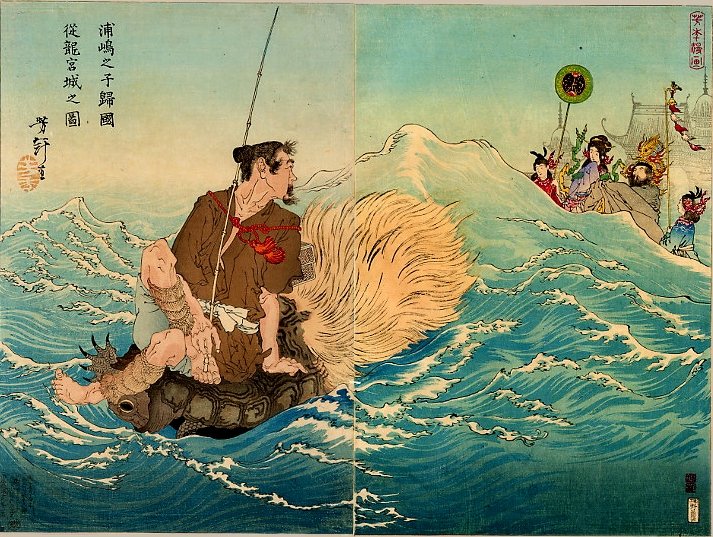
Time travel, as a narrative subgenre, exists in both fantasy and science fiction, but its earliest appearances are in myth and folklore. Two of the oldest examples are “The Tale of Kakudmi” in Hindu mythology. and “The Tale of Urashima Taro” in Japanese folklore.

“The Tale of Kakudmi” appears in several Hindu texts, most prominently the Vishnu Purana (Book IV, Ch 1) — one of 18 important ancient Hindu texts that contain stories of the Hindu gods, kings, and dynasties. When the Vishnu Purana was written is highly contested, but some estimates suppose it to be as old as 1000 BCE. “The Tale of Kakudmi,” briefly, is this:

Kakudmi was a king with a daughter named Revati. Revati was so beautiful that Kakudmi believed no one upon the Earth was worthy enough to marry her. So they went to the Hindu god Brahma to ask for advice, giving him a list of possible suitors and asking which is most worthy. However, Brahma informs them that time moves differently for the gods, and by teh time Kakudmi and Revati return from their visit with Brahma, everyone they have ever known will be long dead. In the short time Kakudmi and Revati are with Brahma, 27 catur-yugas have passed among men (1 catur-yuga = approx. 4,320,000 years according to the Vishnu Purana; so 27 catur-yugas = approx. 116,640,000 years). When Kakudmi and Revati return, they find that no only have the landscape and environment changed drastically, but that the civilizations of men have declined, becoming less than they were in Kakudmi’s own time. Kakudmi states that “he found the race of men dwindled in stature, reduced in vigour, and enfeebled in intellect,” thus making them even less worthy of his daughter than they had been in his own time.

“The Tale of Urashima Taro” is from Japanese folklore, first seen in the Nihongi, the second oldest book of classical Japanese history, and perhaps written around the 6th century. Like “The Tale of Kakudmi,” Urashima Taro is the story of a man who goes to a supernatural location, where time moves differently, so that he experiences only a handful of days while 300 years pass for normal men.

Both of these stories could be considered very early examples of the concept of time dilation, in which time moves more quickly or slowly depending on where you are, based on the theory of relativity that states all perceptions of time differ for different people in different places.

The earliest time travel in stories happened though magical or mystical means: a god, a spell, a mysterious realm. For instance, in the play Anno 7603 by Norwegian poet Johann Hermann Wessel, written in 1781, two men are sent far into the future by a good fairy, where they find that gender roles have reversed and only women are allowed to fight in the military. Then there is, of course, the case of the short story “Rip Van Winkle” by Washington Irving, published in 1918, in which a man mysteriously falls asleep and wakes up decades later without explanation.

The oldest known story of time travel by means of a machine is Edward Page Mitchell’s “The Clock That Went Backward,” written in 1881, though even this story is more magical than science-fictional. It was H. G. Wells’s famous novella The Time Machine (1895) that truly popularized the idea of time travel through scientific and mechanical means; however his short story, “The Chronic Argonauts,” includes a time machine as well, and predates the Time Machine by seven years.

The method used in the highly-regarded novel Time and Again (which will be discussed in my next post) travel is loosely inspired by Einstein’s theories of time, based on the Special Theory of Relativity, combined with the concept of “self-hypnosis.” This method was also popularized in the novel Bid Time Return by Richard Matheson (most famous for I Am Legend and What Dreams May Come), which inspired the film Somewhere in Time starring Christopher Reeve.

Since then, time travel has remained a popular trope in both fantasy and science fiction stories in both print and visual media. Many science fiction stories take great pains to offer detailed explanations for how and why time travel works. But in just as many stories, the how and why of time travel is ignored in favor of the social, historical, or personal consequences of that travel. In some cases, the time travel is merely a trope used to propel another kind of story, such as in the Outlander series (books and tv show), where the time travel elements are mostly used to allow for the romantic drama.

Literature scholar David Wittenberg argues that time travel fiction is a kind of “narratological laboratory” in which the “most basic theoretical questions about storytelling,” as well as philosophical concepts of “temporality, history, and subjectivity, are represented in the form of literal devices and plots,” for the purpose of exploration, through experiments, analysis, and criticism (Wittenberg, David. Time Travel: The Popular Philosophy of Narrative. Fordham UP, 2013).

Some of the most popular themes within time travel narratives include: fears or hopes of changing the past, alternate pasts and alternate futures, observing or communicating with another time, time loops and time paradoxes, time wars, and the prevalence of human emotions such as love overcoming the obstacles of time.

Series Review: Jackaby Series

[AN: sorry for the delay. I had this post all ready to go, and then I forgot to schedule it! Lol!]

A couple weeks ago, in my post about my recent Victorian historical fiction reading binge, I mentioned that I had read a book called Jackaby by William Ritter. Well, I’ve now finished the series (4 books), and thought I’d share a full series review.

I will try to avoid too many MAJOR spoilers, but as I am talking about the series as a whole there will probably be some.

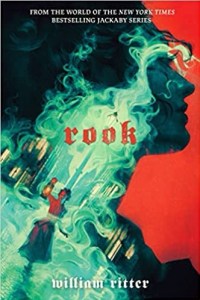
As mentioned, the author is William Ritter (who has also written some middle-grade fiction that looks really great so I’ll probably check those out at some point!). I don’t believe the series as a whole has a name, but the four books are: Jackaby, Beastly Bones, Ghostly Echoes, and Dire King. There is a fifth standalone book coming out in August, called Rook, that I am very much looking forward to. But don’t go looking for the description of that book or you will run face-first into a couple major spoilers for the ending of book 4 (yes this happened to me).

The books take place in a Victorian-age New England city called New Fiddleham (cleverly avoiding any actual states or real cities/geographies). The main characters are Abigail Rook, an intelligent young woman who has recently run away from her home in England in search of adventure, and R.F. Jackaby, a paranormal investigator who becomes her employer. Each book is written in first-person from Abigail’s POV, in a style similar to John Watson reporting about the cases he worked on with Sherlock Holmes — including some amusing little nods to the trope throughout.

R.F. Jackaby is a Seer. In fact, he is THE Seer, as there is only one alive at any given moment. He has the capacity to see the supernatural elements of the world that are mostly invisible to or ignored by the human public. He uses this ability as an investigator in New Fiddleham, dealing with magical and unexplained issues while constantly butting heads with the police chief and the mayor. He lives in a house once owned by a woman who was murdered ten years ago and simply never left — he and the ghost are rather good friends, thankfully.

Abigail Rook is a smart, headstrong young woman who wanted to be an archeologist. Throughout the series she proves herself to be brave and capable and quite often the voice of reason when situations become dire. Her bravery is established pretty early on in her employment with Jackaby when she discovers that his last assistant was turned into a duck, and doesn’t immediately go running and screaming out of the house. Never mind the ghost!

In the first book, Jackaby, the world-building is established and Abigail and Jackaby solve a series of murders, as one does. They also befriend one of the cops, on whom Abigail develops a crush.

In the second book, Beastly Bones, Abigail is given an opportunity to stretch her archeology muscles a bit on a case out in the valley away from the city. The cop Abigail has a crush on, Charlie Barker, has been transferred out to the valley as well, allowing their flirtation to continue with growing adorable-ness (and Jackaby’s hilarious pleas that Abigail not rely on him for emotional or relationship advice). This book gets rather bloody in places, and the mystery of who is doing what to whom was fairly intricate.

[SPOILER BELOW]

There’s a freaking dragon involved! Sort of! It’s complicated!

[SPOILER ENDED]

The second book begins to hint at a larger conspiracy or plot hiding beneath the recent cases that Jackaby and Abigail have worked on. This is fleshed out more in the third book, Ghostly Echoes.

In Ghostly Echoes, Jackaby and Abigail are “hired” by their ghost friend, Jenny, to find out who murdered her. Unfortunately, what should be a relatively straightforward task for them becomes more and more complicated as the clues to Jenny’s murder ten years ago leads them all into the heart of a much larger, deadly plot. This book features a very-polite (but still deadly) vampire, a mad scientist, and a trip on the River Styx into death. And that’s not nearly a lot of it!

Where the first two books were fun jaunts into the murder mystery genre with some paranormal shenanigans thrown in, the third book leaps headfirst into Celtic folklore and epic fantasy. The fourth book, Dire King, then proceeds to shatter the quiet facade of the Victorian city and break into all-out magical war.

The fourth book was so tense and so action-packed I felt like I barely breathed through the entire thing! Despite a couple spoilers I had accidentally run into (while looking at the new book coming out in August), I did not actually know where the book was going for most of it. It goes heavy on the drama, in the best ways possible. I especially appreciated the way Abigail becomes the voice not only of reason but of mercy and goodness and “humanity at its best” throughout the fourth book. And the ending was so SO satisfying. (And there! I managed not to spoil any of the real major bits!)

One of the many things I liked about these books was the relationships. For one, I fully expected it to become a romance between Abigail and Jackaby, just because that tends to be the way these things go (not a complaint! I would have been fine with that as well!). But Ritter defied my expectations by pairing Abigail with the sweet cop, Charlie. (Was there a bit of copaganda, yeah, sure… but it’s such a standard character type in historical fiction and we all know it’s a fantasy anyway, so it didn’t really bother me.)

Another thing I really loved about these books was the absolutely impressive amount of research into folklore and mythology that Ritter had to have done to write these. There are dozens and dozens of references to so many creatures from folklore and mythology it almost boggles the mind! And not just the standard Western ones, though Celtic mythology gets the main focus in the last two books, but also Asian and African as well.

A third of the many things I loved about these books was how truly FUNNY they were. The plots are dark, there’s murder, there’s an attempt to conquer the world in the last book, but despite this (or even because of it) there is a wonderful humor that threads its way through the entire series. Jackaby is deadpan and drily sarcastic (one of my favorite character types), and the interactions between Jackaby and Abigail are one of the major highlights of the whole series.

The whole series was a delight from start to finish. I thoroughly enjoyed all four books, but especially the last one. I cannot wait to read the new one, Rook, coming out in August. What’s even better is that the whole series is getting a reprint in August. I read the books by borrowing the ebooks from the library. And there are ebook and print versions available on Amazon. I think they were self-published, or perhaps indie-published by a small press. But either way, they are getting a new printing with brand new cover art at the same time as the release of the fifth book.

Ironically enough, it was the new cover art that first got me to read these. I follow the artist doing the new covers, Corey Brickley, online. I love his work (seriously go check him out!). He posted the cover reveal for Jackaby with his new artwork and a brief description of the book and I knew it would be right up my alley (I mean! Compare the cover at the top of the post, with the rest of the covers in the post!). But I probably would not have ever run across them if Corey Brickley had not been commissioned to do new covers! It’s so funny how the world works sometimes…

Anyway, I highly recommend these books. As mentioned, they are available to purchase right now in ebook or paperback. Or you can do like I did, and borrow them from the library so that you can buy the NEW covers in August without ending up with two whole sets.

Movie Review: Strange World

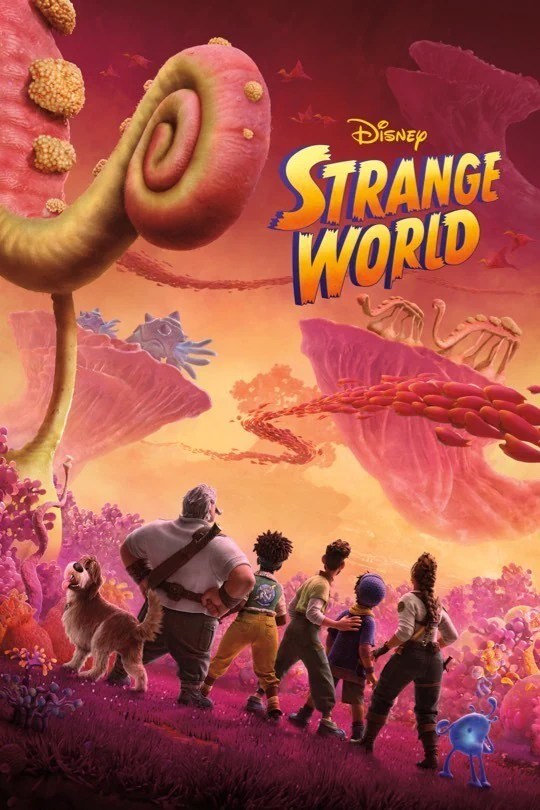
Today, I want to talk a bit about Strange World, Disney’s newest full-length animated feature film.

Strange World released last November, and it did not do well in theatres. Very few people went to see it, which is a shame. Admittedly, I didn’t see it in theatres either. I waited until it was on Disney+ because of the continuing pandemic issues (which are particularly bad here in Texas where the idiots live). But from what I’ve heard the biggest problem was the lack of proper marketing/publicity. No one knew the movie existed! Or when it was out in theatres! There were almost no commercials for it on tv, only a handful of ads on places like Youtube (where most people still skip ads), no merchandise tie-ins with McDonalds or toys released ahead of the movie (which is standard practice! Sometimes the toys start popping up a full 6 months or year before the movie comes out!). NOTHING.

It is believed by many (including me) that this was probably an intentional decision by some of the higher-ups at Disney. ‘Cause here’s the thing: Strange World features the first interracial married couple/family in a full-length Disney animated film. It features a gay main character, whose gayness is not remarked on by a single other person in the movie as anything but completely normal (though I will say that after the fact, I saw several articles claiming that this was Disney’s ‘first gay romance’ and it is no such thing. That is really overstating the matter. The character IS gay. It’s not subtext. He very clearly states that he has a crush on a boy. But that element is background detail to the actual plot. There’s no ‘romance’ involved). It also features a plot that is a very blunt, hard-hitting, unapologetic allegory for our current environmental crisis and our over-reliance on fossil fuels.

Certain parts of Disney audiences (such as me) have been demanding, for years, better representation and diversity in Disney films, which Disney higher-ups have been pushing back against in various ways — mostly due to a fear of losing more conservative audiences in the US, and the entirety of the very lucrative and very conservative Chinese markets. It’s all about the money.

So, Disney finally gives us what we’ve been asking for, a very diverse and progressive story in which they clearly told the animators: “have fun! Go nuts!” and the animators totally brought it. And then they don’t ADVERTISE THE MOVIE AT ALL. And, unsurprisingly, the movie TANKS at the box office because no one knows it exists. But now Disney can point to the abysmal sales and wave their hands and say: “see! You said you wanted this, but then no one came to watch it and it failed, which means no one really wanted it at all and we can go back to what we were doing! We tried! Really! It’s not our fault the market isn’t there for this kind of thing! Back to the old standbys!”

The Disney higher-ups wanted it to fail, so that they would have an excuse to not do it again. I firmly believe that. And it’s a shame because the actual creators: the writers, the animators, the voice actors, etc. absolutely WANT to do this kind of thing, and want it to work and do well. And frankly, they KILLED it with this movie. It’s fucking GREAT. AND NO ONE SAW IT.

Let me expound on the actual movie now, for a bit.

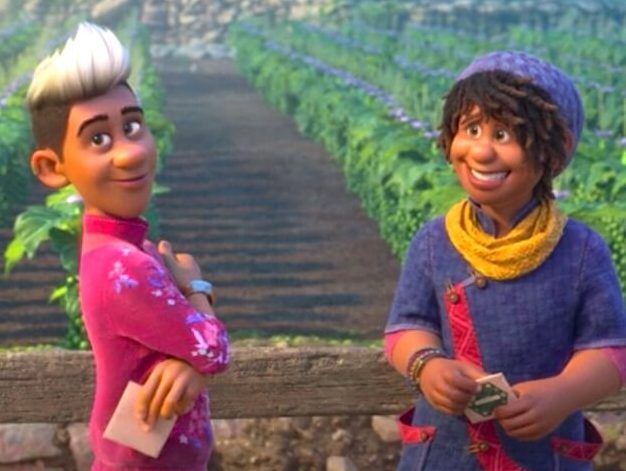
Strange World, Disney’s 61st animated feature film, was written by Qui Nguyen, directed by Don Hall, and stars Jake Gyllenhall, Dennis Quaid, Jaboukie Young-White, Gabrielle Union, and Lucy Liu. The first thing that appealed to me when I finally DID see any trailers or commercials about this movie was the great 30s or 40s style pulp scifi feel of it. It’s even a hollow-earth story! And the movie as a whole really holds up to that early vibe.

The movie opens in Avolonia, a country completely isolated by surrounding impenetrable mountains, with an economy and culture that has grown stagnant. The great explorer Jaeger Clade (voiced by Quaid) has made it his mission to cross the wall of mountains to discover what exists beyond their lands, and bring new hope for the future to Avolonia. To that end, he drags his teenage son, Searcher (Gyllenhall), with him (very clearly against his will). But when Searcher discovers a strange plant in the mountains that releases electrical charges, he and the rest of their exploring crew realize that the plant is the key to their future prosperity and decide not to continue the journey. Infuriated, Jaeger continues on alone while Searcher returns home with the plant they call Pando.

Flash forward 25 years, and Searcher is a Pando farmer, who is regarded as a hero for bringing this plant back to Avolonia and thus ushering in a new era of modern technology including enormous airships and all the things one might expect with electrical power. His wife, Meridian (Union), and his son Ethan (Young-White) work the farm with him. However, Ethan longs for adventure, unknowingly very similar to Jaeger, the grandfather he has never met, and who is presumed dead somewhere in the mountains. Ethan also has a massive crush on his friend Diazo – a fact that is treated with the same kind of “isn’t he so cute” attitude as if the crush were a girl rather than a boy.

Everything changes when Callisto – once a member of Jaeger and Searcher’s exploring crew and now the President of Avolonia – arrives on a massive airship, and announces that Pando is dying. In order to save their way of life, Callisto asks Searcher (the expert on Pando) to travel with her to an enormous hole they have found in the mountains that appears to lead to a hollow-earth-type place and what they believe to be the SOURCE of Pando. Unsurprisingly, Ethan stows away, and Meridian follows, and when the airship descends into the hole to find a wondrous, bonkers world that exists beneath the mountains, the adventure really gets going.

From there, a lot happens. They are attacked by various creatures. They, of course, find Jaeger who has been trapped in the hollow earth for the last 25 years. Ethan becomes more and more enamored of adventuring, making Searcher feel as if he is being abandoned again, just like his father left him all those years ago. And throughout it all, there is a message of learning to coexist with the nature and creatures around you, rather than simply steamrolling over everything and believing you know what is best for the world. The conflict comes to a head when the travelers realize that Pando might be hurting everything, and will ultimately lead to their doom even if it is expedient in the interim, and must make a decision about how they will face the future not only for themselves but for all of their people.

It is not a subtle message. And frankly, GOOD ON THEM. Sometimes the themes need to be heavy-handed if you hope to get anyone to even notice, let alone pay attention. Especially these days. And it’s a message that works, and is worth hitting you over the head with.

On top of that, it’s also just a really fun movie! There’s a lot of humor and running gags throughout the movie. The family conflict between Jaeger, Searcher, and Ethan is touching, and relatable, and comes to a satisfying conclusion. The action sequences are enjoyable. And visually, it’s a joy to behold. Like I said, the studio clearly told the set and creature design animators to just got to town, go wild and they did not hold back! They went as bonkers as they could manage, and obviously had a blast doing it, and the visuals are just STUNNING. Colorful, and strange, and imaginative, and funny, and just so much fun.

So, all of this is just to say, essentially: if you missed out on this movie in theatres, like most of us did, and if you maybe didn’t even know it existed, I highly recommend you go check it out now! It’s on Disney+ right now. Make a family night of it – pop some popcorn, turn the lights down, grab the kids (if you have them, lol), or settle in by yourself with a glass of wine (like I did), and enjoy! I promise you won’t regret it!

My Month of Victorian Romances

Sometimes I get in these moods, where I read one particular kind of book and just CANNOT STOP reading that particular kind of book. I go through cycles where I absolutely devour certain genres or sub-genres. Back in 2020 I went through a huge space opera phase. In mid-2021 there was a big period of murder mysteries. My romance reading in general tends to happen in big chunks.
Starting around the beginning of December, and going through Christmas and New Years, and the first couple weeks of January, I’ve been voraciously consuming historical romance novels set in the Victorian time period. Within that there have been a few variations: a few straight romances, a few mystery types, a few fantasy types. But all of them have been Victorian historical fiction.

In order, I have now read:
Soulless by Gail Carriger
The Siren of Sussex by Mimi Matthews
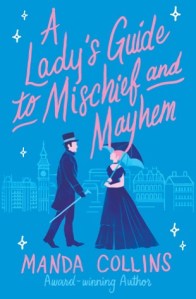
A Lady’s Guide to Mischief and Mayhem by Manda Collins
An Heiress’s Guide to Deception and Desire by Manda Collins
The Belle of Belgrave Square by Mimi Matthews
Widdershins by Jordan L. Hawk (a re-read by still in the same Victorian-set genre)
Changeless by Gail Carriger (started by didn’t finish)
Jackaby by William Ritter
Beastly Bones by William Ritter

Soulless and Changeless are the first two books of Gail Carriger’s Parasol Protectorate series (paranormal romance/steampunk set in Victorian England). I read Carriger’s YA The Finishing School series last year. I didn’t realize until after the fact that the Parasol Protectorate series was an adult series, and written first, and the Finishing School series is a prequel. But I enjoyed the YA books enough to try out the adult series. I wouldn’t say I loved the Finishing School books, but I enjoyed them. They were silly and frothy and adventurous and fun. I found Soulless for cheap at the used bookstore and enjoyed it enough, and then I grabbed the sequel, Changeless, at the library. I won’t say it’s a DNF. I think I might come back to it eventually, probably. But some of the characters that I knew from the Finishing School series appear in ways I really didn’t like (again, I realize the Parasol books came first, so it’s my own fault, but however it happened, I am far more attached to the version of the characters from the prequel series and I was pretty upset about some things in Changeless, which I won’t specify as they are spoilery). Changeless, also frankly was not scratching the particular ITCH I had when I jumped into these Victorian books. So I returned it to the library early.

The Belles of London series encompasses the books The Siren of Sussex and The Belle of Belgrave Square by Mimi Matthews (and a third one is coming out in 2024). These were straight Victorian romance – no magic or murder mysteries in these, just lots of Victorian-period melodrama, which I loved. I loved them so much that The Siren of Sussex made it onto my favorite books of the year list! They are swoony and fun and filled with smart, interesting, complex women and honorable men trying to do the right thing under difficult circumstances, and all the kinds of societal roadblocks and miscommunication issues one might expect from the genre. They are not out to defy the genre expectations, but rather play them up to great effect. I am really looking forward to the third one.

In what appears to be very much a pattern in these kinds of novels, the two books by Manda Collins, A Lady’s Guide to Mischief and Mayhem, and An Heiress’s Guide to Deception and Desire are also linked books, with at least one more book to be released in the series this year in March. These are historical romance/mystery hybrids (one of my favorite combos!), with each book featuring a woman MC solving a crime while also following in love with the charming man helping them investigate. They are both really great mysteries (I had the first one figured out about ⅔ of the way through but the second one kept me guessing until right near the end). And the romances are both sweet and swoony. The first one is a rivals-to-lovers pairing (a police detective and a woman who’s doing her own investigating and keeps messing with his career). The second book is a second-chance romance with a pair of lovers who broke off their engagement years ago, mixed with a marriage of convenience (it’s complicated!). I really loved both and I cannot wait for the third one!

Finally, I have an already completed series of four books by William Ritter that are Victorian-age historical paranormal mysteries. They are not romance, strictly-speaking, though there is a romantic subplot threaded through all the books. They are about a woman from England who comes to America and finds employment with a paranormal investigator. The books are written in first person with the woman, Abigail, narrating her adventures with the investigator, Jackaby, in a way similar to Watson’s narration of the Sherlock Holmes stories. I have finished the first two books, and already have the third one checked out from the library and ready to go. These books are BLAST. Fun mystery writing, lots of period-appropriate set dressing and some really fun paranormal monsters including the usuals such as werewolves, vampires, ghosts, as well as some things you would not expect. I can’t wait to see where these go next!

So that’s what my reading has looked like the last month or so (about a month and a half now, actually, I guess). I think I’m going to finish the William Ritter series now, and then I’m thinking I might jump into something different. I’m thinking about getting back into big epic fantasy tomes. I used to read them almost exclusively in high school. Big giant 800-page types. But I fell out of the habit in college and then grad school killed my reading altogether (as I’ve talked about on this blog before), and since I’ve gotten back into the swing of things I haven’t really returned to my roots yet. I think it’s about time. But we’ll see…

Anticipated New Book Releases (Jan-Feb 2023)

Hello all and happy new year! I thought I would kick-off the first week of the year with a brief list of some of my own personally Most-Anticipated Books for the start of 2023. I keep a pretty extensive list throughout the year, but because my time and my budget is very finite, I usually only end up reading a very small fraction of all the new releases that catch my attention. I won’t share the whole current list here, but I will share a few of the books that are releasing January and February of this year that I am excited about, and which you folks might find interesting as well.

(A few notes: I have these listed in release date order, and I include title, author, release date, genre, and publisher. Most of them are fantasy/SF because that’s mostly what I read, but there are some other things mixed in. I would also like to point out that anything from HarperCollins, while I am excited about them, I will probably not actually buy and/or review until the strike is resolved.)

JANUARY RELEASES:

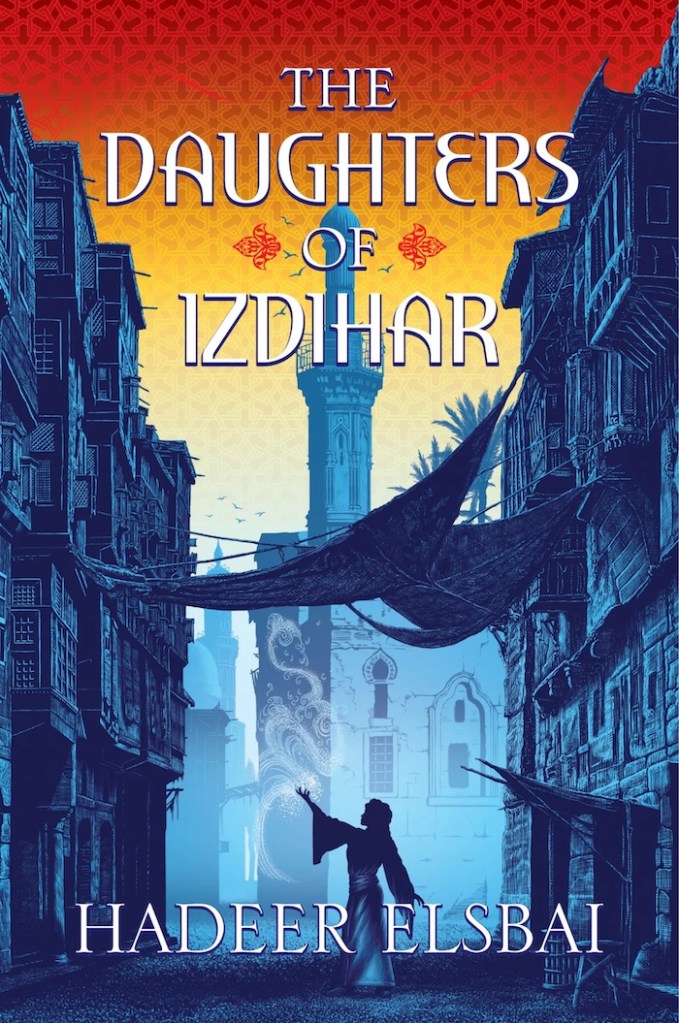
The Daughters of Izdihar by Hadeer Elsbai: releases Jan 10 (HarperCollins), this is an Egyptian-inspired fantasy, with a sapphic romantic subplot, and I am so excited for this one. It doesn’t hurt that the cover is absolutely gorgeous.

Phaedra by Laura Shepperson: releases Jan 10 (Penguin Random House), this one is a feminist retelling of the Greek myth of Phaedra, the sister of the Minotaur. This one is, by all accounts, unflinching and incisive. And I love me a good feminist retelling.

The Written World and the Unwritten World by Italo Calvino: releases Jan 17 (HarperCollins), this is a nonfiction collection of essays by the brilliant amazing incomparable Italo Calvino that will discuss his thoughts on literature and writing. Italo Calvino, author of such masterpieces as Invisible Cities (1972) and If on a winter’s night a traveler (1979), is one of my favorites and I am elated to have this previously-untranslated collection coming out!

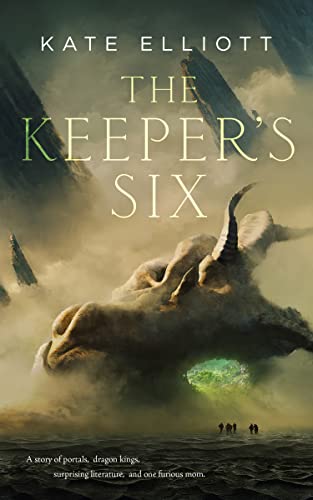
Keeper’s Six by Kate Elliott: releases Jan 17 (Macmillan), this short fantasy novel features a bad-ass world-hopping mother who gets her old adventuring group back together to rescue her adult son who has been kidnapped by an old enemy. Kate Elliott has been a big name in SFF for years, but I only really got to know her work with Unconquerable Sun in 2020. However, I have since then become a devotee, and will buy anything she cares to release.

Everyone in My Family Has Killed Someone by Benjamin Stevenson: releases Jan 17 (HarperCollins), this one is a new murdery mystery about a man who writes mystery-writing how-to books and is an expert in golden age mystery novels, who must put all his knowledge to the test when he goes to a ski resort for a family reunion and everyone starts dying around him. This one just sounds like a ton of fun, and I love the prospect of a modern mystery that incorporates send-ups to the golden age (if you loved the movies Knives Out and Glass Onion you will probably like this book).

The Terraformers by Annalee Newitz: releases Jan 31 (Macmillan), Annalee Newitz is a phenomenal sf writer, who imagines some really fascinating near-future and far-future versions of the world. This new book from her will look at terraforming, eco-systems, and our hopes for the future. I’m really looking forward to this one.

FEBRUARY RELEASES:

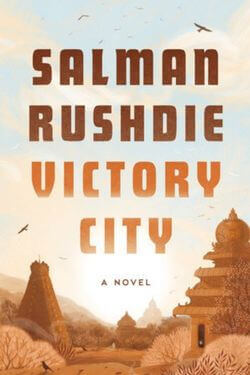
Victory City by Salman Rushdie: releases Feb 7 (Penguin Random House), so, I mean, it’s SALMAN RUSHDIE, do you even need to know more than that? As with all his works, Victory City is historical fantasy/magical realism. It will, no doubt, be about India, and history, and the world, and the future, and everything in between. It’s about a woman who creates her own personal empire with the force of her imagination.

The Last Tale of the Flower Bride by Roshani Chokshi: releases Feb 14 (HarperCollins), this is the adult fantasy debut from a loved and respected YA writer. This book is a gothic romantic fantasy/fairy tale about a marriage falling apart among the secrets of the past.

Arch-Conspirator by Veronica Roth: releases Feb 21 (Macmillan), Veronica Roth has been on my TBR list for ages, and I still have not gotten around to picking up any of her work. But this book might finally change that because it sounds amazing. It’s a dystopic science fiction retelling of the Greek tragedy Antigone. If that doesn’t grab your attention, I don’t know what to do with you.

The Magician’s Daughter by H.G. Parry: releases Feb 21 (Hachette), I first heard about this book about a year ago when an author I follow on Twitter was talking about reading an early ARC, and it just sounds precisely to my taste. It’s a historical fantasy romance about an orphan from a secret magical island off the coast of Ireland, who must come to London to protect her home and her guardian. I am so stoked for this one!

Enchantment: Awakening to Wonder in an Anxious Age by Katherine May: releases 28 Feb (Penguin Random House), this nonfiction book from the author of Wintering: The Power of Rest and Retreat in Difficult Times, is pretty much exactly what the title says it is. It discusses the anxiety, fatigue, and trauma of our times, and looks to the beauty and wonder of the natural world for its restorative power.

The Crane Husband by Kelly Barnhill: releases Feb 28 (Macmillan), this novella, from the author of The Girl Who Drank the Moon, is a dark horror/fantasy re-imagining of the old Japanese folktale “The Crane Wife.” I did mention I love myth/fairytale retellings, right? And it’s a Japanese folktale! Call me sold!

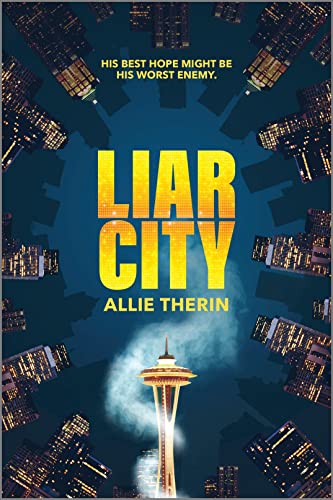
Liar City by Allie Therin: releases Feb 28 (Carina Press), I wrote before on this blog about Allie Therin’s previous work, The Magic in Manhattan trilogy — a 1920s-set historical fantasy romance that I am ABSOLUTELY ENAMORED with. This is something of a different take than her previous work, taking place in contemporary Seattle, with an empath who works a police consultant and is pulled into a case with the FBI. At this point I will buy anything Allie Therin sells me. Hell, I’d probably follow her to Mount Doom if she asked me.

My Fave Reads of the Year, 2022 Edition

Hello all and welcome to the last Friday of the year! I hope everyone had a wonderful holiday week last week, and that you are excited for the new year and all the possibilities that might bring. The last year, or two years really, have been pretty rough, and I am really hoping that 2023 will be a bit kinder to us all. But I am… skeptical, let’s say. Still, I am trying to approach the new year with a feeling of cautious optimism. We shall see how it goes.

Before I jump into my fave reads list, I have several things in the works I want to mention. I have officially started my work as a freelance editor. And I am preparing to launch an etsy shop to sell the fluid paintings I’ve been making off-and-on for the last couple months. The first handful were all gifts to various family and friends, but I have a bunch now that are piling up in my office, so I’m hoping to sell them for just a bit – enough to clear out the space in my office and buy supplies so I can make some more. I’ll have the shop linked here probably in the first week of January for the curious.

I am also considering changing the name of the blog… though, I am still on the fence about that. As I mentioned in my About page ages ago, I chose the name “Night Forest Books” as the name of my hypothetical future bookstore. I’ve had the name in mind since AT LEAST 2016. It’s a reference to my favorite book, The Neverending Story, and the location called “Perilin, the Night Forest.” When I first chose the name I did a lot of research to make sure no other bookstore or related business had claimed the name already. I bought the .com domain for future use, and I claimed the IG name (@night.forest.books) and this blog title. However, I was nowhere near ready to actually register a business or LLC name as I knew it would be probably years before I was financially ready to start the bookstore.

Well, apparently in mid-2020 a brand new micro-press started in CANADA, and they named themselves Night Forest Press. Obviously, even if they did research on the name, they did not consider my teeny-tiny blog a problem, whether it had essentially the same name or not, and since I didn’t have an actual business registered under that name it was legally up for grabs. I could probably still get away with naming a bookstore Night Forest Books if I really wanted to (maybe, I’m not certain), but googling “Night Forest Books” right now just brings up the press website. And I had vague ambitions of maybe someday starting a press associated with the hypothetical bookstore, which would no longer be a viable option under the current name. So, I will need to find a new name for the hypothetical bookstore…

Of course, the blog name is still fine right now. However, as I said, googling for “Night Forest Books” right now does not remotely lead to my blog, which is really disheartening. Besides which, my initial thought was that the blog would be a good way to establish some recognition among readership in advance of opening the bookstore, and if the bookstore has an entirely different name from the blog that kind of defeats the purpose…

So… yeah… I’m on the fence about changing the blog name, or just letting it be and worrying about the bookstore name later. Maybe I’ll just go back to using my actual name for the blog for the time being. That might at least make it obvious in search engines again… maybe. *shrug* If anyone has any thoughts, please feel free to share.

OKAY! And now the thing I’m supposed to actually be writing about today. My Favorite Reads of 2022 List!

I had a really difficult time narrowing the list down this year. (Well, ok, every year). What I have ended up with is a list of 10 books. My top 5 favorite new release fiction books, released in the calendar year of 2022, plus my top 5 favorite nonfiction books, none of which were new releases for 2022 but which were all new reads for me.

My Top 5 Fiction New Releases:

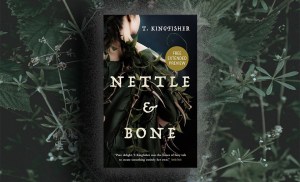
Nettle & Bone by T. Kingfisher: This book by the masterful T. Kingfisher (Ursula Vernon) is a beautiful dark fairy tale with prose that makes me weep with awe and jealousy. I wrote a full review for Nettle & Bone way back at the beginning of the year, where I predicted that it might end up being my favorite book of the year when it was all said and done, though I conceded that Nona the Ninth might easily change my mind when it was released. But lo and behold! I stand by my initial statement! I absolutely adored this book and it remains my favorite book of the year.

A Restless Truth by Freya Marske: you can find the full review of this one and the first book in the trilogy just a few weeks back. This one is a historical romance fantasy set in Edwardian England, featuring a murder mystery, lots of magic, and some very steamy sex. I loved it (and the first one, A Marvellous Light), and I’ve already re-read it once since finishing it.

Nona the Ninth by Tamsyn Muir: I know I still owe you all an actual review of this one, oops… For those still in the dark (how?) this book (and series) is a mind-bending, genre-busting, space opera mixed with necromantic magic, and one of the most complex examinations of love in all its forms (including toxic and self-destructive) that I have ever read. I’ll admit that I fully expected this one to overtake Nettle & Bone as my favorite, but though I loved it immensely, it ended up slipping down to third place. Nona the Ninth, the third of the Locked Tomb series, was excellent, and mind-boggling, but of the three it is my least favorite. Nona was a delight of a character, but the first book is still by far the most FUN. So far I love them in order, lol (Gideon, then Harrow, then Nona).

Last Call at the Nightingale by Katherine Schellman: here’s another one I read and reviewed pretty early in the year! It’s a historical murder mystery novel set in the 1920s, which is of course a good portion of what I love about it. And it features a disaster bi protagonist that I relate to rather strongly, lol! I read the whole thing in one sitting, just absolutely DEVOURED it. I fervently await the sequel!

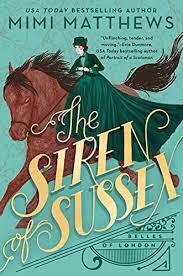
The Siren of Sussex by Mimi Matthews: I have not written a full review for this one yet, but I might try to put one together for it and its sequel later. This one is straight romance novel material, historical (Victorian setting), and absolutely lovely! I read it about a month ago and I am currently in a big Victorian-set historical romance brainrot mode. I also read the sequel to this one, The Belle of Belgrave Square. There will be a third one apparently sometime next year, so maybe I’ll do a double review for books 1 and 2 in time for the 3rd release. This book just really made me happy, with a headstrong intelligent female lead and a Indian-immigrant working-class love interest, and lots of witty banter.

My Top 5 Nonfiction Books:

Zen and the Art of Saving the Planet by Thich Nhat Hanh: this is the last book that came out before Thich Nhat Hanh’s death in 2021. If you are unfamiliar with him, he was a very famous well-respected Buddhist monk who wrote many books on Buddhist, meditation, and finding peace in your own life. He gave lectures, met with world leaders, ran retreats, and generally just made the world a better place by his existence. He was/is one of the greatest heroes in my life, and I was absolutely DISTRAUGHT when he died last year. (And, shit, I am genuinely getting choked up just typing this.) This book is kind of exactly what the title suggests: a way of approaching the crises of our planet (ecological, political, systemic, personal) from a Buddhist perspective but also from a largely non-denominational place of deeply human spirituality and compassion. It made me cry at least three or four times, and the minute I finished it I threatened to buy a copy for every person I know to make them read it (if I’d had the funds, I really probably would have).

Make Your Art No Matter What by Beth Pickens: I have a soft-spot for self-improvement books, but more specifically I really love self-improvement books about living an authentic and creative life. For instance, I also liked Big Magic by Elizabeth Gilbert (though I do find Gilbert a little too woo-woo and mystical hand-wavy at times). This book by Beth Pickens is about living life as an artist — and she defines “artist” very broadly — and offers real concrete advice on how to live that life to the best of your ability and with the most fulfillment you can manage, whether you are a full-time professional artist or someone trying to eke out a practice around a day job and family and other responsibilities. I found it incredibly insightful, down-to-earth, actionable, and really inspiring.

The Dragon Behind the Glass by Emily Voigt: I really love nonfiction books about history or science, and this one is kind of both. I picked it up on a whim and found it absolutely fascinating. It’s about the exotic fish trade, of all things! Specifically about a rare exotic fish called an arawona, which is allegedly the most expensive kind of collector/live fish in the world (most expensive fish of any kind in the world are, I think, some of the giant tuna caught/killed in Asia and sold by auction to high-end restaurants for sometimes millions of dollars). This book, and the exotic fish trade, includes: trips into the deepest barely-explored jungles of Asia and South America, run-ins with the black market and the mob, and devolves into fraud, betrayal, and even murder. It’s absolutely shocking and enormously fascinating!

1920: The Year That Made the Decade Roar by Eric Burns: I think I’ve mentioned before I am a bit obsessed with the 1920s Jazz Age era? So I assume no one is surprised that I picked up this book. It is pretty much exactly what it says it is: its a history book that focused on JUST the single year of 1920, and makes an argument that the events of that single year was the catalyst and predictor for everything that came after it. One of the major events the book focuses on is the 1920 Wall Street bombing, which remained the most destructive incident of domestic terrorism until the Oklahoma City bombing in 1995. (I found that section SO interesting that the Wall Street bombing eventually became the instigating event for the plot in my 1920s historical fiction work-in-progress). The whole book was really enlightening and I highly recommend it to anyone interested in American history.

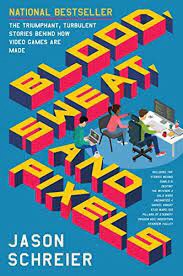
Blood, Sweat, and Pixels by Jason Schreier: the subtitle for this book is “The triumphant, turbulent stories behind how video games are made.” It’s a really well-researched account written by a games journalist about the game industry, using an enormous amount of first-persons accounts and interviews. Each chapter focuses on the story of a different game, including (but not limited to) Witcher 3, Uncharted 4, Dragon Age: Inquisition, and Stardew Valley. I’m not even a big gamer (just a dabbler), so I’m not 100% sure why I decided to pick this one to begin with, but I’m so glad I did! It was so cool to learn about how these games are developed and the kind of crazy sheningans that happen behind the scenes. (The dude who made Stardew Valley continues to blow my mind.) It’s also really fun now to watch the comedy tv show Mythic Quest on Apple+ and constantly go “that’s not how that works! That’s not how any of that works!” Lol…

So, that’s my list, for whatever it’s worth. I’d love to hear what books you read and loved this year! Please feel free to share in the comments!

Two-For-One Book Review: A Marvellous Light, and A Restless Truth by Freya Marske

Titles: A Marvellous Light & A Restless Truth
Author: Freya Marske
Release Dates: 26 Oct 2021 and 1 Nov 2022 
How I Got It: received the first book as an ARC through work, bought the second one
Rating: 5 out of 5 stars

It’s a two-for-one sale, folks! Not literally, of course. But I am doing a double review of the first two books in Freya Marske’s historical romance fantasy Last Binding trilogy: A Marvellous Light and its sequel, A Restless Truth. I read A Marvellous Light last year as an ARC, when I was curating for my job at Fox & Wit (and did end up choosing the book for that month’s release), and I always meant to write a full review for it. But alas, as so often happens, it slipped my mind and I never got it.

Fast forward a year later, and the sequel, A Restless Truth, released in September. I bought it immediately on audio (I have the first book in both print and audio, and I really enjoyed the audio so I figured ‘why not?’), and finished it in a day and a half. And again, I have been meaning to write up a review since I finished. So, here we go! I’ll do both of them together, and then I will hopefully review the last book in the trilogy whenever it releases.

The series is set in the early 1900s, Edwardian England, one of my favorite time periods for historical romance, when William Morris was all the rage and Art Nouveau was beginning to emerge (I’m a HUGE Art Nouveau fan). Of course, this is a version of England with magic, but other than that the series adheres very closely to its time period, displaying an impressive amount of research not only into the history but also the aesthetics and attitudes.

A Marvellous Light focuses on the main character of Sir Robin Blythe and Edwin Courcey. Following the death of his parents — famous philanthropists and secret backbiting devious social manipulators — Robin is placed in a seemingly dull low-level government job by an old enemy of his parents. However, when Edwin Courcey, gentleman magician, waltzes into his office fully expecting someone in the know, Robin discovers that magic is real, he has accidentally been placed in a job of liaison to the secret magical community, and his predecessor Reggie has disappeared under mysterious circumstances. It’s a lot to absorb on the first day. To make matters worse, a trio of magicians hiding their identities attack Robin that night, believing he must know more than he does, and placed a painful cursed tattoo on his arm. The only one with any hope of helping him remove the curse and find out what happened to his predecessor is Edwin Courcey.

For his part, Edwin Courcey just wants this whole mess dealt with and out of his hair. He had considered Reggie a friend, and is distraught over his disappearance, and he doesn’t have the time or the energy to help guide a brand new “civilian” learn about the magical community. Still, it is quickly apparent that he will have to deal with it, so he takes Robin to his family’s country estate to research the curse and try to remove it. Unfortunately, among his family Edwin feels he is instantly revealed to be a weakling and failure: weakest of all his family in magic, though by far the most brilliant and learned in his study of the field. And his family, including his abusive older father and his glittery empty-headed sister, seemed determined to make him miserable and embarrass his guest. And to make matters even more complicated, Robin starts having visions.

As Robin and Edwin research the curse, and try to find out what happened to Reggie, they find themselves caught in the middle of a tangled conspiracy or murder, magic, and fantastical objects of great power that may or may not exist, and which could change the lives of every magician in England. Along the way, they also discover their similarities in taste and attitude, and grow closer, something almost like friends (a novel concept for Edwin), and then possibly more. As their attraction increases, and Robin begins to contemplate the possibility of a future together, Edwin tries desperately to keep control of the situation, even as danger closes in on them with deadly urgency.

The sequel, A Restless Truth, focuses on Robin’s sister, Maud, previously introduced in the first book. With the main conflicts of the first book resolved but new and dangerous threats established for the rest of the trilogy, Robin has sent Maud to collect an older woman magician from America who may hold the key to the whole problem. However, on the return voyage from America to England on a White Star ocean liner, the woman magician is murdered within hours of heading out to sea and an important magical artifact is stolen. Now, Maud must find out who killed her and stole the artifact, find out what they know about the business her brother Robin has gotten involved in, and not get killed herself in the process.
To help her in this endeavor she recruits the charming and beautiful Miss Violet Debenham, a British transplant to the U.S. who is returning home to England, now an actress and a huge walking scandal (of her own making), and the disdainful, perpetually-annoyed Lord Hawthorne (also briefly introduced in the first book), who would really rather not have anything to do with any of this nonsense, thank you very much.

As they work together, Maud finds herself growing more and more attracted to Violet, a previously-unrealized romantic inclination now awakening in her with sudden passion. Violet, meanwhile, is happy to be a dalliance while aboard ship but is desperate to keep her secrets and her heart as detached and distant as possible. As the two women try to work out what they desire and what they are willing to sacrifice to get it, they must contend with at least one murderer, a jewel thief, an obnoxious parrot, and a whole menagerie of animals in the cargo hold. And, just to make matters worse, Maud discovers she may or may not be a medium. In the face of all these problems, Maud is determined not to fail at this mission her brother has given her, conscious more than ever that Robin is the only person in her life she has ever been able to rely on.

These books are UTTERLY DELIGHTFUL. When I first read the arc for A Marvellous Light, I had it in ebook format, and I devoured it. As soon as the book was released I got the hardcover AND the audiobook version immediately, and re-read it by audio. I have since re-read it in one format or another 3 or 4 times. And A Restless Truth is just as delightful and re-readable.

Both stories feature an exciting, tense, action-packed plot full of murder, mystery, and magical artifacts of importance to all the magicians of England. In classic mystery fashion, the artifacts in these first two books function as macguffins – an item that everyone is after, and which propels the actions of the plot, but which seem to have little-to-no actual influence on what finally happens. I am very curious/excited to see how these artifacts come together in the final book of the trilogy and prove as powerful (or not) as they are believed to be.

True to their billing as romance fantasies, both books also give heavy importance to the romantic subplots between Robin and Edwin, and Maud and Violet. They follow the traditional romance series formula of each book focusing on a different couple who are connected in some way or another through one or more repeating characters (think of the Bridgerton series in which each book focuses on a different Bridgerton sibling finding their happily-ever-after). In this case, obviously, the books are connected through the Blyth siblings Robin and Maud, as well as by the overarching external plot. There is not another Blyth sibling for the third book, but I suspect Lord Hawthorne will be the focus for the romantic subplot of the final installment. However, in that case, the main plot will also have to combine all the previous characters in order to reach its conclusion.

One thing I found enormously amusing about both A Marvellous Light and A Restless Truth is the ways that both Blyth siblings are friendly, cheerful, high-energy puppy characters who both fall in love with introverted, cynical, suspicious and paranoid cat people. It’s hilarious. However, where Robin was long aware of his own proclivities for men, and indulged them in secret (as more men than some might suspect did in boarding school and in gentlemen’s clubs), Maud enters her romantic situation completely unaware of her own interests. Violet sparks a sudden sexual awakening for her, and its amusing to watch as Maud throws herself enthusiastically into the discovery.

Speaking of sexual awakening: be aware that these books are NOT shy about the sexual content. Steamy isn’t a sufficient enough word. They are explicit, and sexy, and creative. So if that’s not your thing, reader beware. I, personally, love that shit. The steamier the better.

bonus! look at this fan art of Edwin and Robin by Ellie Bailey (@efpbailey on twitter)

As much as I loved both books, and both couples, I will say that my heart belongs to Robin and Edwin first and foremost. Robin was just so wonderful: cheerful, honest, optimistic. And Edwin was… well, Edwin was me. I identified so strongly with Edwin it was kind of pathetic: shy, introverted, nerdy, the weakest/least successful member of his family and looked down on by his siblings, with a disastrous love life, whose happy place is always in a library and buried in a book. Like Edwin, I could not help but love Robin, who saw him for who he really was, believed in him even when everyone else was laughing at him, and dragged him gently out of his shell. Yep, I am absolutely an Edwin Courcey still searching for my own Robin Blyth.
Long story short (too late, I know): if you enjoy historical fantasy and/or queer romance novels, plus a large helping of murder mystery, these books are for you. The magical murderous plots are exciting and adventurous, the romances are swoony and sexy, and the characters are all wonderfully complex and charming and relatable. You should totally pick them up now so you’re ready when the final book in the trilogy releases! (There’s no solid date on that yet, but I would guess sometime late next year… *fingers crossed*)

A NaNoWriMo Sneak-Peek

Hello folks! I have been busy at work on my NaNoWriMo project and am therefore a bit behind on my reading and book-reviewing schedule for the month. I have one book review I need to write up still, and a couple books in the queue, but I am trying very heard to keep focused on my NaNo project while I can.

So, because I still wanted to post SOMETHING today, and in the spirit of sharing with the writing/book community, I thought I might share with you all the opening for my current project.

I gave a brief description of the project in this post: “It’s That Time of Year Again.” The project is going fairly well so far (*knock on wood*). I’m at about 28,000 words currently, which is just a TINY bit behind the recommended daily word count. But I have hopes for getting caught up this weekend (*fingers crossed*).

I also made a Spotify playlist for the project, which you can find here:
Wesmaris Story (Nano 2022) Playlist

If you’re only interested in my book review posts, I totally understand, and I apologize for the lack thereof this week. But hopefully some of you will enjoy this little sneak-peek.

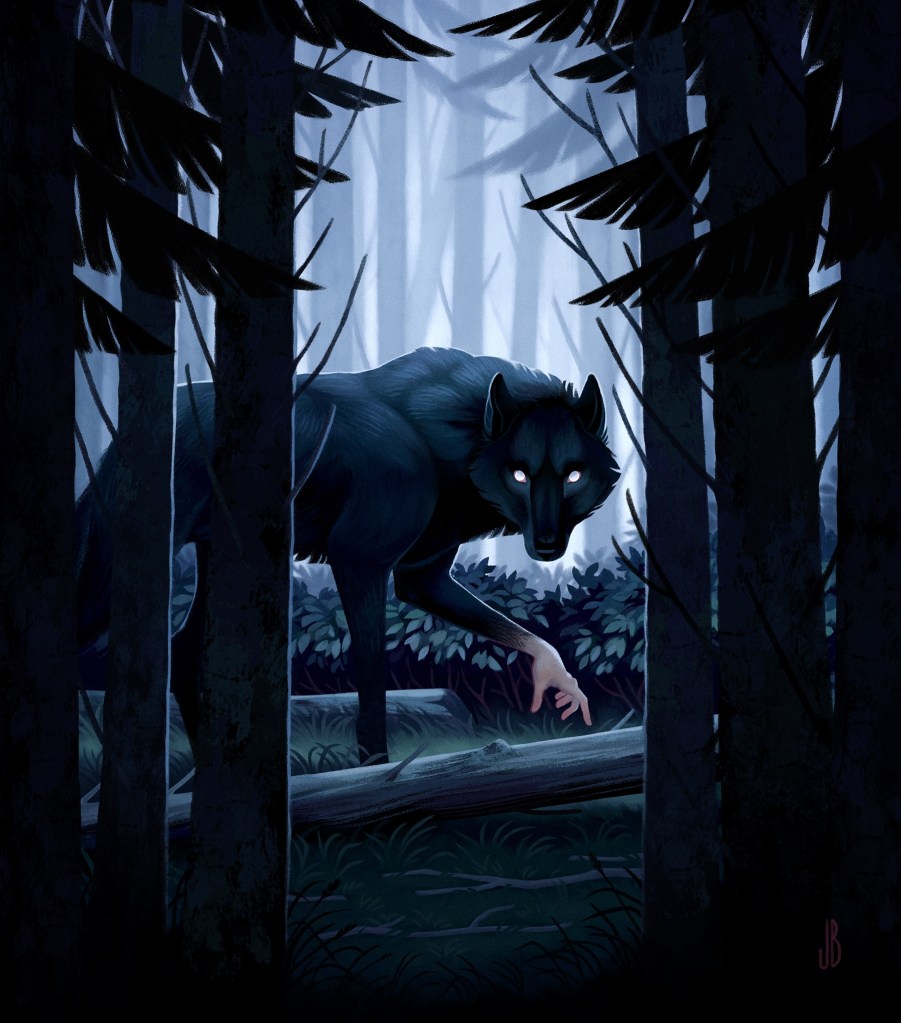
Art by Jenna Barton (@)dappermouth_art (used for vibe inspiration)

Prologue —

When Ellianora was five her mother told her folktales about the Osei, from her homeland of Noridreia — magical shapeshifters who lived in the forests and made deals with humans that were as much curse as gift. When Ellianora was ten her Noridreian-immigrant nanny told her the Osei were not mere folktale but REAL, hiding in the secret places of the world following years of human violence. There had been no recorded contact with the Osei in nearly a century, but every once in a long while one might still appear when summoned by a human desperate enough to call them. Or so her nanny said. Ellianora was not sure she really believed it.

When Ellianora was twenty she snuck out into the forest that skirted the eastern edges of Idelwyth to summon the Osei. She was finally desperate enough.

She wore her simplest, sturdiest dress in a deep navy that blended into the shadows. She carried a bag of the items needed to perform the summoning, as taught to her by her nanny, and a single lantern to light her way through the dark moonless night. The new moon was the best time to summon the Osei. They were more willing to appear with no moon as witness to their movements and the deals. Once she had gone far enough into the forest, Ellianora found a small clearing, surrounded on all sides by tall imposing great-grandfather trees, and knelt.

From her bag she revealed a small silver bowl she had borrowed from her mother’s best silver service, a glass bottle she had filled with cool, clean water, a sachet of tea leaves and rose petals, and the sharpest paring knife she could find in the kitchen. As her nanny had once instructed, she took a moment to clear her mind and focus on her intention, her desire.

Call the Osei. Make a deal. Beg for help.

Then, mind clear and intention firmly set, she placed the silver bowl before her and poured the water into it. Next came the tea leaves and rose petals. She waited a moment for the leaves and petals to swirl in the water, some staying afloat on the surface, some sinking to the bottom of the bowl. Finally, she lifted the knife in her right hand, pressed it firmly into the palm of her left hand, and pulled as quickly as she could, before she could overthink it and back out. The knife sliced through the meat of her palm. She squeezed her hand, gritting her teeth against the pain, and let the blood drip into the bowl.

Water, tea and flower, blood. Gifts for the Osei, to entice them out into the open.

“Osei, I summon you,” she spoke in a low clear voice. “I beg an audience with Kunochi, Lord of the Forest. Lord Kunochi, I entreat you to grant me your aid.”

Kunochi, according to her nanny, was one of the most powerful and most magnanimous of the Osei. If any Osei would grant her their aid, it would be he. It would have been best to speak the summoning in Noridreian, but her mother had given up her language in the name of assimilation and forbidden anyone from teaching it to her children. Wesmarin Imperial would have to do.

Ellianora waited. The forest was silent around her except for the occasional breeze and the music of the crickets. She counted to one hundred in her head, and then repeated the summoning, just to be safe. And waited. And waited.

Nothing happened. Of course, nothing. It was a silly fancy to try this at all. A fool’s errand. A desperate last-minute ploy for reprieve that did nothing but give her a momentary illusion of control.

And then, something did happen. The branches and leaves that surrounded Ellianora shook and shuddered. The entire forest seemed to take a deep breath and hold it. From the deepest shadows around her, a pale long-fingered hand appeared.

“Hello little human,” came the rumbling of a deep voice like distant rolling thunder.

Ellianora choked on a gasp and slapped both hands over her mouth. Blood from her left palm smeared across her lips and chin.

“I am not Kunochi,” said the thunder-voice, “but perhaps I will suffice…”