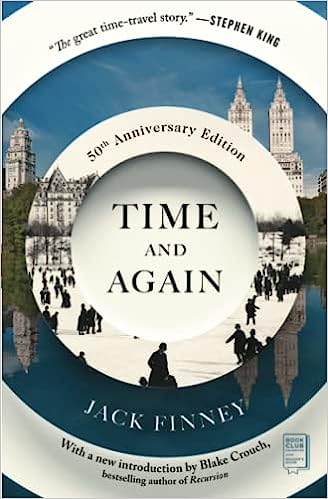
I thought briefly that I might write a post about The Time Machine by H.G. Wells, but then I decided that the book (and the many movie versions) are so well-known, and have been discussed by so many smart people, that it would feel a bit redundant for me to do so now. So, I thought I instead that I might talk about a book or two that, while very well-regarded in their time, have not remained as instantly-recognizable with current readers as they should be. And I’m starting with this one: Time and Again by Jack Finney.
I recently had the opportunity to re-read this classic of time travel fiction, which I had read a couple decades ago but didn’t remember much about. I wanted to share a bit about this truly excellent novel, and hopefully encourage more people to read it now.
Time and Again (1970), an illustrated science fiction time travel novel by American author Jack Finney, follows Simon “Si” Morley as he is recruited to a secret government time travel project, and succeeds in traveling to 1882. There, Si tries to unravel a possible conspiracy, falls in love, and faces difficult choices between love and obligation, loyalty and ethical duty. This is the first of two novels, with the sequel From Time to Time (1995) published the year Jack Finney died. Finney left the ending open for a third novel that was never written.
Many of Jack Finney’s short stories and novels had commercial and critical success. His first novel, 5 Against the House, was published in 1954 and made into a movie in 1955. He is most famous for his second novel, The Body Snatchers (1955), which became his most commercially successful venture, spawning the 1956 movie Invasion of the Body Snatchers and its many remakes. Five of Finney’s novels and several short stories were adapted for film and television in his lifetime. However, his greatest critical success came with Time and Again, which remains his most highly-regarded work by fans and critics alike.
In the introduction to the 50th Anniversary edition of Time and Again, science fiction author Blake Crouch credits Jack Finney and this novel with starting him on the path to becoming a best-selling science fiction writer. And Stephen King, in the Afterword for his novel 11/22/63, claims it is “in this writer’s humble opinion, the great time-travel story.”
In Time and Again, the main character, Si Morley, works as an illustrator for an advertising agency in 1970s New York City, where he is dissatisfied with his life, and bored at work, with no family and a few lackluster romantic relationships. One day he receives a visitor at work, a man named “Rube” Prien–a Major in the Army, who has come to recruit Si to a top-secret government project: an experiment in time travel devised by Dr. E. E. Danziger.
Danziger, a physicist, believes he has devised a method of time travel: by tricking the brain into believing a person is already in a physical location in the past, one can become detached from their own time, and travel back in time.
Si is skeptical at first, but ultimately agrees to join the experiment if he is permitted to travel to New York in January 1882, to witness the mailing of a letter and unravel a mystery that has been haunting him and his girlfriend, Kate. Kate’s father gave her a letter once mailed to HIS father, Andrew Carmody in January 1882 – a letter that hints at a fire that may destroy the world, and was somehow connected to Carmody’s suicide years later. Si intends to learn who sent that letter and what it really means.
And so Si’s adventures in time travel begin. He travels back and forth between 1882 and the 1970s several times, uncovering a larger mystery than he could have guessed, and accidentally falling in love in the process. In his efforts to solve the mystery of the letter, he will come face to face with complex ethical questions about the limits of scientific discovery, the moral obligations of those in power, the dangers of messing with the timeline, the inevitability of fate, and what it means to find the place where you belong.
This book is widely considered a masterpiece of the time travel narrative genre. It features rich detailed descriptions of New York City in the 1880s that beautifully make the time period and setting come alive. This is aided by Finney’s meticulous use of real drawings and photographs from the time period (which he attributes to his fictitious characters), and even quotes and clippings from newspapers of the time. The characters are complex, with deep emotional resonance, genuine motivations, and rich histories. Finney treats even many of the briefly-mentioned side characters with careful attention and detail.
In addition, the narrative voice of Si Morley (the story being written in first person POV) as Morley relaying his experiences, is intelligent, wry, and humorous. Si’s sarcastic wit is often on display, both in his descriptions and in his dialogue with other characters. And his observations about humanity are thought-provoking and insightful.
Over fifty years later, Time and Again is still as impressive as it was upon its initial release. Despite a few outdated statements, it continues to be philosophically rigorous, utterly fascinating, beautifully written, and highly entertaining. I strongly believe it will remain a high benchmark for the genre for decades to come.
For a recent freelance project, I found myself revisiting some time travel narratives. Years ago I taught an entire course on time travel narratives, and it was fun to have an opportunity to dig up those old lecture notes, and re-read a couple of the novels and short stories I taught in that course. I had mentioned at the beginning of the year that I might like to re-purpose some of that work for the blog, since its become abundantly clear I’m not likely to go back into teaching any time soon and all that work might as well be put to some kind of use.
SO! I’ll be doing a handful of blog posts in a sequence about time travel. I promise not to go on about too long, but I thought it might be fun. I’ll start with a brief overview (here), and then discuss perhaps just a couple of novels and a short story or two, and end with a full reading list (and viewing list as well — since there’s some great time travel stuff in film and television). I hope that sounds like fun! It’s fun for me at least.
So without further ado: A Brief History of Time Travel
Time travel exists as a philosophical concept, a scientific principle, and narrative subgenre. The possibilities and implications of time travel have been explored for centuries and appear in many different cultures. While time travel as imagined in fiction may not be possible, some scientists argue that one-way time travel might be possible through the concept of time dilation in the special theory of relativity.
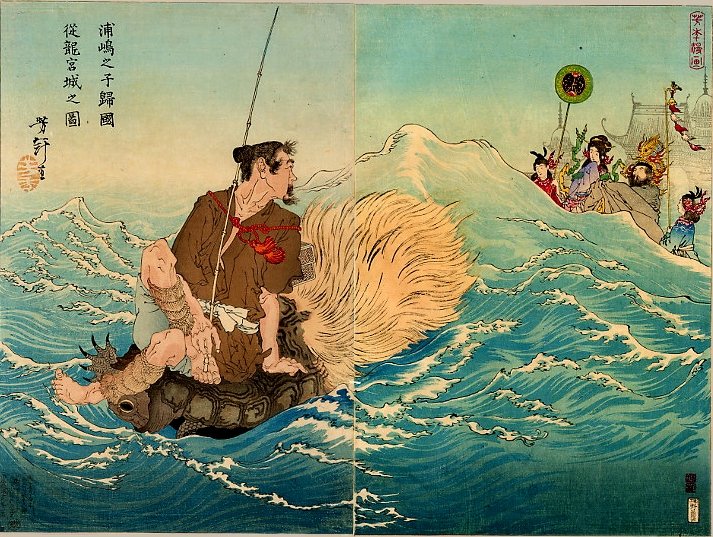
Time travel, as a narrative subgenre, exists in both fantasy and science fiction, but its earliest appearances are in myth and folklore. Two of the oldest examples are “The Tale of Kakudmi” in Hindu mythology. and “The Tale of Urashima Taro” in Japanese folklore.
“The Tale of Kakudmi” appears in several Hindu texts, most prominently the Vishnu Purana (Book IV, Ch 1) — one of 18 important ancient Hindu texts that contain stories of the Hindu gods, kings, and dynasties. When the Vishnu Purana was written is highly contested, but some estimates suppose it to be as old as 1000 BCE. “The Tale of Kakudmi,” briefly, is this:
Kakudmi was a king with a daughter named Revati. Revati was so beautiful that Kakudmi believed no one upon the Earth was worthy enough to marry her. So they went to the Hindu god Brahma to ask for advice, giving him a list of possible suitors and asking which is most worthy. However, Brahma informs them that time moves differently for the gods, and by teh time Kakudmi and Revati return from their visit with Brahma, everyone they have ever known will be long dead. In the short time Kakudmi and Revati are with Brahma, 27 catur-yugas have passed among men (1 catur-yuga = approx. 4,320,000 years according to the Vishnu Purana; so 27 catur-yugas = approx. 116,640,000 years). When Kakudmi and Revati return, they find that no only have the landscape and environment changed drastically, but that the civilizations of men have declined, becoming less than they were in Kakudmi’s own time. Kakudmi states that “he found the race of men dwindled in stature, reduced in vigour, and enfeebled in intellect,” thus making them even less worthy of his daughter than they had been in his own time.
“The Tale of Urashima Taro” is from Japanese folklore, first seen in the Nihongi, the second oldest book of classical Japanese history, and perhaps written around the 6th century. Like “The Tale of Kakudmi,” Urashima Taro is the story of a man who goes to a supernatural location, where time moves differently, so that he experiences only a handful of days while 300 years pass for normal men.
Both of these stories could be considered very early examples of the concept of time dilation, in which time moves more quickly or slowly depending on where you are, based on the theory of relativity that states all perceptions of time differ for different people in different places.
The earliest time travel in stories happened though magical or mystical means: a god, a spell, a mysterious realm. For instance, in the play Anno 7603 by Norwegian poet Johann Hermann Wessel, written in 1781, two men are sent far into the future by a good fairy, where they find that gender roles have reversed and only women are allowed to fight in the military. Then there is, of course, the case of the short story “Rip Van Winkle” by Washington Irving, published in 1918, in which a man mysteriously falls asleep and wakes up decades later without explanation.
The oldest known story of time travel by means of a machine is Edward Page Mitchell’s “The Clock That Went Backward,” written in 1881, though even this story is more magical than science-fictional. It was H. G. Wells’s famous novella The Time Machine (1895) that truly popularized the idea of time travel through scientific and mechanical means; however his short story, “The Chronic Argonauts,” includes a time machine as well, and predates the Time Machine by seven years.
The method used in the highly-regarded novel Time and Again (which will be discussed in my next post) travel is loosely inspired by Einstein’s theories of time, based on the Special Theory of Relativity, combined with the concept of “self-hypnosis.” This method was also popularized in the novel Bid Time Return by Richard Matheson (most famous for I Am Legend and What Dreams May Come), which inspired the film Somewhere in Time starring Christopher Reeve.
Since then, time travel has remained a popular trope in both fantasy and science fiction stories in both print and visual media. Many science fiction stories take great pains to offer detailed explanations for how and why time travel works. But in just as many stories, the how and why of time travel is ignored in favor of the social, historical, or personal consequences of that travel. In some cases, the time travel is merely a trope used to propel another kind of story, such as in the Outlander series (books and tv show), where the time travel elements are mostly used to allow for the romantic drama.
Literature scholar David Wittenberg argues that time travel fiction is a kind of “narratological laboratory” in which the “most basic theoretical questions about storytelling,” as well as philosophical concepts of “temporality, history, and subjectivity, are represented in the form of literal devices and plots,” for the purpose of exploration, through experiments, analysis, and criticism (Wittenberg, David. Time Travel: The Popular Philosophy of Narrative. Fordham UP, 2013).
Some of the most popular themes within time travel narratives include: fears or hopes of changing the past, alternate pasts and alternate futures, observing or communicating with another time, time loops and time paradoxes, time wars, and the prevalence of human emotions such as love overcoming the obstacles of time.
I wanted to share some more queer stories for Pride Month, just because I can! I’ve really loved the recent explosion of queer literature. There’s always room for more improvement, and some genres get more representation than others, but overall I’m very excited to see how many more queer books we’re getting across the board: in SFF, in poetry, in literary fiction, and even in YA and children’s fiction. I’ve tried to share some recent titles in a few different genres for today.
To start with, I wanted to recommend some queer poetry! I don’t talk about poetry here much but I’m actually a HUGE poetry nerd, and read a lot of it. And quite a lot of the poetry I read is queer of some kind or another. So! I have a few to share!
Night With Exit Wounds by Ocean Vuong – this poetry collection from Vietnamese-American poet, also well known for his fiction novel On Earth We’re Briefly Gorgeous, focuses on Vuong’s experiences with immigrant parents, being an outsider in American culture, facing anti-Asian racism, and his experiences as a gay man with less-than-supportive parents, and facing homophobia in America on top of the racism he deals with. The poems are lyrical and hard-hitting. Vuong has a second poetry collection out now, Time is a Mother, which I haven’t had a chance to get my hands on yet.
Next, the two poetry collections by Chen Chen, a Chinese-American poet, examine similar issues of race, sexuality, family, and belonging. His collections are When I Grow Up I Want to Be A List of Further Possibilities, and Your Emergency Contact Has Experienced An Emergency (which I wrote a full review for here). Chen’s poetry, like Vuong’s, deals with the experiences of being an Asian immigrant in the US, and the issues of anti-Asian racism that arise from that. He is also a gay man, and examines the homophobia he experiences in American society, as well as from his parents – particularly his mother with whom he has a fraught relationship. Chen’s poetry is more visceral and blunt, with occasionally humorous or explicit language and description, and some experiments with form. His second book in particular, pulls inspiration from and pays homage to a number of other Asian-American poets, including Bhanu Kapil, Jennifer S. Cheng, Justin Chin, and Marilyn Chin.
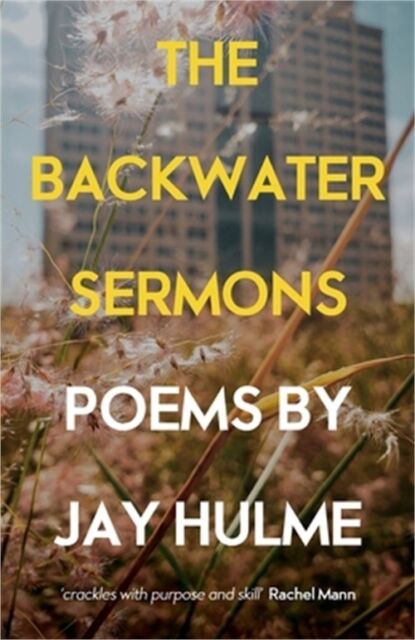
Another queer poet worth checking out is Jay Hulme, with his collection The Backwater Sermons. Jay Hulme is a trans-man in the UK, who is also a devout Christian. Much of his work deals with the complex beliefs and emotions that arise from the intersections between religion and sexuality, particularly in a christian culture where some subsections of the community are very welcoming of queer identity, and other subsections are violently and vehemently opposed. Hulme imagines gentle and accepting Jesus in a dance club, and re-frames saints with queer identities of all kinds. Personally, as a queer woman who came from a Catholic background and now has a complicated and ambivalent relationship with religion writ large, I found Hulme’s poetry and perspective on Christianity touching and enlightening and filled with a hope I have not yet found for myself. Here is one of the poems from this collection: “Jesus at the Gay Bar.”
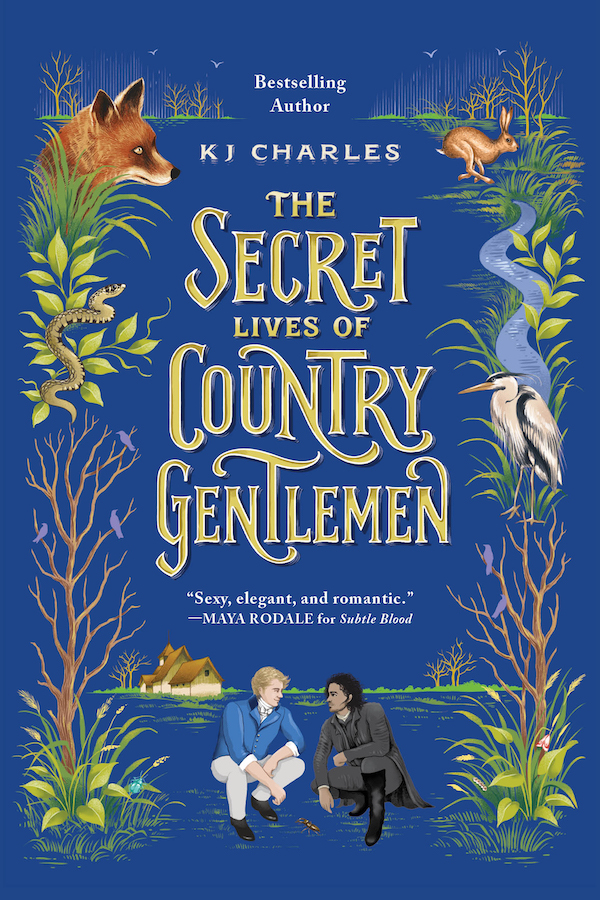
I can also highly recommend K. J. Charles’s newest release: The Secret Lives of Country Gentlemen, which is in the same vein of much of her other work. A queer historical romance, this one is set in Regency England (did I mention this is one of my favorite time periods?), and features a lonely prickly baronet, his former lover – a charming smuggler, and a creepy gothic estate on Romney Marsh. I love everything Charles writes, and this one is no exception. Hopefully, I’ll get around to writing a full review for this one eventually, but in the meantime, you should still check it out!
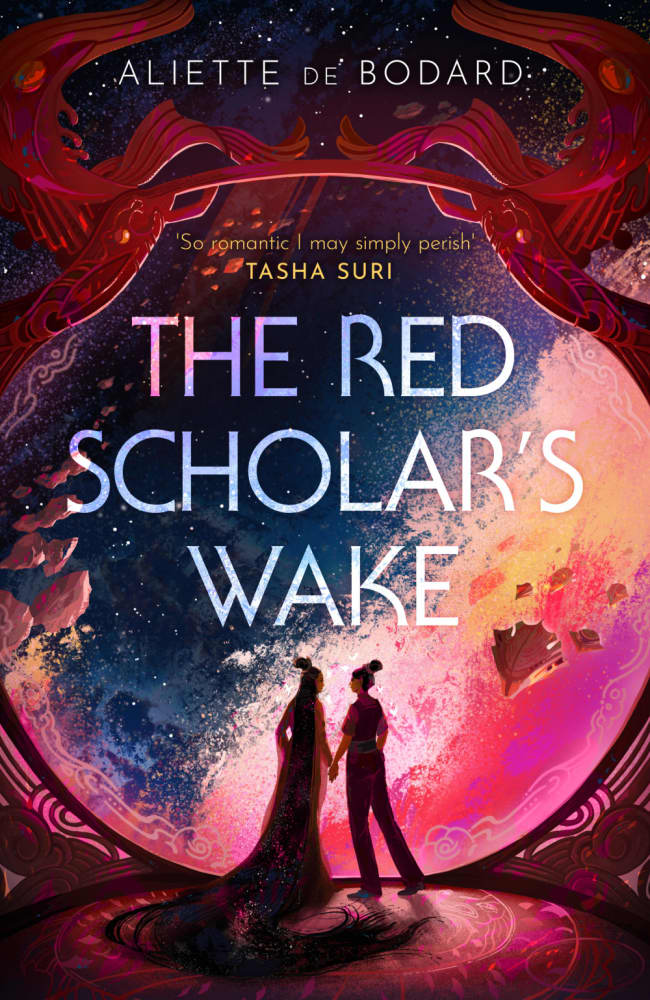
And I’ll stop, today, with The Red Scholar’s Wake by Aliette de Bodard. This one is a sapphic science fiction with space pirates, and a sentient spaceship. It’s been described as Black Sails in space, but with lesbians, romance, and Vietnamese influences. This one came out last year, and I had it on my radar then, but didn’t finally get around to buying until last week. So, I haven’t read this one yet, but it’s at the top of my TBR stack. It sounds amazing, and the reviews have been great, and I have no doubt I’ll love it when I get to it.
I’m getting the blog back up and running, and I’m just in time, because: It’s Pride Month! In the face of all the current awfulness in the U.S. (which I’m not going to get into here, because it’s terrifying and rage-inducing and I’m tired), let’s focus on fun things. So, as your resident Disaster Bi™, allow me to offer up some Queer Joy books for your reading pleasure!
By happy coincidence (probably not coincidence, they probably did it on purpose), a bunch of books releasing THIS WEEK are happy and gay!
Mortal Follies by Alexis Hall — Alexis Hall of Boyfriend Material fame, returns with a sapphic, Regency-era romance fantasy this time! Which is pretty much my absolute favorite combination of words in the English language. I’ve been a Regency-era nut since I was a kid, and when you combine sapphic, romance, and fantasy together, you put me smack-dab in my happy place. I am SO excited for this one! (I love these trope/tag meme book graphics! I don’t care if anyone else thinks they’re dumb. Also, look how pretty this cover is!)
We Could Be So Good by Cat Sebastian — the newest book from Cat Sebastian (famous for her queer books of mostly, but not only, gay man) sounds like a really great romp. You can always count on Cat Sebastian for relatable characters, engaging plots, and all the gayness. This one is set in 1950s New York, and features a scrappy newspaper writer and the son of a Newspaper Tycoon who grow close in the midst of the very dangerous anti-gay atmosphere of the 50s.
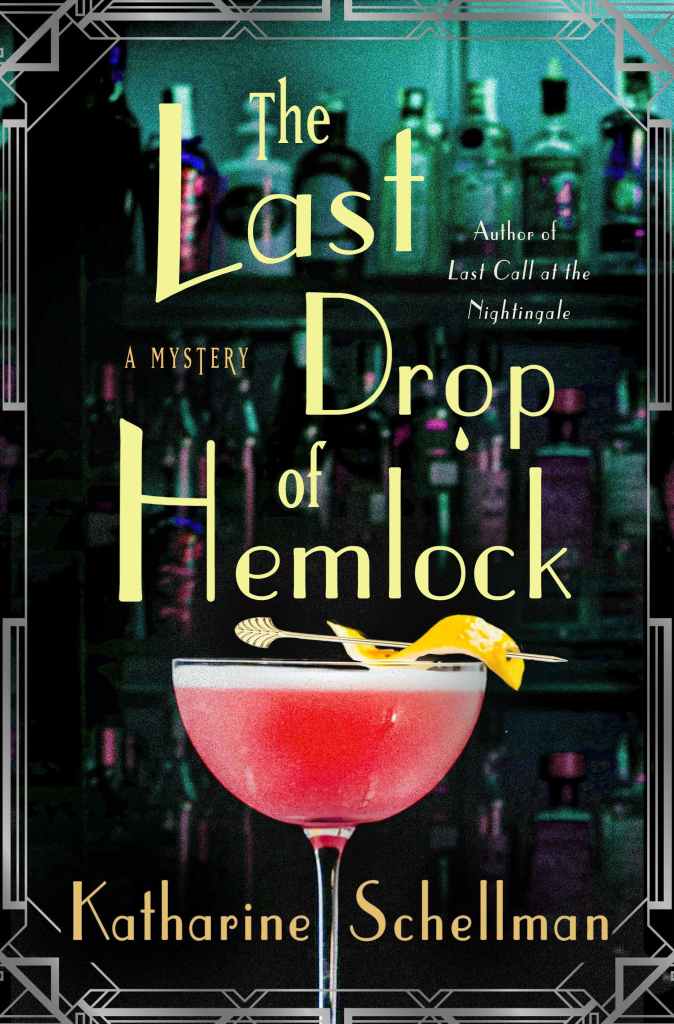
The Last Drop of Hemlock by Katherine Schellman — This book is primarily a historical mystery novel set in 1920s New York (another one of my favorite time periods!). It’s the sequel to Last Call at the Nightingale, for which I wrote a glowing review last year. Like the first, it features my fellow resident Disaster Bi, Vivian Kelly as she navigates her new job at a speakeasy, her attraction to the dangerously alluring woman who owns the speakeasy, and stumbling upon yet another murder (and, okay, this one might stretch the definition of “joy” in “Queer Joy,” as Vivian is really Going Through It™, but still…). Katherine Schellman is an instant-buy for me and I cannot recommend her work highly enough! (I couldn’t find a fun graphics version of this cover, alas.)
Allow me to indulge in what might be a somewhat controversial book take for a moment. We, the book community writ large, have got to stop being so precious (see secondary definition here) and pearl-clutchy about the physical object of the book.
But let me back up for a second.
During my undergraduate Literature degree, I took a class from one English professor who, on the first day of the semester, picked up his copy of the Norton Anthology of British Literature and chucked it across the room. The room gasped and watched in stunned silence as the enormous book flew across the room and landed in a crumpled heap, pages folded and bent.
This professor strode across the room, picked up his anthology, smoothed a few pages down, closed it, and put it back on his desk.
And then he announced to the room that the book is not a sacred object.
The stories, imagination, knowledge, or information contained within the book are certainly sacred, but not the physical object itself. It is merely paper and ink — and usually fairly cheap paper and ink at that. And whatever we need to do to that physical object in order to best access, understand, and appreciate the knowledge within — be it writing in the margins, underlining, folding pages, or even ripping the book in half to make it easier to carry — are all fair game.
That lesson was absolutely invaluable to me. I carried it with me into graduate school, and eventually imparted it to my own students when I taught.
There are, obviously, exceptions. Certainly no one is advocating for beating up first editions, or antiques, or beautifully-printed hardcovers. But your average, standard publication, trade paperback? It is not sacred. Please stop acting like it’s the Shroud of Turin.
This brings me back to where I started.
There have always been people who judge those who dare to dog-ear their book pages, or write in their books, and so forth. And there always will be. It’s a fact of life, and I accept that. And certainly no one is saying you have to do these things to your books if you don’t want to. But in recent years there has been a huge uptick in those who are very vocal in online spaces (as so often happens with the internet), acting as if those who adapt a printed book to their needs is tantamount to the devil. People who rant and rave against someone dog-earring a page, or behaving as if a disabled person who tears a very large book in half to make it easier to hold has just ripped an infant in two and should be executed. It’s absurd.
Not coincidentally this kind of judgy behavior has gotten worse with the rise of book subscription boxes and the craze in recent (last 6-8 years) of more and more “special edition” and “collectible” books. Now. Let me be clear. There is nothing wrong with special editions and collectible books. I have a good handful of beautiful, illustrated, signed, extra-expensive special editions that I adore. They have their own shelf in my office. I keep them dusted, out of harsh sunlight that might bleach the spines, and away from harm. I paid a lot of money for them, and they are absolutely works of art and should be treated that way.
That said, there is a growing trend/attitude in a large number of buyers who will only buy a book if it’s a special edition — with sprayed edges! Exclusive dust jackets! Illustrated end papers! Signed and numbered! And certainly only in hardcover! The book subscription boxes are constantly tripping over each other in the scramble to find more and newer and better ways to outdo the competition with their exclusive perks. More and more the focus drifts away from whether a book is actually good and readable and toward its collectibility and exclusivity.
While this has absolutely been a major boost for some authors, it truly only helps the big names. The buzzy TikTok titles. The authors known for catching the attention of subscription boxes and having a million slightly different “exclusive editions” in various places. I love that some authors are seeing major boosts in sales from these things. But it is also harming the vast majority of midlist authors who never get hardcover releases — only trade paperback, and sometimes only ebook releases. The authors who have been publishing consistently for years, sometimes decades, without ever getting quite mainstream enough for the big flashy TikTok campaign or the special edition from Illumicrate or some other big subscription box. Or the debut authors who weren’t lucky enough to warrant the big initial marketing push from their publisher, or catching the eye of that one BookTok reviewer who could make them the next sensation.
I firmly believe that these two attitudes (the pearl-clutchy sacredness of the physical book, and this obsession with exclusivity) go hand-in-hand. If the book is sacred, only the prettiest, flashiest, most valuable packages are worth buying/reading. And both readers and authors are harmed by this attitude.
I’m not saying we shouldn’t buy (or make) pretty special editions anymore. Or that we must buy every random paperback we see. Or that everyone is required to treat their books with more roughness. I’m just saying maybe we, as a community, need to unclench a little. Stop worrying quite so much about the resale value of a bloody book, and just try getting the fullest out of the content on offer.
(Also, apologies if I got a tiny bit rant-y here. But if I can’t rant a tiny bit on my own blog, where can I?)
[AN: sorry for the delay. I had this post all ready to go, and then I forgot to schedule it! Lol!]
A couple weeks ago, in my post about my recent Victorian historical fiction reading binge, I mentioned that I had read a book called Jackaby by William Ritter. Well, I’ve now finished the series (4 books), and thought I’d share a full series review.
I will try to avoid too many MAJOR spoilers, but as I am talking about the series as a whole there will probably be some.
As mentioned, the author is William Ritter (who has also written some middle-grade fiction that looks really great so I’ll probably check those out at some point!). I don’t believe the series as a whole has a name, but the four books are: Jackaby, Beastly Bones, Ghostly Echoes, and Dire King. There is a fifth standalone book coming out in August, called Rook, that I am very much looking forward to. But don’t go looking for the description of that book or you will run face-first into a couple major spoilers for the ending of book 4 (yes this happened to me).
The books take place in a Victorian-age New England city called New Fiddleham (cleverly avoiding any actual states or real cities/geographies). The main characters are Abigail Rook, an intelligent young woman who has recently run away from her home in England in search of adventure, and R.F. Jackaby, a paranormal investigator who becomes her employer. Each book is written in first-person from Abigail’s POV, in a style similar to John Watson reporting about the cases he worked on with Sherlock Holmes — including some amusing little nods to the trope throughout.
R.F. Jackaby is a Seer. In fact, he is THE Seer, as there is only one alive at any given moment. He has the capacity to see the supernatural elements of the world that are mostly invisible to or ignored by the human public. He uses this ability as an investigator in New Fiddleham, dealing with magical and unexplained issues while constantly butting heads with the police chief and the mayor. He lives in a house once owned by a woman who was murdered ten years ago and simply never left — he and the ghost are rather good friends, thankfully.
Abigail Rook is a smart, headstrong young woman who wanted to be an archeologist. Throughout the series she proves herself to be brave and capable and quite often the voice of reason when situations become dire. Her bravery is established pretty early on in her employment with Jackaby when she discovers that his last assistant was turned into a duck, and doesn’t immediately go running and screaming out of the house. Never mind the ghost!
In the first book, Jackaby, the world-building is established and Abigail and Jackaby solve a series of murders, as one does. They also befriend one of the cops, on whom Abigail develops a crush.
In the second book, Beastly Bones, Abigail is given an opportunity to stretch her archeology muscles a bit on a case out in the valley away from the city. The cop Abigail has a crush on, Charlie Barker, has been transferred out to the valley as well, allowing their flirtation to continue with growing adorable-ness (and Jackaby’s hilarious pleas that Abigail not rely on him for emotional or relationship advice). This book gets rather bloody in places, and the mystery of who is doing what to whom was fairly intricate.
[SPOILER BELOW]
There’s a freaking dragon involved! Sort of! It’s complicated!
[SPOILER ENDED]
The second book begins to hint at a larger conspiracy or plot hiding beneath the recent cases that Jackaby and Abigail have worked on. This is fleshed out more in the third book, Ghostly Echoes.
In Ghostly Echoes, Jackaby and Abigail are “hired” by their ghost friend, Jenny, to find out who murdered her. Unfortunately, what should be a relatively straightforward task for them becomes more and more complicated as the clues to Jenny’s murder ten years ago leads them all into the heart of a much larger, deadly plot. This book features a very-polite (but still deadly) vampire, a mad scientist, and a trip on the River Styx into death. And that’s not nearly a lot of it!
Where the first two books were fun jaunts into the murder mystery genre with some paranormal shenanigans thrown in, the third book leaps headfirst into Celtic folklore and epic fantasy. The fourth book, Dire King, then proceeds to shatter the quiet facade of the Victorian city and break into all-out magical war.
The fourth book was so tense and so action-packed I felt like I barely breathed through the entire thing! Despite a couple spoilers I had accidentally run into (while looking at the new book coming out in August), I did not actually know where the book was going for most of it. It goes heavy on the drama, in the best ways possible. I especially appreciated the way Abigail becomes the voice not only of reason but of mercy and goodness and “humanity at its best” throughout the fourth book. And the ending was so SO satisfying. (And there! I managed not to spoil any of the real major bits!)
One of the many things I liked about these books was the relationships. For one, I fully expected it to become a romance between Abigail and Jackaby, just because that tends to be the way these things go (not a complaint! I would have been fine with that as well!). But Ritter defied my expectations by pairing Abigail with the sweet cop, Charlie. (Was there a bit of copaganda, yeah, sure… but it’s such a standard character type in historical fiction and we all know it’s a fantasy anyway, so it didn’t really bother me.)
Another thing I really loved about these books was the absolutely impressive amount of research into folklore and mythology that Ritter had to have done to write these. There are dozens and dozens of references to so many creatures from folklore and mythology it almost boggles the mind! And not just the standard Western ones, though Celtic mythology gets the main focus in the last two books, but also Asian and African as well.
A third of the many things I loved about these books was how truly FUNNY they were. The plots are dark, there’s murder, there’s an attempt to conquer the world in the last book, but despite this (or even because of it) there is a wonderful humor that threads its way through the entire series. Jackaby is deadpan and drily sarcastic (one of my favorite character types), and the interactions between Jackaby and Abigail are one of the major highlights of the whole series.
The whole series was a delight from start to finish. I thoroughly enjoyed all four books, but especially the last one. I cannot wait to read the new one, Rook, coming out in August. What’s even better is that the whole series is getting a reprint in August. I read the books by borrowing the ebooks from the library. And there are ebook and print versions available on Amazon. I think they were self-published, or perhaps indie-published by a small press. But either way, they are getting a new printing with brand new cover art at the same time as the release of the fifth book.
Ironically enough, it was the new cover art that first got me to read these. I follow the artist doing the new covers, Corey Brickley, online. I love his work (seriously go check him out!). He posted the cover reveal for Jackaby with his new artwork and a brief description of the book and I knew it would be right up my alley (I mean! Compare the cover at the top of the post, with the rest of the covers in the post!). But I probably would not have ever run across them if Corey Brickley had not been commissioned to do new covers! It’s so funny how the world works sometimes…
Anyway, I highly recommend these books. As mentioned, they are available to purchase right now in ebook or paperback. Or you can do like I did, and borrow them from the library so that you can buy the NEW covers in August without ending up with two whole sets.
Sometimes I get in these moods, where I read one particular kind of book and just CANNOT STOP reading that particular kind of book. I go through cycles where I absolutely devour certain genres or sub-genres. Back in 2020 I went through a huge space opera phase. In mid-2021 there was a big period of murder mysteries. My romance reading in general tends to happen in big chunks.
Starting around the beginning of December, and going through Christmas and New Years, and the first couple weeks of January, I’ve been voraciously consuming historical romance novels set in the Victorian time period. Within that there have been a few variations: a few straight romances, a few mystery types, a few fantasy types. But all of them have been Victorian historical fiction.
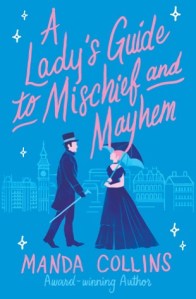
In order, I have now read: Soulless by Gail Carriger The Siren of Sussex by Mimi Matthews A Lady’s Guide to Mischief and Mayhem by Manda Collins An Heiress’s Guide to Deception and Desire by Manda Collins The Belle of Belgrave Square by Mimi Matthews Widdershins by Jordan L. Hawk (a re-read by still in the same Victorian-set genre) Changeless by Gail Carriger (started by didn’t finish) Jackaby by William Ritter Beastly Bones by William Ritter
Soulless and Changeless are the first two books of Gail Carriger’s Parasol Protectorate series (paranormal romance/steampunk set in Victorian England). I read Carriger’s YA The Finishing School series last year. I didn’t realize until after the fact that the Parasol Protectorate series was an adult series, and written first, and the Finishing School series is a prequel. But I enjoyed the YA books enough to try out the adult series. I wouldn’t say I loved the Finishing School books, but I enjoyed them. They were silly and frothy and adventurous and fun. I found Soulless for cheap at the used bookstore and enjoyed it enough, and then I grabbed the sequel, Changeless, at the library. I won’t say it’s a DNF. I think I might come back to it eventually, probably. But some of the characters that I knew from the Finishing School series appear in ways I really didn’t like (again, I realize the Parasol books came first, so it’s my own fault, but however it happened, I am far more attached to the version of the characters from the prequel series and I was pretty upset about some things in Changeless, which I won’t specify as they are spoilery). Changeless, also frankly was not scratching the particular ITCH I had when I jumped into these Victorian books. So I returned it to the library early.
The Belles of London series encompasses the books The Siren of Sussex and The Belle of Belgrave Square by Mimi Matthews (and a third one is coming out in 2024). These were straight Victorian romance – no magic or murder mysteries in these, just lots of Victorian-period melodrama, which I loved. I loved them so much that The Siren of Sussex made it onto my favorite books of the year list! They are swoony and fun and filled with smart, interesting, complex women and honorable men trying to do the right thing under difficult circumstances, and all the kinds of societal roadblocks and miscommunication issues one might expect from the genre. They are not out to defy the genre expectations, but rather play them up to great effect. I am really looking forward to the third one.
In what appears to be very much a pattern in these kinds of novels, the two books by Manda Collins, A Lady’s Guide to Mischief and Mayhem, and An Heiress’s Guide to Deception and Desire are also linked books, with at least one more book to be released in the series this year in March. These are historical romance/mystery hybrids (one of my favorite combos!), with each book featuring a woman MC solving a crime while also following in love with the charming man helping them investigate. They are both really great mysteries (I had the first one figured out about ⅔ of the way through but the second one kept me guessing until right near the end). And the romances are both sweet and swoony. The first one is a rivals-to-lovers pairing (a police detective and a woman who’s doing her own investigating and keeps messing with his career). The second book is a second-chance romance with a pair of lovers who broke off their engagement years ago, mixed with a marriage of convenience (it’s complicated!). I really loved both and I cannot wait for the third one!
Finally, I have an already completed series of four books by William Ritter that are Victorian-age historical paranormal mysteries. They are not romance, strictly-speaking, though there is a romantic subplot threaded through all the books. They are about a woman from England who comes to America and finds employment with a paranormal investigator. The books are written in first person with the woman, Abigail, narrating her adventures with the investigator, Jackaby, in a way similar to Watson’s narration of the Sherlock Holmes stories. I have finished the first two books, and already have the third one checked out from the library and ready to go. These books are BLAST. Fun mystery writing, lots of period-appropriate set dressing and some really fun paranormal monsters including the usuals such as werewolves, vampires, ghosts, as well as some things you would not expect. I can’t wait to see where these go next!
So that’s what my reading has looked like the last month or so (about a month and a half now, actually, I guess). I think I’m going to finish the William Ritter series now, and then I’m thinking I might jump into something different. I’m thinking about getting back into big epic fantasy tomes. I used to read them almost exclusively in high school. Big giant 800-page types. But I fell out of the habit in college and then grad school killed my reading altogether (as I’ve talked about on this blog before), and since I’ve gotten back into the swing of things I haven’t really returned to my roots yet. I think it’s about time. But we’ll see…
Hello all and happy new year! I thought I would kick-off the first week of the year with a brief list of some of my own personally Most-Anticipated Books for the start of 2023. I keep a pretty extensive list throughout the year, but because my time and my budget is very finite, I usually only end up reading a very small fraction of all the new releases that catch my attention. I won’t share the whole current list here, but I will share a few of the books that are releasing January and February of this year that I am excited about, and which you folks might find interesting as well.
(A few notes: I have these listed in release date order, and I include title, author, release date, genre, and publisher. Most of them are fantasy/SF because that’s mostly what I read, but there are some other things mixed in. I would also like to point out that anything from HarperCollins, while I am excited about them, I will probably not actually buy and/or review until the strike is resolved.)
JANUARY RELEASES:
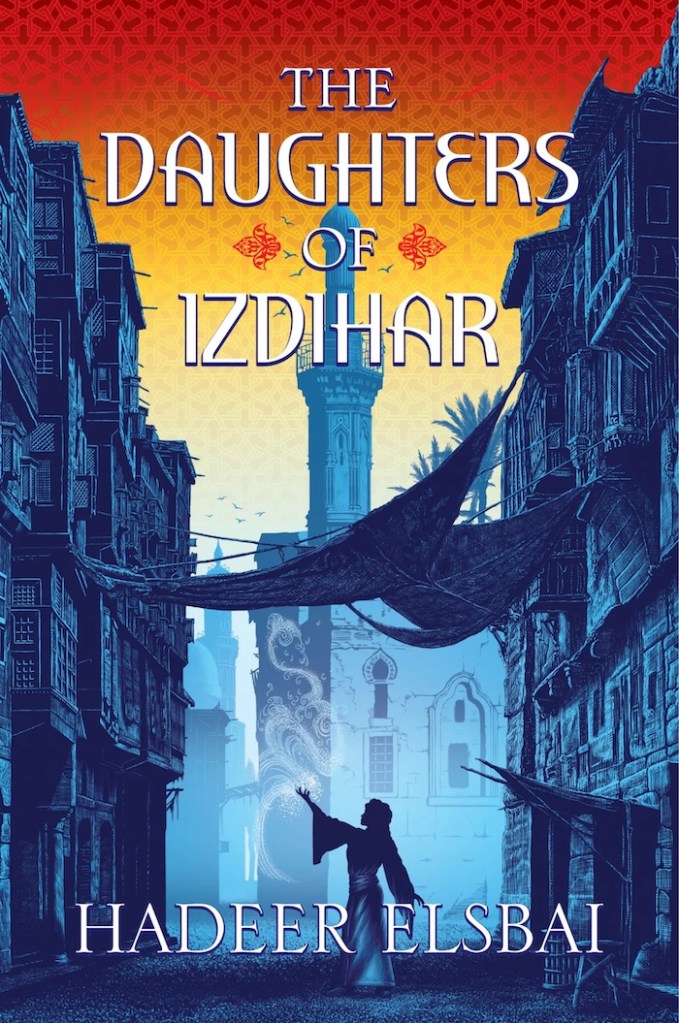
The Daughters of Izdihar by Hadeer Elsbai: releases Jan 10 (HarperCollins), this is an Egyptian-inspired fantasy, with a sapphic romantic subplot, and I am so excited for this one. It doesn’t hurt that the cover is absolutely gorgeous.
Phaedra by Laura Shepperson: releases Jan 10 (Penguin Random House), this one is a feminist retelling of the Greek myth of Phaedra, the sister of the Minotaur. This one is, by all accounts, unflinching and incisive. And I love me a good feminist retelling.
The Written World and the Unwritten World by Italo Calvino: releases Jan 17 (HarperCollins), this is a nonfiction collection of essays by the brilliant amazing incomparable Italo Calvino that will discuss his thoughts on literature and writing. Italo Calvino, author of such masterpieces as Invisible Cities (1972) and If on a winter’s night a traveler (1979), is one of my favorites and I am elated to have this previously-untranslated collection coming out!
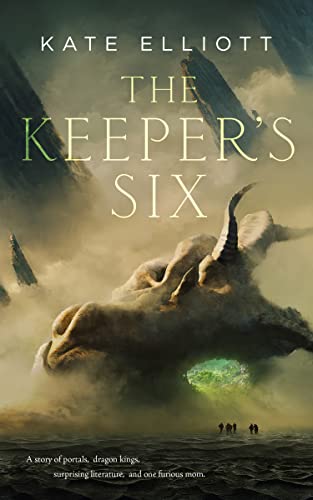
Keeper’s Six by Kate Elliott: releases Jan 17 (Macmillan), this short fantasy novel features a bad-ass world-hopping mother who gets her old adventuring group back together to rescue her adult son who has been kidnapped by an old enemy. Kate Elliott has been a big name in SFF for years, but I only really got to know her work with Unconquerable Sun in 2020. However, I have since then become a devotee, and will buy anything she cares to release.
Everyone in My Family Has Killed Someone by Benjamin Stevenson: releases Jan 17 (HarperCollins), this one is a new murdery mystery about a man who writes mystery-writing how-to books and is an expert in golden age mystery novels, who must put all his knowledge to the test when he goes to a ski resort for a family reunion and everyone starts dying around him. This one just sounds like a ton of fun, and I love the prospect of a modern mystery that incorporates send-ups to the golden age (if you loved the movies Knives Out and Glass Onion you will probably like this book).
The Terraformers by Annalee Newitz: releases Jan 31 (Macmillan), Annalee Newitz is a phenomenal sf writer, who imagines some really fascinating near-future and far-future versions of the world. This new book from her will look at terraforming, eco-systems, and our hopes for the future. I’m really looking forward to this one.
FEBRUARY RELEASES:
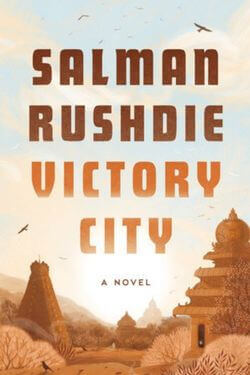
Victory City by Salman Rushdie: releases Feb 7 (Penguin Random House), so, I mean, it’s SALMAN RUSHDIE, do you even need to know more than that? As with all his works, Victory City is historical fantasy/magical realism. It will, no doubt, be about India, and history, and the world, and the future, and everything in between. It’s about a woman who creates her own personal empire with the force of her imagination.
The Last Tale of the Flower Bride by Roshani Chokshi: releases Feb 14 (HarperCollins), this is the adult fantasy debut from a loved and respected YA writer. This book is a gothic romantic fantasy/fairy tale about a marriage falling apart among the secrets of the past.
Arch-Conspirator by Veronica Roth: releases Feb 21 (Macmillan), Veronica Roth has been on my TBR list for ages, and I still have not gotten around to picking up any of her work. But this book might finally change that because it sounds amazing. It’s a dystopic science fiction retelling of the Greek tragedy Antigone. If that doesn’t grab your attention, I don’t know what to do with you.
The Magician’s Daughter by H.G. Parry: releases Feb 21 (Hachette), I first heard about this book about a year ago when an author I follow on Twitter was talking about reading an early ARC, and it just sounds precisely to my taste. It’s a historical fantasy romance about an orphan from a secret magical island off the coast of Ireland, who must come to London to protect her home and her guardian. I am so stoked for this one!
Enchantment: Awakening to Wonder in an Anxious Age by Katherine May: releases 28 Feb (Penguin Random House), this nonfiction book from the author of Wintering: The Power of Rest and Retreat in Difficult Times, is pretty much exactly what the title says it is. It discusses the anxiety, fatigue, and trauma of our times, and looks to the beauty and wonder of the natural world for its restorative power.
The Crane Husband by Kelly Barnhill: releases Feb 28 (Macmillan), this novella, from the author of The Girl Who Drank the Moon, is a dark horror/fantasy re-imagining of the old Japanese folktale “The Crane Wife.” I did mention I love myth/fairytale retellings, right? And it’s a Japanese folktale! Call me sold!
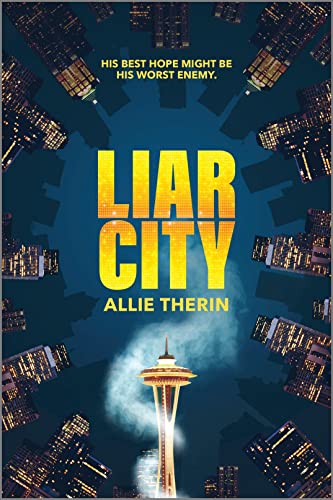
Liar City by Allie Therin: releases Feb 28 (Carina Press), I wrote before on this blog about Allie Therin’s previous work, The Magic in Manhattan trilogy — a 1920s-set historical fantasy romance that I am ABSOLUTELY ENAMORED with. This is something of a different take than her previous work, taking place in contemporary Seattle, with an empath who works a police consultant and is pulled into a case with the FBI. At this point I will buy anything Allie Therin sells me. Hell, I’d probably follow her to Mount Doom if she asked me.
Hello all and welcome to the last Friday of the year! I hope everyone had a wonderful holiday week last week, and that you are excited for the new year and all the possibilities that might bring. The last year, or two years really, have been pretty rough, and I am really hoping that 2023 will be a bit kinder to us all. But I am… skeptical, let’s say. Still, I am trying to approach the new year with a feeling of cautious optimism. We shall see how it goes.
Before I jump into my fave reads list, I have several things in the works I want to mention. I have officially started my work as a freelance editor. And I am preparing to launch an etsy shop to sell the fluid paintings I’ve been making off-and-on for the last couple months. The first handful were all gifts to various family and friends, but I have a bunch now that are piling up in my office, so I’m hoping to sell them for just a bit – enough to clear out the space in my office and buy supplies so I can make some more. I’ll have the shop linked here probably in the first week of January for the curious.
I am also considering changing the name of the blog… though, I am still on the fence about that. As I mentioned in my About page ages ago, I chose the name “Night Forest Books” as the name of my hypothetical future bookstore. I’ve had the name in mind since AT LEAST 2016. It’s a reference to my favorite book, The Neverending Story, and the location called “Perilin, the Night Forest.” When I first chose the name I did a lot of research to make sure no other bookstore or related business had claimed the name already. I bought the .com domain for future use, and I claimed the IG name (@night.forest.books) and this blog title. However, I was nowhere near ready to actually register a business or LLC name as I knew it would be probably years before I was financially ready to start the bookstore.
Well, apparently in mid-2020 a brand new micro-press started in CANADA, and they named themselves Night Forest Press. Obviously, even if they did research on the name, they did not consider my teeny-tiny blog a problem, whether it had essentially the same name or not, and since I didn’t have an actual business registered under that name it was legally up for grabs. I could probably still get away with naming a bookstore Night Forest Books if I really wanted to (maybe, I’m not certain), but googling “Night Forest Books” right now just brings up the press website. And I had vague ambitions of maybe someday starting a press associated with the hypothetical bookstore, which would no longer be a viable option under the current name. So, I will need to find a new name for the hypothetical bookstore…
Of course, the blog name is still fine right now. However, as I said, googling for “Night Forest Books” right now does not remotely lead to my blog, which is really disheartening. Besides which, my initial thought was that the blog would be a good way to establish some recognition among readership in advance of opening the bookstore, and if the bookstore has an entirely different name from the blog that kind of defeats the purpose…
So… yeah… I’m on the fence about changing the blog name, or just letting it be and worrying about the bookstore name later. Maybe I’ll just go back to using my actual name for the blog for the time being. That might at least make it obvious in search engines again… maybe. *shrug* If anyone has any thoughts, please feel free to share.
OKAY! And now the thing I’m supposed to actually be writing about today. My Favorite Reads of 2022 List!
I had a really difficult time narrowing the list down this year. (Well, ok, every year). What I have ended up with is a list of 10 books. My top 5 favorite new release fiction books, released in the calendar year of 2022, plus my top 5 favorite nonfiction books, none of which were new releases for 2022 but which were all new reads for me.
My Top 5 Fiction New Releases:
Nettle & Bone by T. Kingfisher: This book by the masterful T. Kingfisher (Ursula Vernon) is a beautiful dark fairy tale with prose that makes me weep with awe and jealousy. I wrote a full review for Nettle & Bone way back at the beginning of the year, where I predicted that it might end up being my favorite book of the year when it was all said and done, though I conceded that Nona the Ninth might easily change my mind when it was released. But lo and behold! I stand by my initial statement! I absolutely adored this book and it remains my favorite book of the year.
A Restless Truth by Freya Marske: you can find the full review of this one and the first book in the trilogy just a few weeks back. This one is a historical romance fantasy set in Edwardian England, featuring a murder mystery, lots of magic, and some very steamy sex. I loved it (and the first one, A Marvellous Light), and I’ve already re-read it once since finishing it.
Nona the Ninth by Tamsyn Muir: I know I still owe you all an actual review of this one, oops… For those still in the dark (how?) this book (and series) is a mind-bending, genre-busting, space opera mixed with necromantic magic, and one of the most complex examinations of love in all its forms (including toxic and self-destructive) that I have ever read. I’ll admit that I fully expected this one to overtake Nettle & Bone as my favorite, but though I loved it immensely, it ended up slipping down to third place. Nona the Ninth, the third of the Locked Tomb series, was excellent, and mind-boggling, but of the three it is my least favorite. Nona was a delight of a character, but the first book is still by far the most FUN. So far I love them in order, lol (Gideon, then Harrow, then Nona).
Last Call at the Nightingale by Katherine Schellman: here’s another one I read and reviewed pretty early in the year! It’s a historical murder mystery novel set in the 1920s, which is of course a good portion of what I love about it. And it features a disaster bi protagonist that I relate to rather strongly, lol! I read the whole thing in one sitting, just absolutely DEVOURED it. I fervently await the sequel!
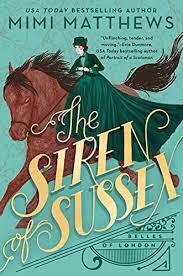
The Siren of Sussex by Mimi Matthews: I have not written a full review for this one yet, but I might try to put one together for it and its sequel later. This one is straight romance novel material, historical (Victorian setting), and absolutely lovely! I read it about a month ago and I am currently in a big Victorian-set historical romance brainrot mode. I also read the sequel to this one, The Belle of Belgrave Square. There will be a third one apparently sometime next year, so maybe I’ll do a double review for books 1 and 2 in time for the 3rd release. This book just really made me happy, with a headstrong intelligent female lead and a Indian-immigrant working-class love interest, and lots of witty banter.
My Top 5 Nonfiction Books:
Zen and the Art of Saving the Planet by Thich Nhat Hanh: this is the last book that came out before Thich Nhat Hanh’s death in 2021. If you are unfamiliar with him, he was a very famous well-respected Buddhist monk who wrote many books on Buddhist, meditation, and finding peace in your own life. He gave lectures, met with world leaders, ran retreats, and generally just made the world a better place by his existence. He was/is one of the greatest heroes in my life, and I was absolutely DISTRAUGHT when he died last year. (And, shit, I am genuinely getting choked up just typing this.) This book is kind of exactly what the title suggests: a way of approaching the crises of our planet (ecological, political, systemic, personal) from a Buddhist perspective but also from a largely non-denominational place of deeply human spirituality and compassion. It made me cry at least three or four times, and the minute I finished it I threatened to buy a copy for every person I know to make them read it (if I’d had the funds, I really probably would have).
Make Your Art No Matter What by Beth Pickens: I have a soft-spot for self-improvement books, but more specifically I really love self-improvement books about living an authentic and creative life. For instance, I also liked Big Magic by Elizabeth Gilbert (though I do find Gilbert a little too woo-woo and mystical hand-wavy at times). This book by Beth Pickens is about living life as an artist — and she defines “artist” very broadly — and offers real concrete advice on how to live that life to the best of your ability and with the most fulfillment you can manage, whether you are a full-time professional artist or someone trying to eke out a practice around a day job and family and other responsibilities. I found it incredibly insightful, down-to-earth, actionable, and really inspiring.
The Dragon Behind the Glass by Emily Voigt: I really love nonfiction books about history or science, and this one is kind of both. I picked it up on a whim and found it absolutely fascinating. It’s about the exotic fish trade, of all things! Specifically about a rare exotic fish called an arawona, which is allegedly the most expensive kind of collector/live fish in the world (most expensive fish of any kind in the world are, I think, some of the giant tuna caught/killed in Asia and sold by auction to high-end restaurants for sometimes millions of dollars). This book, and the exotic fish trade, includes: trips into the deepest barely-explored jungles of Asia and South America, run-ins with the black market and the mob, and devolves into fraud, betrayal, and even murder. It’s absolutely shocking and enormously fascinating!
1920: The Year That Made the Decade Roar by Eric Burns: I think I’ve mentioned before I am a bit obsessed with the 1920s Jazz Age era? So I assume no one is surprised that I picked up this book. It is pretty much exactly what it says it is: its a history book that focused on JUST the single year of 1920, and makes an argument that the events of that single year was the catalyst and predictor for everything that came after it. One of the major events the book focuses on is the 1920 Wall Street bombing, which remained the most destructive incident of domestic terrorism until the Oklahoma City bombing in 1995. (I found that section SO interesting that the Wall Street bombing eventually became the instigating event for the plot in my 1920s historical fiction work-in-progress). The whole book was really enlightening and I highly recommend it to anyone interested in American history.
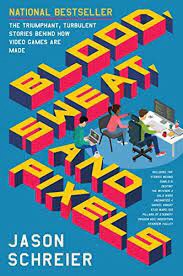
Blood, Sweat, and Pixels by Jason Schreier: the subtitle for this book is “The triumphant, turbulent stories behind how video games are made.” It’s a really well-researched account written by a games journalist about the game industry, using an enormous amount of first-persons accounts and interviews. Each chapter focuses on the story of a different game, including (but not limited to) Witcher 3, Uncharted 4, Dragon Age: Inquisition, and Stardew Valley. I’m not even a big gamer (just a dabbler), so I’m not 100% sure why I decided to pick this one to begin with, but I’m so glad I did! It was so cool to learn about how these games are developed and the kind of crazy sheningans that happen behind the scenes. (The dude who made Stardew Valley continues to blow my mind.) It’s also really fun now to watch the comedy tv show Mythic Quest on Apple+ and constantly go “that’s not how that works! That’s not how any of that works!” Lol…
So, that’s my list, for whatever it’s worth. I’d love to hear what books you read and loved this year! Please feel free to share in the comments!
Hello folks! This is just a quick heads-up to let you all know that I will not have a full blog post up this Friday, as it is Christmas Week and I have family stuff, etc. I plan to have my “Fave Reads of the Year” list up the following Friday (last Friday of the year!). I have a long list worked out, but I am having a very difficult time cutting it down, lol! This is always my problem with all sorts of “best of” lists. I love too many things and I hate trying to prioritize, put in numerical order, or cut down, so we’ll see how it goes…
Also: I have a couple of upcoming-release books I plan to review. HOWEVER, they are both HarperCollins books, and I am waiting to post reviews of these books until the current HarperCollins strike is resolved. While this does impact the authors, most of the affected authors have voiced enthusiastic support for the striking HarperCollins union. They have encouraged book reviewers NOT to cross the virtual picket line, and to withhold reviews until further notice.
I also highly recommend following the Strike account on Twitter: @/hcpunion for all updates, and links to ways you can support the strike.
Ok, that’s all from me for now! Merry Christmas to those who celebrate! Happy Chanukah to my friends in the Jewish community! And a general happy week to everyone, religious or not! See you all after Christmas!





















 Amanda Haimoto Rudd