Book Review: The River Has Roots by Amal El-Mohtar

A few months ago, I had the pleasure of reading Amal El-Mohtar’s new novella, The River Has Roots (released in March 2025). Amal El-Mohtar is a Lebanese-Canadian poet and speculative fiction author. Though The River Has Roots is her solo full-length fiction debut, El-Mohtar is a prolific writer of speculative short stories and poetry, as well as the editor of the fantastical poetry magazine, Goblin Fruit. She has received the Rhysling Award for Best Short Poem three times, and her short story, “Seasons of Glass and Iron” won the Nebula, Locus, and Hugo Awards in 2016. She released her collection of short fiction, The Honey Month, in 2010, and has a second short fiction collection, Seasons of Glass and Iron, forthcoming in 2026. However, she is, of course, best known This Is How You Lose the Time War, a romantic science fiction epistolary novella co-written with Max Gladstone that swept the awards season in 2019, winning the Nebula, Locus, Hugo, BSFA, and Aurora Awards for Best Novella/Shorter Fiction. That novella is one of the most beautiful and moving pieces of fiction I have ever read, so I knew that picking up The River Has Roots would be a safe choice.

The River Has Roots is based on the traditional murder ballad known as “The Two Sisters.” Murder ballads are a sub-category of traditional folk ballads that tell narratives about crime, murder, and death, usually of a gruesome nature. Murder ballads most often originated in the areas of England, Scotland, and Scandinavia in the medieval period, and usually relayed both the murder and the justice or revenge that follows. In most cases, the murder victim in the ballad was a woman. The murder ballad of “The Two Sisters” originates in England or Scotland, dating to at least 1656. Several variations of the tale exist, such as “The Twa Sisters,” “Binnorie,” “The Cruel Sister,” or “The Bonny Swan,” among others.

The two sisters of the novella are Esther and Ysabel Hawthorn, who live near the town of Thistleford, where the River Liss runs from the Faerie land of Arcadia, carrying the wild magic of “grammar” in its water. Grammar has the power to transform what it touches and is governed by complex rules of meaning and wordplay. The willow trees along the river filter the wild grammar from the water with their roots, making the water safe and the grammar within willow wood usable by humans. Marking the boundaries between Arcadia and the human world is a wild area called the Modal Lands.

Esther, the elder, and Ysabel, the younger sister, are part of the Hawthorn family, who have cared for their grove of willow trees for generations, cultivating and harvesting the willow wood to be used in magical objects. Esther and Ysabel are tasked with singing to the trees, which strengthens them and keeps them happy. As is often the case in such tales, the elder sister is dark-haired and serious while the younger sister is blonde and playful. Yet, unlike traditional folktales, it is the elder sister Esther who captures the attention of a man, rather than Ysabel. The man, Samuel Pollard is wealthy and charming, but Esther will have nothing to do with him. Both because she finds him dull and obsequious and because she already has a secret faerie lover from Arcadia named Rin, a nonbinary shapeshifter who can appear as an owl as easily as they appear as a man or woman. When Samuel Pollard discovers that Esther has becoming engaged to Rin, his jealousy turns violent.

Though there are many variations of “The Two Sisters” murder ballad, the basic components stay roughly the same. The two sisters visit a body of water, usually a river, sometimes a sea, where the eldest sister drowns the younger sister in a bout of jealousy over a man. El-Mohtar’s version, however, defies the patriarchal themes of the original. Esther explicitly comments in the narrative that many such tales pit women against each other for the sake of man, and usually reduce the older sister to a cruel, selfish stereotype. Instead, El-Mohtar imagines two sisters who love and protect each other, placing a controlling and jealous man in the role of murderer.

This novella showcases what is clearly one of Amal El-Mohtar’s greatest strengths, her absolutely stunning poetic prose. Every sentence is so beautiful that I often simply had to stop reading and stare for a minute or two, admiring the skill, burning with jealousy of her mastery of language. There are some stories that I would be willing to make a deal with the devil in order to have been the one who wrote it. This Is How You Lose the Time War is definitely on that list (so are Gideon the Ninth by Tamsyn Muir and The Spear Cuts Through Water by Simon Jimenez, just name a couple). The River Has Roots is also on that list, because holy wow is it gorgeous. The prose is not only elegant and lyrical though. It is also filled with wordplay, puns, and metaphor turned literal, all of which highlight the primary theme of the novella: the power of language to transform human perception and even concrete reality.

Puns and double meanings appear from the first line of the first chapter, including the interplay of the magic of grammar and its etymological origins, as well as the double meanings inherent in the Modal Lands and elsewhere. By imagining grammar as a kind of transformational magic, the narrative heightens the figurative and symbolic power of language into a concrete force that has real, physical impacts on people and their world. Wordplay and puns quite literally have the power to transform Esther into a swan and a harp. There are, however, as many positive examples of the impact of language as there are negative. Just as words can be used to divide and destroy, they can also bring together. Riddles and wordplay facilitate Esther and Rin’s relationship, allowing them to cross the boundaries between their lands and cultures. Similarly, words, particularly riddles and songs, represent (and help create) the unbreakable bond between Esther and Ysabel, which is instrumental to the plot’s conclusion. The narrative proves again and again that language is a powerful force in the world, both literally and figuratively, that can impact lives for good or ill and must therefore be used with care.

Sisterhood is also crucial to the novella. It is the through the power of sisterly love that Esther and Ysabel defy the patriarchal oppression of Samuel Pollard (and the traditional murder ballad), and death itself. Though the romantic love between Esther and Rin is also an important, it is not the central focus. Instead, the narrative gives primacy to the sisterly love between Esther and Ysabel. Esther, in particular, explicitly rejects the formulaic role usually assigned to eldest sisters in folklore. She is not jealous of Ysabel, but protective, and is willing to sacrifice her life and happiness for Ysabel’s sake.

Because language is so crucial to this story, and because I simply could not stop staring at some of the prose, here are a few of my favorite passages (I could highlight the entire novella, but I’ll do my best to just pick a few):

“There was a time when grammar was wild–when it shifted shapes and unleashed new forms out of old. Grammar, like gramarye, like grimoire. What is magic but a change in the world? What is conjugation but a transformation, one thing into another?” (Page 1)

“When people say that voices run in families, they mean it as inheritance–that something special has been passed down the generations, like the slope of a nose or the set of a jaw. But Esther and Ysabel Hawthorn had voices that ran together like raindrops on a windowpane. Their voices threaded through each other like the warp and weft of fine cloth, and when the sisters harmonized, the air shimmered with it.” (Page 7-8)

“Most music is the result of some intimacy with an instrument. One wraps one’s mouth around a whistle and pours one’s breath into it; one all but lays one’s cheek against a violin; and skin to skin is holy drummer’s kiss. But a harp is played most like a lover: you learn to lean its body against your breast, find those places of deepest, stiffest tension with your hands and finger them into quivering release.” (Page 80)

“Rin might have said, The way is a riddle. How would Esther solve it?
They might have said, You sang your way out of Arcadia once; sing your way back in.
Or Rin might have said, If the river has roots, it has branches, too; learn to climb them, and find your sister.” (Page 98)

The River Has Roots packs a powerful punch into a fairly small package—one of things I love best about a good novella. With poetic prose and complex wordplay, the novella tells a haunting story of sisterly love, justice and revenge, and the power and magic of language. It is lyrical, poignant, and makes me insanely envious. Which, honestly, is my favorite kind of book.

Book Review: Atmosphere by Taylor Jenkins Reid

I recently picked up Taylor Jenkins Reid’s new release, Atmosphere (released on June 3rd 2025), and read it in two afternoons. Reid is known for her literary historical fiction with prominent romantic subplots, and her two most recognizable and highly-regarded titles are The Seven Husbands of Evelyn Hugo and Daisy Jones and the Six (which was made into a television mini series). I haven’t read her work before, but I’d seen that her historical settings are generally well-researched and her romances tend toward the sapphic. What sold me on Atmosphere, though, was how uniquely targeted it was to me specifically, almost as if by design. It is about a woman named Joan who is an astronomy professor at Rice University in Houston, who joins the NASA shuttle program in the 1980s and (of course) falls in love with a fellow women astronaut candidate named Vanessa.

Considering that I am a queer woman who lives in Houston, have (briefly) worked on the Rice University campus, was once long-ago a Physics major in college (closely related to astronomy) and I am a massive NASA nerd who has visited Space Center Houston on many occasions… well, this book was basically written FOR ME.

Atmosphere is told primarily from the perspective of astronomer Joan Goodwin, a brilliant accomplished woman who, in addition to her work, takes care of her sister, Barbara, and her niece, Frances (who would suffer from serious neglect without Joan’s presence). Unlike Barbara, who has spent her life flitting from man to man and getting herself into trouble, Joan is serious, self-controlled, and never shown the slightest interest in romance. She doesn’t even particularly like kissing. She has watched her mother’s personality subsumed by her father’s—even despite the fact that they genuinely love each other—and vowed never to let that happen to her. Instead, she devotes her life to her love for astronomy and pursuit of knowledge.

When, in 1980, NASA opens astronaut candidate applications to women for the first time, Joan, who has spent her life dreaming of the stars and believing she would never be able to reach them, leaps at the opportunity. She finds herself among a small group of women accepted into the program. Over the course of two years of training and preparation with her candidate cohort, she befriends many fellow astronauts, and finds herself falling inexorably in love with one, Vanessa Ford, a mechanical engineer and pilot. For the first time in her life, Joan understands what all the fuss is about. However, the two women must be enormously careful, for this is the 1980s, and anything labeled “sexually deviant” could get them both fired from the program.

The novel is told out of sequence. The first chapter opens in 1984, as Vanessa takes her first shuttle flight while Joan works in Mission Control, having already experienced her first flight mission a couple months before. The chapter ends just as an emergency situation on the shuttle places Vanessa and the rest of the crew in serious danger. The novel than jumps back to 1980, when Joan first learns about the new application process. From there, chapters jump back and forth between Joan’s experiences from 1980 through 1983, (as she joins the program, completes her training, and falls in love with Vanessa), and the unfolding catastrophe on the shuttle in 1984 which finds Joan having to talk her lover through a potentially deadly situation without revealing the depth of her feelings to the rest of Mission Control.

The research details of the novel are impeccable. I recognized the locations mentioned around the greater Houston area with an amusing and disorienting sensation (I do not often see books talking about my own neighborhoods). And the details about the NASA shuttle program, the training, the operations in Mission Control, the design of the shuttle and equipment, were all accurate (at least to my amateur enthusiast’s eyes) and helped ground the love story in its time and place. The love story itself unfolds in a slow, careful way that felt organic and lovely. And the character of Joan was complex and real. Even more than her relationship with Vanessa, what sang to me the most was her relationship with her sister and her niece, which grows increasingly fraught as the story progresses. Those moments in particular felt real and important and painful to me. By the time the novel reaches its emotional payout in the end, it feels earned.

This book hit me with surprising force a few different ways. For one thing, I see an uncomfortable amount of myself in Joan. In her relationship with Barbara, the way she bites her tongue to keep the peace and allows her (selfish, manipulative, narcissistic) sister to run roughshod over her life. I too have done that with family far more often than I would like to admit. I also see myself in her fear of inadequacy, in her work, among her peers, and especially within romantic entanglements. She has a hard time believe she’s even allowed to want these things, let alone have them and be good at them. I get that feeling. These are all feelings that I think the book wants people to feel, to identify with, to absorb. And I absolutely did. So job well done.

Somewhat embarrassingly, one of the aspects of the novel the hit me the fastest and the hardest was an element that is probably pretty minor to the average person. The thing that got me crying only 22-23 pages in. The thing that kept me crying for a good chunk of the book. It was the moment Joan got the call that she had been accepted into NASA to begin with. I had to put the book down. I started to sob. I had to talk to my best friend so he could help me calm down.

You see, I wanted to be an astronaut. I know, most children wanted to be an astronaut at some point in their lives. But for me it was a serious goal for a time. The first three years of my undergraduate degree, I was a physics major. I had a plan. I was going to get my physics degree, join the Navy science program, and work my way into NASA. But that didn’t happen. I ended up getting a Bachelor’s and a Master’s degree in Literature, and taught for nearly ten years, and got most of my way through a PhD as well. There were a lot of reasons for that that I won’t dig into here. No one cares about hearing my entire life story, and it’s all rather tangled together.

Suffice to say that despite my love for literature, I look back and regret the decision not to pursue that path to this day. There are times in your life when you stand at a fork in the path, with multiple options. No option is wrong or right, just different, each equally valid in some way, representing some aspect of your personality or your ambition. But each option requires closing down the others forever, no going back and trying again. I made a decision. I often fear it was the wrong one. To this day, I cry every time I watch Apollo 13, or a space documentary, or visit Space Center Houston. And when I read the sentence in Atmosphere, on page 23 when Joan first learns she has been accepted into the training program, I burst into violent sobs. Such is life, I suppose, that we all must live with our choices and swallow our regrets. This novel just happened to stab right at the heart of one of mine.

Atmosphere is not only about two women falling in love, or about the trials and tribulations of the space program. It is about the unfairness of a society that continually and remorselessly dismisses at women, consigning them to the background and scoffing at their ambitions and accomplishments. It is about the long and painful struggle of every woman who has had to kick and scratch and fight to claim a place among men that she has rightfully earned and deserves. It is also about the unfairness and cruelty of a society that forces queer people to hide who they truly are and deny the people they love for the sake of safety. And it is about importance of love and family and true belonging, even if that family ends up not looking like the traditional, idyllic image in a magazine. And its also about the smallness of people and the bigness of the universe, and interconnectedness that encompasses everyone so that even the smallest person’s value rivals that of the whole universe. It’s genuinely, a really beautiful, empathetic, hopeful book.

Book Review: the Monk & Robot Duology

Title: A Psalm for the Wild-Built (Book 1), A Prayer for the Crown-Shy (Book 2)
Author: Becky Chambers
Publication Dates: 2021, 2022
How I Got Them: Bought in print
Rating: 5 stars! 6! 7!

As I try to get myself back into the swing of full book reviews – and I hadn’t meant to go so long without any! I’m still reading plenty, but writing the reviews has proven too much for my brain lately – I wanted to talk about Becky Chambers’ two Monk & Robot novellas. I read them a few months ago, and they now live rent free in my brain forever. Hell, they are hooked into my ribs and refuse to let go. They made me Feel Things ™, and I was not prepared. I’d heard Becky Chambers was good at that, but these were the first of her books I’d read (I also own The Long Way to Small Angry Planet, but haven’t had a chance to read it yet).

Both books take place in a post-industrial, ecologically-rich utopian society called Panga, where centuries before the stories take place, the robots built to serve humans suddenly and mysteriously gained full sentience, put away their tools, and wandered off into the wilderness never to be seen or heard from again. The humans have since learned the error of their ways (in terms of industrialization, ecological destruction, etc), and now live without robots, mostly in balance with their environments, and at peace with each other. It is left up to guesswork and interpretation if this world is meant to be Earth far far in the future, or another world entirely, with many similarities.

In Panga, we meet the nonbinary (they/them) monk, Sibling Dex who, in the throes of a pervasive ennui and feeling of unfulfilled potential, leaves the safety and comfort of their home monastery to become a traveling tea monk. As a tea monk, they administer comfort, advice, and tea to the far-flung towns and villages on the outskirts of human civilization. Dex becomes very good at this, and highly loved and respected by the villages they frequent. Yet after a couple years, they find even this calling unsatisfying. Dex is filled with yearning, for peace or purpose or something they can’t even name. And so, on a whim, they start journeying out into the uncharted, unforgiving wilderness beyond the villages, in search of a centuries-lost monastery they read about in a history book.

On the way, Dex has the shock of their life when they stumble upon a robot, Splendid Speckled Mosscap, who has been sent by agreement with many other robots, to find humans and attempt to understand them, asking them “what do you need?” This is the first interaction between robots and humans since the robots disappeared centuries before.

Dex and Mosscap team up to travel to the lost monastery, engaging in deep philosophical debates along the way and building toward an odd and marvelous friendship.

The second book picks up directly from the ending of the first book, with Dex and Mosscap journeying back into human civilization so that Mosscap can meet with humans in each village and ask them its question: “what do you need?” On this journey, Mosscap faces its own sense of mortality, and realizes that it is changed merely through interaction with humans. Meanwhile, Dex continues to wrestle with their sense of dissatisfaction, lack of purpose, and desire for fulfillment. We also meet Dex’s family, see many, often contradictory, reactions as humans come face to face with a robot, and have more philosophical debates. While the ending of the second book is satisfying, I still find myself hoping for more. There’s been no talk of another novella yet. Perhaps these two are all Becky Chambers intends to say on the matter, but I hope she returns to Dex and Mosscap eventually.

The first book is essentially one long philosophical discussion wrapped in a beautiful package of lush idyllic wilderness, gentle friendship, and warm fragrant tea.

The second book continues that philosophical discussion, but with more interaction with other characters and a few uncomfortable moments as Dex and Mosscap deal with potentially less-tolerant humans. However, both books are gentle and quiet. Not a lot of “Plot” happens. Dex and Mosscap are traveling, but most of the journeying and tension is internal, emotional. The world and characters of these books are diverse and welcoming and comforting and thoughtful, and the questions asked by Dex and by the text are deeply human and complicated.

Dex’s dissatisfaction with their life could, on one level, be criticized as “first world problems.” After all, Dex’s world is utopian: peaceful and comfortable, people’s needs are met, their desires permitted and catered to wherever possible. No one, as far as one can tell, is starving, or being oppressed. What, then, is there to complain about? Nothing, really. Which is part of Dex’s problem, because they feel guilty about feeling unsettled and dissatisfied and unfulfilled. They feel they have no right to their dissatisfaction, but knowing this does not make the feeling go away.

And I think that’s where these books get at the heart of the matter. Mosscap asks the humans: “what do you need?” and most of the humans HAVE NO IDEA. Some of them seem perfectly content with what they have. Some of them simply don’t know how to answer the question. Some can’t even decide what the difference is between a “need” and a “want.” What does one need? What does one want? Are they the same thing?

Dex’s ennui is deeply human and real. A feeling I recognize in myself. They want happiness, but what is happiness? They want purpose, but each time they think they’ve found it it proves fleeting, unfulfilling, illusory. They fear that there is something wrong with them, something broken, so that nothing will ever feel RIGHT, even though everyone else around them seems just fine.

Dex asks:

“Still. Something is missing. Something is off. So, how fucking spoiled am I, then? How fucking broken? What is wrong with me that I can have everything I could ever want and have ever asked for and still wake up in the morning feeling like every day is a slog?”

I know this feeling intimately.

These books made me cry at least half a dozen times.

These books have fingers that dig into my sternum and grasp at the churning maelstrom of feeling beneath.

They don’t provide easy answers, but possibilities. Mosscap offers a wisdom born of nature, of thoughtful reflection and an almost Zen sensibility (Dex is a monk of a made-up “fantasy” religion concerning six gods, but I’d argue that they have a distinctly Buddhist quality to them).

Mosscap offers this particular bit of advice:

“You’re an animal, Sibling Dex. You are not separate or other. You’re an animal. And animals have no purpose. Nothing has a purpose. The world simply is. If you want to do things that are meaningful to others, fine! Good! So do I! But if I wanted to crawl into a cave and watch stalagmites with Frostfrog for the remainder of my days, that would also be both fine and good. You keep asking why your work is not enough, and I don’t know how to answer that, because it is enough to exist in the world and marvel at it. You don’t need to justify that, or earn it. You are allowed to just live. That is all most animals do.”

Similarly, in the second book, Dex states:

“You don’t have to have a reason to be tired. You don’t have to earn rest or comfort. You’re allowed to just be. I say that wherever I go.” They threw a hand toward their wagon, its wooden sides emblazoned with the summer bear. “It’s painted on the side of my home! But I don’t feel like it’s true, for me. I feel like it’s true for everyone else but not me. I feel like I have to do more than that. Like I have a responsibility to do more than that.”

Of course, in our own world, where capitalism rages unchecked and survival is far from assured, we are not “allowed to just live” and we usually do have to work in order to justify our right to exist in the world. Rest has to be earned purely because society has demanded it. But the Monk & Robot books imagine a world where this might no longer be necessary and it’s a beautiful, hopeful thought.

The second book, Prayer for the Crown-Shy, pushes beyond this by suggesting that, perhaps, the answer is in our connections with other people. In our friendships, and loves, and communities. As Dex and Mosscap travel through parts of Panga in the second book, stopping at each village to ask people what they need, the answer (not always explicitly stated, but often implied by their own interactions with people), is EACH OTHER. This is true for Dex as they reconnect with their family, and make possibly romantic connections with someone they meet while traveling. But it is at its most true at the end when, having nearly reached their final destination and inevitable separation, Dex and Mosscap stop where they’re at. Because they’d rather stay together. They find an answer in each other, in their companionship and gentle, complicated, beautiful friendship.

Dex says:

“What if that is enough, for now? What if we’re both trying to answer something much too big before we’ve answered the small thing we should have started with? What if it’s enough to just be…Us.”

Is it enough? I don’t know. In THIS world, possibly not. But what a hopeful, marvelous idea that it someday could be.

Series Review: Jackaby Series

[AN: sorry for the delay. I had this post all ready to go, and then I forgot to schedule it! Lol!]

A couple weeks ago, in my post about my recent Victorian historical fiction reading binge, I mentioned that I had read a book called Jackaby by William Ritter. Well, I’ve now finished the series (4 books), and thought I’d share a full series review.

I will try to avoid too many MAJOR spoilers, but as I am talking about the series as a whole there will probably be some.

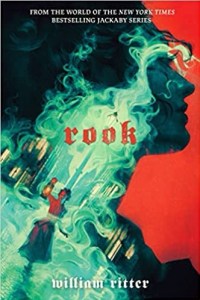
As mentioned, the author is William Ritter (who has also written some middle-grade fiction that looks really great so I’ll probably check those out at some point!). I don’t believe the series as a whole has a name, but the four books are: Jackaby, Beastly Bones, Ghostly Echoes, and Dire King. There is a fifth standalone book coming out in August, called Rook, that I am very much looking forward to. But don’t go looking for the description of that book or you will run face-first into a couple major spoilers for the ending of book 4 (yes this happened to me).

The books take place in a Victorian-age New England city called New Fiddleham (cleverly avoiding any actual states or real cities/geographies). The main characters are Abigail Rook, an intelligent young woman who has recently run away from her home in England in search of adventure, and R.F. Jackaby, a paranormal investigator who becomes her employer. Each book is written in first-person from Abigail’s POV, in a style similar to John Watson reporting about the cases he worked on with Sherlock Holmes — including some amusing little nods to the trope throughout.

R.F. Jackaby is a Seer. In fact, he is THE Seer, as there is only one alive at any given moment. He has the capacity to see the supernatural elements of the world that are mostly invisible to or ignored by the human public. He uses this ability as an investigator in New Fiddleham, dealing with magical and unexplained issues while constantly butting heads with the police chief and the mayor. He lives in a house once owned by a woman who was murdered ten years ago and simply never left — he and the ghost are rather good friends, thankfully.

Abigail Rook is a smart, headstrong young woman who wanted to be an archeologist. Throughout the series she proves herself to be brave and capable and quite often the voice of reason when situations become dire. Her bravery is established pretty early on in her employment with Jackaby when she discovers that his last assistant was turned into a duck, and doesn’t immediately go running and screaming out of the house. Never mind the ghost!

In the first book, Jackaby, the world-building is established and Abigail and Jackaby solve a series of murders, as one does. They also befriend one of the cops, on whom Abigail develops a crush.

In the second book, Beastly Bones, Abigail is given an opportunity to stretch her archeology muscles a bit on a case out in the valley away from the city. The cop Abigail has a crush on, Charlie Barker, has been transferred out to the valley as well, allowing their flirtation to continue with growing adorable-ness (and Jackaby’s hilarious pleas that Abigail not rely on him for emotional or relationship advice). This book gets rather bloody in places, and the mystery of who is doing what to whom was fairly intricate.

[SPOILER BELOW]

There’s a freaking dragon involved! Sort of! It’s complicated!

[SPOILER ENDED]

The second book begins to hint at a larger conspiracy or plot hiding beneath the recent cases that Jackaby and Abigail have worked on. This is fleshed out more in the third book, Ghostly Echoes.

In Ghostly Echoes, Jackaby and Abigail are “hired” by their ghost friend, Jenny, to find out who murdered her. Unfortunately, what should be a relatively straightforward task for them becomes more and more complicated as the clues to Jenny’s murder ten years ago leads them all into the heart of a much larger, deadly plot. This book features a very-polite (but still deadly) vampire, a mad scientist, and a trip on the River Styx into death. And that’s not nearly a lot of it!

Where the first two books were fun jaunts into the murder mystery genre with some paranormal shenanigans thrown in, the third book leaps headfirst into Celtic folklore and epic fantasy. The fourth book, Dire King, then proceeds to shatter the quiet facade of the Victorian city and break into all-out magical war.

The fourth book was so tense and so action-packed I felt like I barely breathed through the entire thing! Despite a couple spoilers I had accidentally run into (while looking at the new book coming out in August), I did not actually know where the book was going for most of it. It goes heavy on the drama, in the best ways possible. I especially appreciated the way Abigail becomes the voice not only of reason but of mercy and goodness and “humanity at its best” throughout the fourth book. And the ending was so SO satisfying. (And there! I managed not to spoil any of the real major bits!)

One of the many things I liked about these books was the relationships. For one, I fully expected it to become a romance between Abigail and Jackaby, just because that tends to be the way these things go (not a complaint! I would have been fine with that as well!). But Ritter defied my expectations by pairing Abigail with the sweet cop, Charlie. (Was there a bit of copaganda, yeah, sure… but it’s such a standard character type in historical fiction and we all know it’s a fantasy anyway, so it didn’t really bother me.)

Another thing I really loved about these books was the absolutely impressive amount of research into folklore and mythology that Ritter had to have done to write these. There are dozens and dozens of references to so many creatures from folklore and mythology it almost boggles the mind! And not just the standard Western ones, though Celtic mythology gets the main focus in the last two books, but also Asian and African as well.

A third of the many things I loved about these books was how truly FUNNY they were. The plots are dark, there’s murder, there’s an attempt to conquer the world in the last book, but despite this (or even because of it) there is a wonderful humor that threads its way through the entire series. Jackaby is deadpan and drily sarcastic (one of my favorite character types), and the interactions between Jackaby and Abigail are one of the major highlights of the whole series.

The whole series was a delight from start to finish. I thoroughly enjoyed all four books, but especially the last one. I cannot wait to read the new one, Rook, coming out in August. What’s even better is that the whole series is getting a reprint in August. I read the books by borrowing the ebooks from the library. And there are ebook and print versions available on Amazon. I think they were self-published, or perhaps indie-published by a small press. But either way, they are getting a new printing with brand new cover art at the same time as the release of the fifth book.

Ironically enough, it was the new cover art that first got me to read these. I follow the artist doing the new covers, Corey Brickley, online. I love his work (seriously go check him out!). He posted the cover reveal for Jackaby with his new artwork and a brief description of the book and I knew it would be right up my alley (I mean! Compare the cover at the top of the post, with the rest of the covers in the post!). But I probably would not have ever run across them if Corey Brickley had not been commissioned to do new covers! It’s so funny how the world works sometimes…

Anyway, I highly recommend these books. As mentioned, they are available to purchase right now in ebook or paperback. Or you can do like I did, and borrow them from the library so that you can buy the NEW covers in August without ending up with two whole sets.

My Month of Victorian Romances

Sometimes I get in these moods, where I read one particular kind of book and just CANNOT STOP reading that particular kind of book. I go through cycles where I absolutely devour certain genres or sub-genres. Back in 2020 I went through a huge space opera phase. In mid-2021 there was a big period of murder mysteries. My romance reading in general tends to happen in big chunks.

Starting around the beginning of December, and going through Christmas and New Years, and the first couple weeks of January, I’ve been voraciously consuming historical romance novels set in the Victorian time period. Within that there have been a few variations: a few straight romances, a few mystery types, a few fantasy types. But all of them have been Victorian historical fiction.

In order, I have now read:
Soulless by Gail Carriger
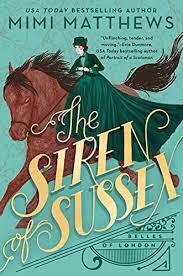
The Siren of Sussex by Mimi Matthews
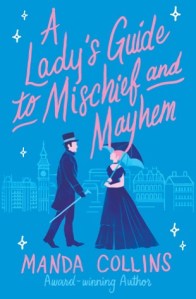
A Lady’s Guide to Mischief and Mayhem by Manda Collins
An Heiress’s Guide to Deception and Desire by Manda Collins
The Belle of Belgrave Square by Mimi Matthews
Widdershins by Jordan L. Hawk (a re-read by still in the same Victorian-set genre)
Changeless by Gail Carriger (started by didn’t finish)
Jackaby by William Ritter
Beastly Bones by William Ritter

Soulless and Changeless are the first two books of Gail Carriger’s Parasol Protectorate series (paranormal romance/steampunk set in Victorian England). I read Carriger’s YA The Finishing School series last year. I didn’t realize until after the fact that the Parasol Protectorate series was an adult series, and written first, and the Finishing School series is a prequel. But I enjoyed the YA books enough to try out the adult series. I wouldn’t say I loved the Finishing School books, but I enjoyed them. They were silly and frothy and adventurous and fun. I found Soulless for cheap at the used bookstore and enjoyed it enough, and then I grabbed the sequel, Changeless, at the library. I won’t say it’s a DNF. I think I might come back to it eventually, probably. But some of the characters that I knew from the Finishing School series appear in ways I really didn’t like (again, I realize the Parasol books came first, so it’s my own fault, but however it happened, I am far more attached to the version of the characters from the prequel series and I was pretty upset about some things in Changeless, which I won’t specify as they are spoilery). Changeless, also frankly was not scratching the particular ITCH I had when I jumped into these Victorian books. So I returned it to the library early.

The Belles of London series encompasses the books The Siren of Sussex and The Belle of Belgrave Square by Mimi Matthews (and a third one is coming out in 2024). These were straight Victorian romance – no magic or murder mysteries in these, just lots of Victorian-period melodrama, which I loved. I loved them so much that The Siren of Sussex made it onto my favorite books of the year list! They are swoony and fun and filled with smart, interesting, complex women and honorable men trying to do the right thing under difficult circumstances, and all the kinds of societal roadblocks and miscommunication issues one might expect from the genre. They are not out to defy the genre expectations, but rather play them up to great effect. I am really looking forward to the third one.

In what appears to be very much a pattern in these kinds of novels, the two books by Manda Collins, A Lady’s Guide to Mischief and Mayhem, and An Heiress’s Guide to Deception and Desire are also linked books, with at least one more book to be released in the series this year in March. These are historical romance/mystery hybrids (one of my favorite combos!), with each book featuring a woman MC solving a crime while also following in love with the charming man helping them investigate. They are both really great mysteries (I had the first one figured out about ⅔ of the way through but the second one kept me guessing until right near the end). And the romances are both sweet and swoony. The first one is a rivals-to-lovers pairing (a police detective and a woman who’s doing her own investigating and keeps messing with his career). The second book is a second-chance romance with a pair of lovers who broke off their engagement years ago, mixed with a marriage of convenience (it’s complicated!). I really loved both and I cannot wait for the third one!

Finally, I have an already completed series of four books by William Ritter that are Victorian-age historical paranormal mysteries. They are not romance, strictly-speaking, though there is a romantic subplot threaded through all the books. They are about a woman from England who comes to America and finds employment with a paranormal investigator. The books are written in first person with the woman, Abigail, narrating her adventures with the investigator, Jackaby, in a way similar to Watson’s narration of the Sherlock Holmes stories. I have finished the first two books, and already have the third one checked out from the library and ready to go. These books are BLAST. Fun mystery writing, lots of period-appropriate set dressing and some really fun paranormal monsters including the usuals such as werewolves, vampires, ghosts, as well as some things you would not expect. I can’t wait to see where these go next!

So that’s what my reading has looked like the last month or so (about a month and a half now, actually, I guess). I think I’m going to finish the William Ritter series now, and then I’m thinking I might jump into something different. I’m thinking about getting back into big epic fantasy tomes. I used to read them almost exclusively in high school. Big giant 800-page types. But I fell out of the habit in college and then grad school killed my reading altogether (as I’ve talked about on this blog before), and since I’ve gotten back into the swing of things I haven’t really returned to my roots yet. I think it’s about time. But we’ll see…

My Fave Reads of the Year, 2022 Edition

Hello all and welcome to the last Friday of the year! I hope everyone had a wonderful holiday week last week, and that you are excited for the new year and all the possibilities that might bring. The last year, or two years really, have been pretty rough, and I am really hoping that 2023 will be a bit kinder to us all. But I am… skeptical, let’s say. Still, I am trying to approach the new year with a feeling of cautious optimism. We shall see how it goes.

Before I jump into my fave reads list, I have several things in the works I want to mention. I have officially started my work as a freelance editor. And I am preparing to launch an etsy shop to sell the fluid paintings I’ve been making off-and-on for the last couple months. The first handful were all gifts to various family and friends, but I have a bunch now that are piling up in my office, so I’m hoping to sell them for just a bit – enough to clear out the space in my office and buy supplies so I can make some more. I’ll have the shop linked here probably in the first week of January for the curious.

I am also considering changing the name of the blog… though, I am still on the fence about that. As I mentioned in my About page ages ago, I chose the name “Night Forest Books” as the name of my hypothetical future bookstore. I’ve had the name in mind since AT LEAST 2016. It’s a reference to my favorite book, The Neverending Story, and the location called “Perilin, the Night Forest.” When I first chose the name I did a lot of research to make sure no other bookstore or related business had claimed the name already. I bought the .com domain for future use, and I claimed the IG name (@night.forest.books) and this blog title. However, I was nowhere near ready to actually register a business or LLC name as I knew it would be probably years before I was financially ready to start the bookstore.

Well, apparently in mid-2020 a brand new micro-press started in CANADA, and they named themselves Night Forest Press. Obviously, even if they did research on the name, they did not consider my teeny-tiny blog a problem, whether it had essentially the same name or not, and since I didn’t have an actual business registered under that name it was legally up for grabs. I could probably still get away with naming a bookstore Night Forest Books if I really wanted to (maybe, I’m not certain), but googling “Night Forest Books” right now just brings up the press website. And I had vague ambitions of maybe someday starting a press associated with the hypothetical bookstore, which would no longer be a viable option under the current name. So, I will need to find a new name for the hypothetical bookstore…

Of course, the blog name is still fine right now. However, as I said, googling for “Night Forest Books” right now does not remotely lead to my blog, which is really disheartening. Besides which, my initial thought was that the blog would be a good way to establish some recognition among readership in advance of opening the bookstore, and if the bookstore has an entirely different name from the blog that kind of defeats the purpose…

So… yeah… I’m on the fence about changing the blog name, or just letting it be and worrying about the bookstore name later. Maybe I’ll just go back to using my actual name for the blog for the time being. That might at least make it obvious in search engines again… maybe. *shrug* If anyone has any thoughts, please feel free to share.

OKAY! And now the thing I’m supposed to actually be writing about today. My Favorite Reads of 2022 List!

I had a really difficult time narrowing the list down this year. (Well, ok, every year). What I have ended up with is a list of 10 books. My top 5 favorite new release fiction books, released in the calendar year of 2022, plus my top 5 favorite nonfiction books, none of which were new releases for 2022 but which were all new reads for me.

My Top 5 Fiction New Releases:

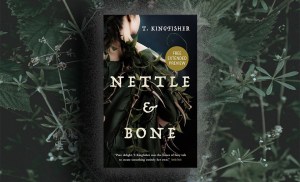
Nettle & Bone by T. Kingfisher: This book by the masterful T. Kingfisher (Ursula Vernon) is a beautiful dark fairy tale with prose that makes me weep with awe and jealousy. I wrote a full review for Nettle & Bone way back at the beginning of the year, where I predicted that it might end up being my favorite book of the year when it was all said and done, though I conceded that Nona the Ninth might easily change my mind when it was released. But lo and behold! I stand by my initial statement! I absolutely adored this book and it remains my favorite book of the year.

A Restless Truth by Freya Marske: you can find the full review of this one and the first book in the trilogy just a few weeks back. This one is a historical romance fantasy set in Edwardian England, featuring a murder mystery, lots of magic, and some very steamy sex. I loved it (and the first one, A Marvellous Light), and I’ve already re-read it once since finishing it.

Nona the Ninth by Tamsyn Muir: I know I still owe you all an actual review of this one, oops… For those still in the dark (how?) this book (and series) is a mind-bending, genre-busting, space opera mixed with necromantic magic, and one of the most complex examinations of love in all its forms (including toxic and self-destructive) that I have ever read. I’ll admit that I fully expected this one to overtake Nettle & Bone as my favorite, but though I loved it immensely, it ended up slipping down to third place. Nona the Ninth, the third of the Locked Tomb series, was excellent, and mind-boggling, but of the three it is my least favorite. Nona was a delight of a character, but the first book is still by far the most FUN. So far I love them in order, lol (Gideon, then Harrow, then Nona).

Last Call at the Nightingale by Katherine Schellman: here’s another one I read and reviewed pretty early in the year! It’s a historical murder mystery novel set in the 1920s, which is of course a good portion of what I love about it. And it features a disaster bi protagonist that I relate to rather strongly, lol! I read the whole thing in one sitting, just absolutely DEVOURED it. I fervently await the sequel!

The Siren of Sussex by Mimi Matthews: I have not written a full review for this one yet, but I might try to put one together for it and its sequel later. This one is straight romance novel material, historical (Victorian setting), and absolutely lovely! I read it about a month ago and I am currently in a big Victorian-set historical romance brainrot mode. I also read the sequel to this one, The Belle of Belgrave Square. There will be a third one apparently sometime next year, so maybe I’ll do a double review for books 1 and 2 in time for the 3rd release. This book just really made me happy, with a headstrong intelligent female lead and a Indian-immigrant working-class love interest, and lots of witty banter.

My Top 5 Nonfiction Books:

Zen and the Art of Saving the Planet by Thich Nhat Hanh: this is the last book that came out before Thich Nhat Hanh’s death in 2021. If you are unfamiliar with him, he was a very famous well-respected Buddhist monk who wrote many books on Buddhist, meditation, and finding peace in your own life. He gave lectures, met with world leaders, ran retreats, and generally just made the world a better place by his existence. He was/is one of the greatest heroes in my life, and I was absolutely DISTRAUGHT when he died last year. (And, shit, I am genuinely getting choked up just typing this.) This book is kind of exactly what the title suggests: a way of approaching the crises of our planet (ecological, political, systemic, personal) from a Buddhist perspective but also from a largely non-denominational place of deeply human spirituality and compassion. It made me cry at least three or four times, and the minute I finished it I threatened to buy a copy for every person I know to make them read it (if I’d had the funds, I really probably would have).

Make Your Art No Matter What by Beth Pickens: I have a soft-spot for self-improvement books, but more specifically I really love self-improvement books about living an authentic and creative life. For instance, I also liked Big Magic by Elizabeth Gilbert (though I do find Gilbert a little too woo-woo and mystical hand-wavy at times). This book by Beth Pickens is about living life as an artist — and she defines “artist” very broadly — and offers real concrete advice on how to live that life to the best of your ability and with the most fulfillment you can manage, whether you are a full-time professional artist or someone trying to eke out a practice around a day job and family and other responsibilities. I found it incredibly insightful, down-to-earth, actionable, and really inspiring.

The Dragon Behind the Glass by Emily Voigt: I really love nonfiction books about history or science, and this one is kind of both. I picked it up on a whim and found it absolutely fascinating. It’s about the exotic fish trade, of all things! Specifically about a rare exotic fish called an arawona, which is allegedly the most expensive kind of collector/live fish in the world (most expensive fish of any kind in the world are, I think, some of the giant tuna caught/killed in Asia and sold by auction to high-end restaurants for sometimes millions of dollars). This book, and the exotic fish trade, includes: trips into the deepest barely-explored jungles of Asia and South America, run-ins with the black market and the mob, and devolves into fraud, betrayal, and even murder. It’s absolutely shocking and enormously fascinating!

1920: The Year That Made the Decade Roar by Eric Burns: I think I’ve mentioned before I am a bit obsessed with the 1920s Jazz Age era? So I assume no one is surprised that I picked up this book. It is pretty much exactly what it says it is: its a history book that focused on JUST the single year of 1920, and makes an argument that the events of that single year was the catalyst and predictor for everything that came after it. One of the major events the book focuses on is the 1920 Wall Street bombing, which remained the most destructive incident of domestic terrorism until the Oklahoma City bombing in 1995. (I found that section SO interesting that the Wall Street bombing eventually became the instigating event for the plot in my 1920s historical fiction work-in-progress). The whole book was really enlightening and I highly recommend it to anyone interested in American history.

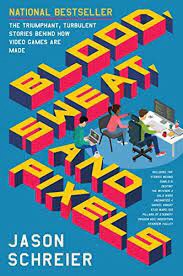
Blood, Sweat, and Pixels by Jason Schreier: the subtitle for this book is “The triumphant, turbulent stories behind how video games are made.” It’s a really well-researched account written by a games journalist about the game industry, using an enormous amount of first-persons accounts and interviews. Each chapter focuses on the story of a different game, including (but not limited to) Witcher 3, Uncharted 4, Dragon Age: Inquisition, and Stardew Valley. I’m not even a big gamer (just a dabbler), so I’m not 100% sure why I decided to pick this one to begin with, but I’m so glad I did! It was so cool to learn about how these games are developed and the kind of crazy sheningans that happen behind the scenes. (The dude who made Stardew Valley continues to blow my mind.) It’s also really fun now to watch the comedy tv show Mythic Quest on Apple+ and constantly go “that’s not how that works! That’s not how any of that works!” Lol…

So, that’s my list, for whatever it’s worth. I’d love to hear what books you read and loved this year! Please feel free to share in the comments!

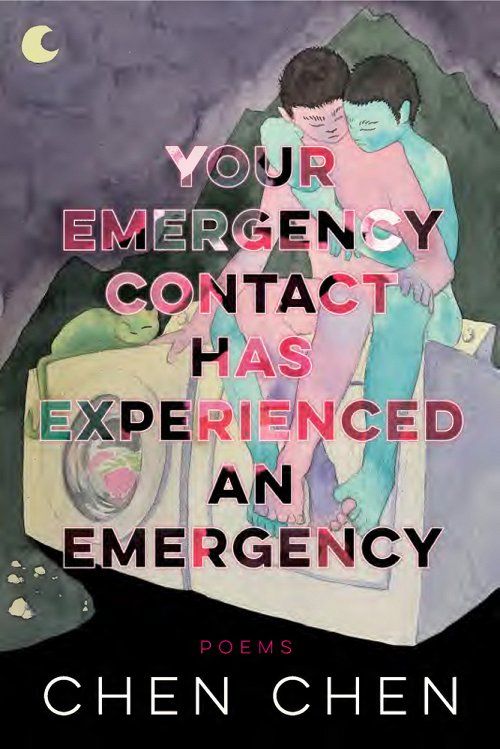
Book Review: Your Emergency Contact Has Experienced an Emergency

Title: Your Emergency Contact Has Experienced an Emergency
Author: Chen Chen
Released: 13 September 2022
How I Got It: bought from publisher website
Rating: 4 out of 5 stars

Today, I have a slightly different sort of book review for you all. I’m talking about a new poetry collection by poet Chen Chen (author of When I Grow Up I Want to Be a List of Further Possibilities) titled Your Emergency Contact Has Experienced an Emergency.

I read a lot of poetry, but I don’t talk about it much on this site, a fact that I want to try to change. Since I literally just finished reading this one a few minutes ago, I thought I’d go ahead and write up a review while it’s still fresh in my mind and before I have a chance to get distracted by other things and forget to do it.

Chen Chen is a queer Chinese-American poet. The vast majority of his poetry centers on his Chinese-ness and his queer-ness to varying degrees. I really enjoyed his first full collection (When I Grow Up…) and so I leapt at the chance to buy his new one. This book did not disappoint.

The language is sharp and playful and incisive and contemporary. At times delightfully vulgar, and at other times fascinatingly opaque. Chen Chen demonstrates skill and ingenuity with a wide range of forms, from compact carefully constructed tercets to large prose poems that are almost breathless with long momentum to a clever little anagram poem that uses only words spelled from the letters of his name (with the clever addition of the phrase “no middle name” to fill out the severe lack of options in just “Chen Chen”).

I took particular pleasure in the homage to other Asian-American poets throughout the collection, including Justin Chin, Marilyn Chin, Bhanu Kapil, and others. But what I loved the most, probably, was the sheer unembarrassed SPECIFICITY of the poems in this collection.

These are poems for now, vital and relevant in the wake of the pandemic and 2020 shutdown, and in the midst of continued tensions. Many of the poems reference the pandemic, as the narrator faces resurgence of anti-Chinese racism, and invokes never-ending questions that all Asian-Americans face in one way or another: are we ever Asian enough? Are we ever American enough? How can we be both at once, and who gets to decide?

Chen Chen also invokes the specificity, locality, and histories of his own personal life with such unabashed and blunt detail that you feel you might as well be sitting at his dining room table, listening to him talk about his family and his partner and his life. The reader lives with him in Massachusetts, struggling with his mother’s disapproval for being gay; and travels to Lubbock, Texas for grad school, and joins him when he visits China, feeling both inside and outside the culture.

The specificity of “Doctor’s Note” in particular, resonates with me as the note declares: “Please excuse Chen Chen from class. He is currently dead.” This poem goes on to list the ways that Chen Chen has attempted to remedy to situation, including the Coldplay song “The Scientist,” new episodes of Buffy the Vampire Slayer, and Tai Chi in his room. Perhaps not every reader can identify with these specifics, but everyone knows that sensation of being so miserable that all you can do is stay in bed surrounded by the little things you love.

Sometimes the unrelenting detail can be off-putting for the more squeamish: such as in the poem “Winter” in which the narrator contemplates “Big smelly bowel movements this blue January morning” and wonders if the words “shit” or “scat” are “more or less literary than ‘poop’…” Or, in the poem “Ode to Rereading Rimbaud in Lubbock, Texas,” where the narrator describes his “poetics of deep threat & tonguefuck.” These sorts of details might be a bit much for some readers. They make even me squirm a bit in places (and I have a high tolerance), but in the end they only add to the layers upon layers of empathy and emotional resonance that radiate from these poems.

No doubt, the vulgarity can be uncomfortable in places, but it is clearly MEANT to be uncomfortable, and thus shake the reader out of their commonplace experiences). And for every moment of uncomfortable vulgarity, there are dozens of moments of beauty and pathos, as Chen Chen (or the narrator of the poems) showers his lover/partner Jeff with adoration, laments the strained relationship with his mother, and grieves the death of Jeff’s mother.

I was particularly struck by this stanza speaking to his lover in “Summer”:
“You wrap your arms around me & it’s like you’re the patron saint of touch as / well as soft sunlight & soothed dogs. Or you must be the early representative / of divine holding. Or you’re both & also a boy, like me, holding on.”

I was also painfully struck by “a small book of questions: question vii” when the narrator describes his efforts to make his mother acknowledge his boyfriend and laments:
“I want to remember better. / But I want more, more of the / better to remember.”

At its heart, this collection is about the never-ending riddle of identity — race, sexuality, family identity — and also about love and grief and stubborn joy in the face of that grief. Many people will find something in this collection, some empathy, some resonance, some connection. But, if you are a) queer, b) Asian-American, or c) have parents who routinely disappoint you while also being disappointed IN you (bonus points if, like me, you have all three!) then this book was made for YOU SPECIFICALLY. And you definitely need it.

Two-For-One Book Review: A Marvellous Light, and A Restless Truth by Freya Marske

Titles: A Marvellous Light & A Restless Truth
Author: Freya Marske
Release Dates: 26 Oct 2021 and 1 Nov 2022 
How I Got It: received the first book as an ARC through work, bought the second one
Rating: 5 out of 5 stars

It’s a two-for-one sale, folks! Not literally, of course. But I am doing a double review of the first two books in Freya Marske’s historical romance fantasy Last Binding trilogy: A Marvellous Light and its sequel, A Restless Truth. I read A Marvellous Light last year as an ARC, when I was curating for my job at Fox & Wit (and did end up choosing the book for that month’s release), and I always meant to write a full review for it. But alas, as so often happens, it slipped my mind and I never got it.

Fast forward a year later, and the sequel, A Restless Truth, released in September. I bought it immediately on audio (I have the first book in both print and audio, and I really enjoyed the audio so I figured ‘why not?’), and finished it in a day and a half. And again, I have been meaning to write up a review since I finished. So, here we go! I’ll do both of them together, and then I will hopefully review the last book in the trilogy whenever it releases.

The series is set in the early 1900s, Edwardian England, one of my favorite time periods for historical romance, when William Morris was all the rage and Art Nouveau was beginning to emerge (I’m a HUGE Art Nouveau fan). Of course, this is a version of England with magic, but other than that the series adheres very closely to its time period, displaying an impressive amount of research not only into the history but also the aesthetics and attitudes.

A Marvellous Light focuses on the main character of Sir Robin Blythe and Edwin Courcey. Following the death of his parents — famous philanthropists and secret backbiting devious social manipulators — Robin is placed in a seemingly dull low-level government job by an old enemy of his parents. However, when Edwin Courcey, gentleman magician, waltzes into his office fully expecting someone in the know, Robin discovers that magic is real, he has accidentally been placed in a job of liaison to the secret magical community, and his predecessor Reggie has disappeared under mysterious circumstances. It’s a lot to absorb on the first day. To make matters worse, a trio of magicians hiding their identities attack Robin that night, believing he must know more than he does, and placed a painful cursed tattoo on his arm. The only one with any hope of helping him remove the curse and find out what happened to his predecessor is Edwin Courcey.

For his part, Edwin Courcey just wants this whole mess dealt with and out of his hair. He had considered Reggie a friend, and is distraught over his disappearance, and he doesn’t have the time or the energy to help guide a brand new “civilian” learn about the magical community. Still, it is quickly apparent that he will have to deal with it, so he takes Robin to his family’s country estate to research the curse and try to remove it. Unfortunately, among his family Edwin feels he is instantly revealed to be a weakling and failure: weakest of all his family in magic, though by far the most brilliant and learned in his study of the field. And his family, including his abusive older father and his glittery empty-headed sister, seemed determined to make him miserable and embarrass his guest. And to make matters even more complicated, Robin starts having visions.

As Robin and Edwin research the curse, and try to find out what happened to Reggie, they find themselves caught in the middle of a tangled conspiracy or murder, magic, and fantastical objects of great power that may or may not exist, and which could change the lives of every magician in England. Along the way, they also discover their similarities in taste and attitude, and grow closer, something almost like friends (a novel concept for Edwin), and then possibly more. As their attraction increases, and Robin begins to contemplate the possibility of a future together, Edwin tries desperately to keep control of the situation, even as danger closes in on them with deadly urgency.

The sequel, A Restless Truth, focuses on Robin’s sister, Maud, previously introduced in the first book. With the main conflicts of the first book resolved but new and dangerous threats established for the rest of the trilogy, Robin has sent Maud to collect an older woman magician from America who may hold the key to the whole problem. However, on the return voyage from America to England on a White Star ocean liner, the woman magician is murdered within hours of heading out to sea and an important magical artifact is stolen. Now, Maud must find out who killed her and stole the artifact, find out what they know about the business her brother Robin has gotten involved in, and not get killed herself in the process.

To help her in this endeavor she recruits the charming and beautiful Miss Violet Debenham, a British transplant to the U.S. who is returning home to England, now an actress and a huge walking scandal (of her own making), and the disdainful, perpetually-annoyed Lord Hawthorne (also briefly introduced in the first book), who would really rather not have anything to do with any of this nonsense, thank you very much.

As they work together, Maud finds herself growing more and more attracted to Violet, a previously-unrealized romantic inclination now awakening in her with sudden passion. Violet, meanwhile, is happy to be a dalliance while aboard ship but is desperate to keep her secrets and her heart as detached and distant as possible. As the two women try to work out what they desire and what they are willing to sacrifice to get it, they must contend with at least one murderer, a jewel thief, an obnoxious parrot, and a whole menagerie of animals in the cargo hold. And, just to make matters worse, Maud discovers she may or may not be a medium. In the face of all these problems, Maud is determined not to fail at this mission her brother has given her, conscious more than ever that Robin is the only person in her life she has ever been able to rely on.

These books are UTTERLY DELIGHTFUL. When I first read the arc for A Marvellous Light, I had it in ebook format, and I devoured it. As soon as the book was released I got the hardcover AND the audiobook version immediately, and re-read it by audio. I have since re-read it in one format or another 3 or 4 times. And A Restless Truth is just as delightful and re-readable.

Both stories feature an exciting, tense, action-packed plot full of murder, mystery, and magical artifacts of importance to all the magicians of England. In classic mystery fashion, the artifacts in these first two books function as macguffins – an item that everyone is after, and which propels the actions of the plot, but which seem to have little-to-no actual influence on what finally happens. I am very curious/excited to see how these artifacts come together in the final book of the trilogy and prove as powerful (or not) as they are believed to be.

True to their billing as romance fantasies, both books also give heavy importance to the romantic subplots between Robin and Edwin, and Maud and Violet. They follow the traditional romance series formula of each book focusing on a different couple who are connected in some way or another through one or more repeating characters (think of the Bridgerton series in which each book focuses on a different Bridgerton sibling finding their happily-ever-after). In this case, obviously, the books are connected through the Blyth siblings Robin and Maud, as well as by the overarching external plot. There is not another Blyth sibling for the third book, but I suspect Lord Hawthorne will be the focus for the romantic subplot of the final installment. However, in that case, the main plot will also have to combine all the previous characters in order to reach its conclusion.

One thing I found enormously amusing about both A Marvellous Light and A Restless Truth is the ways that both Blyth siblings are friendly, cheerful, high-energy puppy characters who both fall in love with introverted, cynical, suspicious and paranoid cat people. It’s hilarious. However, where Robin was long aware of his own proclivities for men, and indulged them in secret (as more men than some might suspect did in boarding school and in gentlemen’s clubs), Maud enters her romantic situation completely unaware of her own interests. Violet sparks a sudden sexual awakening for her, and its amusing to watch as Maud throws herself enthusiastically into the discovery.

Speaking of sexual awakening: be aware that these books are NOT shy about the sexual content. Steamy isn’t a sufficient enough word. They are explicit, and sexy, and creative. So if that’s not your thing, reader beware. I, personally, love that shit. The steamier the better.

bonus! look at this fan art of Edwin and Robin by Ellie Bailey (@efpbailey on twitter)

As much as I loved both books, and both couples, I will say that my heart belongs to Robin and Edwin first and foremost. Robin was just so wonderful: cheerful, honest, optimistic. And Edwin was… well, Edwin was me. I identified so strongly with Edwin it was kind of pathetic: shy, introverted, nerdy, the weakest/least successful member of his family and looked down on by his siblings, with a disastrous love life, whose happy place is always in a library and buried in a book. Like Edwin, I could not help but love Robin, who saw him for who he really was, believed in him even when everyone else was laughing at him, and dragged him gently out of his shell. Yep, I am absolutely an Edwin Courcey still searching for my own Robin Blyth.

Long story short (too late, I know): if you enjoy historical fantasy and/or queer romance novels, plus a large helping of murder mystery, these books are for you. The magical murderous plots are exciting and adventurous, the romances are swoony and sexy, and the characters are all wonderfully complex and charming and relatable. You should totally pick them up now so you’re ready when the final book in the trilogy releases! (There’s no solid date on that yet, but I would guess sometime late next year… *fingers crossed*)

Book Review: Imperfect Illusions

Title: Imperfect Illusions
Author: Vanora Lawless
Release Date: 4 October 2022
How I Got It: ARC from the author
Rating: 4.5 out of 5

Let me start this review with a little backstory. I follow the fantasy romance author Allie Therin on Twitter, whose work I adore and have raved about to all and sundry. A few months ago she started talking about her next project (Liar City, coming out next year) which will feature an empath. Another indie romance author, Vanora Lawless commented that she was also writing a story that featured an empath. Her story was a historical fantasy romance, about an empath drafted to fight during WW1. At that, I piped up that I was ALSO working on a story that features an empath, who was ALSO a soldier during WW1, though my story takes place in the 20s after the MC has survived the war and come home with serious PTSD. The three of us made a lot of jokes about being the empath squad (and several other writers joined in the merriment).

Fast forward a couple months, and Vanora Lawless (who I have since followed on Twitter and chatted with here and there) asked if I would be interested in an e-arc of her empath book, Imperfect Illusions, which she would be releasing (self-pub) in October. Of course, I jumped at the chance! Historical romance fantasy is one of my main obsessions. And I wanted to see how she interpreted the “empath soldier” character (and feared mine, which is nowhere near ready for publication, would be too similar).

I’d meant to read Imperfect Illusions right after I finished Nona the Ninth. But then Nona the Ninth knocked me on my ass and I spent over two weeks in a total book hangover/coma (and I know I still owe you all a review of that one). So, I finally sat down to read Imperfect Illusions on Monday (a day before officially release, lol).

And, reader, I read the whole thing in one sitting on Monday night, finishing at about 1:30am. Lol.

Imperfect Illusions, as I mentioned, is a historical fantasy romance. Sully is an empath working as a private detective in Chicago, when he is forcefully recruited by the military to join a special group of “Skilled” (magical) soldiers to go fight in France during WW1. He is blackmailed into joining because the military knows he sleeps with men and has no compunction exposing him and causing scandal for his teenage cousin (that he is raising) and possible arrest. On his last night before leaving for training, he goes for a night on the town and picks up a handsome man in a club. Much to his surprise, the handsome man, Elliot, is also “skilled” and is also being blackmailed into military service.

The two men have a single beautiful, emotional night together, and then go their separate ways, believing they will never see each other again.

Fast-forward to the war: Elliot’s skill is that he can dream-walk into anyone’s mind with enough effort, but mostly with people he has an emotional connection with (such as family and lovers). He accidentally finds himself in Sully’s dreams, and ends up protecting Sully from debilitating nightmares caused by Sully’s inability to block out the pain and fear and trauma of every other soldier around him on the frontlines. The problem is, like many people, Sully doesn’t generally remember his dreams, and therefore has no conscious knowledge of the fact that he is spending months’ worth of nights keeping company with Elliot as the two fall in love.

When Elliot and Sully end up working together on a covert mission, these two incongruent versions of their relationship come head to head, and it all goes to hell from there.

I really enjoyed this book a lot. Both of the MCs are charming and complex and given lots of personality on the page. Elliot’s wealthy background made for an interesting contrast of personalities to Sully’s working-class orphan background. I was highly amused by the detail that Elliot majored in English and writes (self-professed bad) poetry. I know the feeling, Elliot. The magic system is interesting and entertaining. People with magic are called “skilled” and usually have one, or perhaps two related, magical abilities: Sully is an empath but can also create illusions to distract or deflect attention; Elliot is a dream-walker but also has the ability to push the sensation of elation or horror into a person he touches, etc. Going into the story, I wasn’t sure how much the magic would matter to the plot, outside the inciting issue of Elliot dream-walking without Sully’s knowledge. I was happy to see that, in fact, the magic (of the MCs and a number of supporting characters) was all highly important and effectively used to further the plot. Without giving too much away, let me just say: I was not prepared for the zombies!

Speaking of the plot, besides the romance plot, there is a rather intense plot centered around WW1 in general, and on a dangerous covert operation specifically. It was exciting, and creepy (see the aforementioned zombies), and well-executed.

The general setting of the war in France is painted with a light touch. Enough specificity and detail to ground the story, but not so much as to get lost in the historical weeds. Just on a subjective, personal taste level, I would appreciate a bit more attention to the historical setting. There were a few points where I was sitting there thinking: “I’m not entirely sure this is accurate…” or “this is kind of vague every-war-is-like-this stuff, rather than specific WW1 history.” But again, that is purely a matter of personal taste, because I am a history nerd, and I get caught up in my own historical research when I’m writing a lot (like, to the point of trying to find accurate tram service line maps for 1922 Cleveland, and making sure any song I mentioned was definitely already released on the radio before Sept 1922… I’m just like that). In any case, this was a very minor complaint. Not even really a complaint, actually. Just a noted difference in writing styles.

The book was highly entertaining. Both MCs were charming as fuck. The romance was beautiful and intense and entirely swoon-worthy (a handful of very steamy sex scenes). And the zombies were creepy. And I am absolutely delighted to know that a sequel is expected some time next year. Thank goodness!

As I mentioned, this book JUST released this week. I highly recommend it for any of my fellow historical romance fans. You can find links to any of your preferred book-buying locations on the Imperfect Illusions books2read page (by the by, books2read.com is my new favorite place for compiling of the book buying links).

Cozy Fantasy Recs for the Stressed and Anxious

I don’t know about anyone else, but I have been hugely stressed out this entire year. As I mentioned in a previous post, a lot of that was job-related. But, of course, the general state of the world at large is definitely not helping matters. Due to the constant levels of stress and anxiety, I have been hugely dependent on very happy, upbeat, cozy, wholesome media to keep me going. I used to be able to handle more grim and gritty fiction/television at least some of the time, but lately… not so much.

I suspect a lot of other people feel similarly. To that end, I thought I would share some of the cozy fantasy I’ve been consuming lately to help keep me from going completely insane.

First up on the recommendations list is a book that has been getting a lot of traction on social media. In fact, it got SO MUCH traction on social media that this little self-published book has since been picked up by Tor Books for traditional publication. You can probably guess. Yep! I’m talking about Legends & Lattes by Travis Baltree. This book is like the definition of cozy low-stakes fantasy: set in an unabashedly D&D-inspired world, it features an orc warrior who has decided to hang up her axe, retire from adventuring, and open up the very first coffee shop in the land. In the course of trying to get her coffee shop up and running, she befriends several people around the city, accidentally gets on the wrong side of the local mob boss, and has to deal with an old travel companion-turned-rival. While there is conflict, and some danger involved, the book largely stays low-stakes and perfectly charming. You are assured of coziness galore, and a happy ending, as well as some sweet sapphic romance just to gild the lily. I guarantee you will not be able to stop smiling your whole way through the book. In addition, I will say that I have the audiobook, which is read by the author (who is also a professional audio narrator) his reading is delightful.

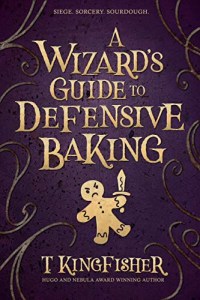
Second on my recommendations list is A Wizard’s Guide to Defensive Baking by T. Kingfisher. I’ve discussed T. Kingfisher before, when I wrote a review of her book Nettle & Bone back in… March? That book is still currently top contender for my favorite new release book of the year (though I haven’t read Nona the Ninth yet as I write this, so that may change soon). [AN: I have read Nona since initially drafting this post. I haven’t quite decided yet, but they might be tied?] It was also the first book by T. Kingfisher I had read, but I loved it so much that I knew I was going to have to read the rest of her work as well. That’s where Wizard’s Guide to Defensive Baking comes in.

This book is categorized as young adult fantasy, but works just as well as middle grade fiction. It features a main character who is a fourteen year old girl — and the narration does a wonderful job of really staying in that teenage POV. On top of that, Kingfisher’s world-building continues to be top-notch. In this book, fourteen-year-old Mona is an apprentice baker in her aunt’s bakery. She possesses some minor magic to work with the dough, but nothing like what the real wizards in the city possess. But when magic-users all over the city begin to disappear, Mona accidentally comes across a plot to remove all magic from the city, including the powerful wizards that defend it from outside attack. Through luck and quick thinking, Mona escapes this fate, leaving her the only one left in the city with any hope of stopping an attack and protecting her queen.

While the stakes in this book are bigger and more dangerous — there is some violence and death — the overall tone remains so upbeat and snarky and fun as to keep it from being oppressive or overly dark. It helps that we are treated to things like walking gingerbread men wreaking havoc on the attacking army, and Mona’s continued irritation that she has been left to do the grown-ups’ jobs for them because they are all useless.

My third (and final, for now) recommendation is the first volume of a brand new literary magazine called Wyngraf — available in print and ebook through their website. This new magazine specifically features only cozy fantasy stories, in the wake of a growing call for that particular sub-genre. I got the first issue on ebook (though I may buy future volumes in print) to check out what kind of stories were being published. While the stories range in length and skill-level, they are all fairly charming. Nice, light, happy little reads to nibble on in between bigger reading goals. This first volume features such stories as “The Perils of Living With Your Human” — about a dragon who is having a rough day trying to help the human he is bonded with; “Your Own Beeswax” — a comedic little tale about a minstrel, in the vein of Jack Vance; and a few stories of what the editor calls “backpack fantasy” — fun little tales that feel a bit like the road travel montage of a larger fantasy epic. Some of the stories are weaker than others, but on the whole the collection works well together and is entertaining enough to read through in an evening or two. I look forward to what stories we might see in the next issue (which conveniently is out on Oct 1st!).

No doubt I will have more cozy fantasy recommendations in the future. But I hope these three are a good start for those who, like me, need some more warmth and joy in their lives to counterbalance the stress and anxiety of the world around us.