Book Review: the Monk & Robot Duology

Title: A Psalm for the Wild-Built (Book 1), A Prayer for the Crown-Shy (Book 2)
Author: Becky Chambers
Publication Dates: 2021, 2022
How I Got Them: Bought in print
Rating: 5 stars! 6! 7!

As I try to get myself back into the swing of full book reviews – and I hadn’t meant to go so long without any! I’m still reading plenty, but writing the reviews has proven too much for my brain lately – I wanted to talk about Becky Chambers’ two Monk & Robot novellas. I read them a few months ago, and they now live rent free in my brain forever. Hell, they are hooked into my ribs and refuse to let go. They made me Feel Things ™, and I was not prepared. I’d heard Becky Chambers was good at that, but these were the first of her books I’d read (I also own The Long Way to Small Angry Planet, but haven’t had a chance to read it yet).

Both books take place in a post-industrial, ecologically-rich utopian society called Panga, where centuries before the stories take place, the robots built to serve humans suddenly and mysteriously gained full sentience, put away their tools, and wandered off into the wilderness never to be seen or heard from again. The humans have since learned the error of their ways (in terms of industrialization, ecological destruction, etc), and now live without robots, mostly in balance with their environments, and at peace with each other. It is left up to guesswork and interpretation if this world is meant to be Earth far far in the future, or another world entirely, with many similarities.

In Panga, we meet the nonbinary (they/them) monk, Sibling Dex who, in the throes of a pervasive ennui and feeling of unfulfilled potential, leaves the safety and comfort of their home monastery to become a traveling tea monk. As a tea monk, they administer comfort, advice, and tea to the far-flung towns and villages on the outskirts of human civilization. Dex becomes very good at this, and highly loved and respected by the villages they frequent. Yet after a couple years, they find even this calling unsatisfying. Dex is filled with yearning, for peace or purpose or something they can’t even name. And so, on a whim, they start journeying out into the uncharted, unforgiving wilderness beyond the villages, in search of a centuries-lost monastery they read about in a history book.

On the way, Dex has the shock of their life when they stumble upon a robot, Splendid Speckled Mosscap, who has been sent by agreement with many other robots, to find humans and attempt to understand them, asking them “what do you need?” This is the first interaction between robots and humans since the robots disappeared centuries before.

Dex and Mosscap team up to travel to the lost monastery, engaging in deep philosophical debates along the way and building toward an odd and marvelous friendship.

The second book picks up directly from the ending of the first book, with Dex and Mosscap journeying back into human civilization so that Mosscap can meet with humans in each village and ask them its question: “what do you need?” On this journey, Mosscap faces its own sense of mortality, and realizes that it is changed merely through interaction with humans. Meanwhile, Dex continues to wrestle with their sense of dissatisfaction, lack of purpose, and desire for fulfillment. We also meet Dex’s family, see many, often contradictory, reactions as humans come face to face with a robot, and have more philosophical debates. While the ending of the second book is satisfying, I still find myself hoping for more. There’s been no talk of another novella yet. Perhaps these two are all Becky Chambers intends to say on the matter, but I hope she returns to Dex and Mosscap eventually.

The first book is essentially one long philosophical discussion wrapped in a beautiful package of lush idyllic wilderness, gentle friendship, and warm fragrant tea.

The second book continues that philosophical discussion, but with more interaction with other characters and a few uncomfortable moments as Dex and Mosscap deal with potentially less-tolerant humans. However, both books are gentle and quiet. Not a lot of “Plot” happens. Dex and Mosscap are traveling, but most of the journeying and tension is internal, emotional. The world and characters of these books are diverse and welcoming and comforting and thoughtful, and the questions asked by Dex and by the text are deeply human and complicated.

Dex’s dissatisfaction with their life could, on one level, be criticized as “first world problems.” After all, Dex’s world is utopian: peaceful and comfortable, people’s needs are met, their desires permitted and catered to wherever possible. No one, as far as one can tell, is starving, or being oppressed. What, then, is there to complain about? Nothing, really. Which is part of Dex’s problem, because they feel guilty about feeling unsettled and dissatisfied and unfulfilled. They feel they have no right to their dissatisfaction, but knowing this does not make the feeling go away.

And I think that’s where these books get at the heart of the matter. Mosscap asks the humans: “what do you need?” and most of the humans HAVE NO IDEA. Some of them seem perfectly content with what they have. Some of them simply don’t know how to answer the question. Some can’t even decide what the difference is between a “need” and a “want.” What does one need? What does one want? Are they the same thing?

Dex’s ennui is deeply human and real. A feeling I recognize in myself. They want happiness, but what is happiness? They want purpose, but each time they think they’ve found it it proves fleeting, unfulfilling, illusory. They fear that there is something wrong with them, something broken, so that nothing will ever feel RIGHT, even though everyone else around them seems just fine.

Dex asks:

“Still. Something is missing. Something is off. So, how fucking spoiled am I, then? How fucking broken? What is wrong with me that I can have everything I could ever want and have ever asked for and still wake up in the morning feeling like every day is a slog?”

I know this feeling intimately.

These books made me cry at least half a dozen times.

These books have fingers that dig into my sternum and grasp at the churning maelstrom of feeling beneath.

They don’t provide easy answers, but possibilities. Mosscap offers a wisdom born of nature, of thoughtful reflection and an almost Zen sensibility (Dex is a monk of a made-up “fantasy” religion concerning six gods, but I’d argue that they have a distinctly Buddhist quality to them).

Mosscap offers this particular bit of advice:

“You’re an animal, Sibling Dex. You are not separate or other. You’re an animal. And animals have no purpose. Nothing has a purpose. The world simply is. If you want to do things that are meaningful to others, fine! Good! So do I! But if I wanted to crawl into a cave and watch stalagmites with Frostfrog for the remainder of my days, that would also be both fine and good. You keep asking why your work is not enough, and I don’t know how to answer that, because it is enough to exist in the world and marvel at it. You don’t need to justify that, or earn it. You are allowed to just live. That is all most animals do.”

Similarly, in the second book, Dex states:

“You don’t have to have a reason to be tired. You don’t have to earn rest or comfort. You’re allowed to just be. I say that wherever I go.” They threw a hand toward their wagon, its wooden sides emblazoned with the summer bear. “It’s painted on the side of my home! But I don’t feel like it’s true, for me. I feel like it’s true for everyone else but not me. I feel like I have to do more than that. Like I have a responsibility to do more than that.”

Of course, in our own world, where capitalism rages unchecked and survival is far from assured, we are not “allowed to just live” and we usually do have to work in order to justify our right to exist in the world. Rest has to be earned purely because society has demanded it. But the Monk & Robot books imagine a world where this might no longer be necessary and it’s a beautiful, hopeful thought.

The second book, Prayer for the Crown-Shy, pushes beyond this by suggesting that, perhaps, the answer is in our connections with other people. In our friendships, and loves, and communities. As Dex and Mosscap travel through parts of Panga in the second book, stopping at each village to ask people what they need, the answer (not always explicitly stated, but often implied by their own interactions with people), is EACH OTHER. This is true for Dex as they reconnect with their family, and make possibly romantic connections with someone they meet while traveling. But it is at its most true at the end when, having nearly reached their final destination and inevitable separation, Dex and Mosscap stop where they’re at. Because they’d rather stay together. They find an answer in each other, in their companionship and gentle, complicated, beautiful friendship.

Dex says:

“What if that is enough, for now? What if we’re both trying to answer something much too big before we’ve answered the small thing we should have started with? What if it’s enough to just be…Us.”

Is it enough? I don’t know. In THIS world, possibly not. But what a hopeful, marvelous idea that it someday could be.

My Short Story is Officially Published

Hello folks! I wanted to share happy bit of personal news. My short story, “In the Empty Rooms” has been published by online lit magazine Haven Speculative, and is now officially out to the public today. It’s part of Issue 10 on their site.

Haven Speculative is an entirely volunteer, non-pro magazine that could use any and all support you can spare! They publish all stories and poetry for free on their site, but you can also download an ebook version of each issue by subscribing to their patreon, which I highly recommend. They are publishing some great work by new up-and-coming authors.

I particularly loved To Kneel at the Altar of Your Bones by Valo Wing, from Issue 8 back in March. (Fun fact: I had the pleasure of working with Valo during the Futurescapes Workshop last August).

Anyway, you can find the whole issue at havenspec.com and my story can be found here: “In the Empty Rooms” by Amanda Haimoto Rudd.

Time Travel Narratives Recommended Reading List

To wrap up my little mini series of blog posts about time travel narratives, I am ending with a fairly large recommended reading and viewing list. There’s a bunch of stuff on here, some nonfiction books about the science and theories of time travel, an enormous list of novels, a couple anthologies, and bunch of movies, and a handful of relevant tv shows (mostly from Star Trek, which is famous for their time travel episodes).

This list is not remotely exhaustive. There are hundreds and hundreds of possible books and other media to include in this list. But this is a pretty place to start. It’s a fairly representative list of the most well-known and popular media on the subject. I have not read all of these books, or watched all of these movies (though I have at least some familiarity with a large majority of them).

I have them separated into categories, but they are not in any kind of order whatsoever (not chronological, alphabetical, or quality). Sorry, I was too lazy to work that much out. In any case, have fun with this list!

Non-Fiction Books:

  • Time Travel: The Popular Philosophy of Narrative by David Wittenberg
  • How To Build A Time Machine: The Science Between Time Travel by Brian Clegg
  • Black Holes and Time Warps: Einstein’s Outrageous Legacy by Kip S. Thorne
  • The Science of Interstellar by Kip S. Thorne
  • Time Traveler: A Scientist’s Personal Mission to Make Time Travel a Reality by Dr. Ronald Mallett and Bruce Henderson
  • The Order of Time by Carlo Rovelli
  • Time Travel in Einstein’s Universe: The Physical Possibilities of Travel Through Time by J. Richard Gott

Anthologies:

  • The Time Traveler’s Almanac, edited by Ann and Jeff Vandermeer
  • The Best Time Travel Stories of the 20th Century, edited by Harry Turtledove and Martin H. Greenburg

Novels:

  • The Time Machine by H.G. Wells
  • Time and Again by Jack Finney
  • From Time to Time by Jack Finney
  • End of Eternity by Isaac Asimov
  • Slaughterhouse-Five by Kurt Vonnegut, Jr.
  • Time Enough for Love by Robert A. Heinlein
  • A Connecticut Yankee in King Arthur’s Court by Mark Twain
  • The House on the Strand by Daphne DuMaurier
  • The Man Who Folded Himself by David Gerrold
  • A Wrinkle in Time by Madeleine L’Engle
  • Kindred by Octavia Butler
  • Hyperion by Dan Simmons
  • The Time Traveler’s Wife by Audrey Niffenegger
  • The First Fifteen Lives of Harry August by Claire North
  • Outlander by Diana Gabaldon (Book 1 of the Outlander series)
  • Timeline by Michael Crichton
  • Woman on the Edge of Time by Marge Piercy
  • The Accidental Time Machine by Joe Haldeman
  • The Shining Girls by Lauren Beukes
  • 11/22/63 by Stephen King
  • Doomsday Book by Connie Willis
  • To Say Nothing of the Dog by Connie Willis
  • Black Out/All Clear by Connie Willis
  • How to Live Safely in a Science Fictional Universe by Charles Yu
  • This Is How You Lose the Time War by Amal El-Mohtar and Max Gladstone
  • All You Need Is Kill by Hiroshi Sakurazaka 
  • Recursion by Black Crouch
  • Just One Damn Thing After Another by Jodi Taylor (Book 1 of Chronicles of St. Mary’s series)

Movies:

screenshot from The Time Machine (1960)
  • The Time Machine (1960)
  • Terminator
  • Terminator 2
  • Looper
  • Primer
  • Back to the Future
  • Time After Time
  • Planet of the Apes
  • Donnie Darko
  • Groundhog Day
  • Interstellar
  • Safety Not Guaranteed
  • Arrival
  • La Jetee
  • 12 Monkeys
  • The Girl Who Leapt Through Time
  • Your Name
  • Edge of Tomorrow
  • The Philadelphia Experiment
  • Somewhere in Time
  • Time Bandits

TV Episodes:

(These shows all did multiple time travel-centric episodes. I have not listed all of them, just a representative handful.)

screenshot from “The Late Philip J Fry,” Futurama

Futurama — “All’s Well That Roswell,” “The Late Philip J. Fry,” “The Why of Fry,” “Meanwhile”

Star Trek: TOS — “City on the Edge of Forever,” “All Our Yesterdays,” “Tomorrow is Yesterday”

Star Trek: TNG — “Time Squared,” “Yesterday’s Enterprise,” “Time’s Arrow,” “Tapestry,” “All Good Things”

Star Trek: DS9 — “Past Tense,” “Visionary,” “Wrongs Darker than Death or Night,” “Time’s Orphan”

Star Trek: VOY — “Future’s End,” “Before and After,” “Year of Hell,” “Relativity”

*I didn’t really watch Enterprise or Discovery, though I know they also feature plenty of time travel. Also, season 2 of Picard is centered around one giant time travel plot. 

Pretty much all of Doctor Who (obviously,) but I especially recommend “Blink”

Also, all of Quantum Leap, which is a CLASSIC.

Twilight Zone had several of time travel eps, but the one that comes to mind most is “Cradle of Darkness”

Time Travel Narratives: The Time Traveler’s Almanac

Apologies for the delay! Life is life-ing at me pretty hard right now. But here is the next installment in my mini series on time travel narratives. This week I’m talking about a great short story collection. Next week I’ll share a big Recommended Reading/Viewing List to wrap things up.

The Time Traveler’s Almanac is a short story anthology, published in 2013, edited by Ann and Jeff Vandermeer, that collects 65 short fiction pieces as well as 5 nonfiction essays on the subject of time travel.

This collection contains (among much else): an excerpt from HG Wells’s novel, The Time Machine, Ray Bradbury’s famous short story “A Sound of Thunder,” and Connie Willis’s novelette “Fire Watch” – which introduced the time traveling history department of Oxford University which later became the central focus of her novels Doomsday Book, To Say Nothing of the Dog, and Blackout/All Clear. Many well-known and critically acclaimed short stories are featured in this anthology, as well as  a large number of lesser-known works that are unique and entertaining takes on the genre. One of the strengths of this collection is the breadth and diversity of its selections. The short fiction covers a range of authors, time periods, and subject matter including but not limited to: sexuality, ethnicity, immigration and refugee status, love overcoming adversity, and all the usual science fiction trappings of fate, inevitability, and the mind-bending possibilities of time loops and paradoxes.

A couple of my favorites from this anthology include “The Clock That Went Backwards” by Edward Page Mitchell, “The Gernsback Continuum” by William Gibson.

“The Clock That Went Backwards” (which I mentioned briefly in a previous post) is one of the earliest time travel narratives that features a mechanical/scientific means of time travel (rather than a magical/spiritual one). This short story, published in 1881, predates H.G. Well’s The Time Machine by more than 10 years, and was a major stepping stone in the development of time travel narratives as a genre. In this story, the narrator recounts his childhood with his aunt who owned a very old Dutch clock. When the aunt dies, the narrator takes possession of the clock. While in university, one of his professors takes an interest in the clock, and argues that based on Hegel’s concept of Aufhebung, he believes that the sequence of past, present, and future is arbitrary and can be changed. To demonstrate, he winds the Dutch clock backwards, during which it is struck by lightning and causes a fire. In the aftermath the professor and the narrator find themselves thrown out of their time and into the 1500s. After a series of disasters, the narrator is knocked unconscious and awakens back in his own time again. It is never clear how the clock sent them to the past, nor how they returned.

“The Gernsback Continuum” is a short story by William Gibson published in 1981. Gibson, incidentally, is one of my favorite authors and his first novel Neuromancer, is one of the most important cyberpunk novels (arguably the first) ever written. The name “Gernsback” in the title pays homage to Hugo Gernsback, a publisher who pioneered the creation of science fiction pulp magazines. In this short story, a photographer is assigned to photograph the futuristic architecture of the 1930s, a period in time that attempted to imagine what the far utopian future might look like. While doing so, the photographer finds himself slipping in and out of a version of the present/future 1980s, based not on current reality but on the optimism of that 1930s vision. A version of reality filled with utopian visions of flying cars and zeppelins and glittering “raygun gothic” architecture. Eventually, he breaks free from this slippage of reality back to the real 1980s, which he finds horrific, violent, and full of despair.

A couple other stories in the collection I’d recommend are: “If Ever I Should Leave You” by Pamela Sargent, “Himself in Anachron” by Cordwainer Smith, and “Palimpsest” by Charlie Stross. But seriously, the entire collection is worth a deep dive.

This collection of stories is very well curated and organized by the editors, with a wide range of texts, that offers a strong overview of the time travel narrative genre. It is a good place for any reader or scholar to start as they enter into an in-depth examination of the genre. I highly recommend it to anyone looking to branch out, learn more about the history of the genre, or gain a more expansive view of SFF in general.

Time Travel Narratives: End of Eternity by Isaac Asimov

Continuing with my little mini series of blog posts about time travel narratives, this week I decided to talk about one of Asimov’s lesser-known works. (I had briefly considered writing about Slaughterhouse-Five by Kurt Vonnegut first, but as with The Time Machine, I decided that that novel was well-known enough that it probably didn’t need my endorsement or opinion). Isaac Asimov is, of course, very famous and many of his books are so well-loved they’ve been made into movies and television (I, Robot and Foundation, as just two examples). But this standalone time travel novel is one of his works that has not had quite the longevity of readership that so many of his others have had.

But first, I have to talk about Asimov himself for a second, because good lord this man’s legacy is mind blowing, and his life was truly fascinating.

Isaac Asimov by Rowena Morrill (via Wikipedia)

Isaac Asimov was born sometime between October 1919 and January 1920 in Petrovichi, Soviet Russia. Due to the uncertainties of the time and the severe lack of records, no one (not even his own family) knows precisely when he was born, but Asimov himself decided to celebrate his birthday as January 2, 1920. He came from a family of Jewish millers, who all immigrated to the US when he was 3 years old, where they lived in Brooklyn and owned a candy store.

He started college at the age of 15, and published his first short story, “Marooned Off Vesta” at 19. He attended Columbia University for graduate school and earned a bachelor’s and master’s in Chemistry, and a PhD in biochemistry in 1948. Between his degrees he briefly served with the US Army during WW2 and narrowly avoided participating in the atomic bomb tests at the Bikini Atoll in 1946. After earning his PhD, he went on to teach at the Boston University of Medicine where he remained in some capacity until his death. And he wrote nearly non-stop.

A few fun facts about Asimov: he was afraid of flying and flew only twice in his life; he also never learned to swim or ride a bicycle. He had a wide array of interests from opera to Sherlock Holmes, and he was one of the founding members of the Committee for the Scientific Investigations of Claims of the Paranormal (now known as the Committee for Skeptical Inquiry). He was friends with Kurt Vonnegut and Star Trek creator Gene Roddenbury.

He died in 1992 from heart and kidney failure at the age of (approximately) 90 years old.

While Asimov is most famous for his science fiction novels, he actually wrote in many other genres including mystery, fantasy, children’s, and nonfiction. He was one of the most prolific writers of any time or genre, ever. In fact, his career includes over 500 books on various subjects, many many short stories, and approximately 90,000 letters, and his books have been categorized in 9 out of the 10 major categories of the Dewey Decimal system.

His science fiction career could be split into essentially two periods of time and focus: the first started with his first publications in 1939 and ended in 1958 with the publication of his novel The Naked Sun. From about 1952 onward, his attention became focused on his nonfiction writing, during which time he co-authored a textbook called Biochemistry and Human Metabolism, and wrote an enormous collection of books on topics ranging from physics to the historical contexts of the Bible. Then, in 1982, he picked up his science fiction career again, and wrote a number of continuations and sequels to previous works, starting with Foundation’s Edge.

His most well known works are his Foundation series, Robot series, and Galactic Empire series. Later in life, he wrote a number of books that connect each of these series to each other, thus creating one unified (if somewhat inconsistent) Story Universe. In 1964, the Science Fiction Writers of America voted for his short story, “Nightfall,” published in 1941, as the best science fiction story of all time. He is credited with coining the words: positronic, psychohistory, and robotics. And possibly his most enduring contribution is the “three laws of robotics,” which are still used today.

He was awarded honorary doctorate degrees, won 7 Hugo Awards, 2 Nebulas, and many other awards besides. An asteroid, a crater on Mars, a Brooklyn elementary school, and a literary award have all been named in his honor. Few writers in any genre have received the kind of respect, accolades, and adoration that Isaac Asimov did both during his lifetime and after his death.

All of that said, (and sorry that bio got a bit long, but the man was truly FASCINATING), I want to talk about End of Eternity, written in 1955. This is a standalone novel that does not connect to any of his larger series canons. It offers a particularly fascinating take on time travel, elements of which may have influenced contemporary works like the Time Variance Authority in the Loki tv series, and the two competing time factions in the novella This Is How You Lose the Time War.

End of Eternity is a complex novel, with elements of mystery, that centers around a time travel organization called Eternity (its members called Eternals), which was created in the 27th century and aims to improve human happiness and protect humans from harm or danger. To do so, they observe human history, analyze their options, and then make small “reality changes” that mean to reduce suffering at the (in their minds, justifiable) cost of losses in technology, art, and other cultural endeavors that they judge to have a harmful effect in the long run. Safety is prioritized over creativity, discovery, or excitement.

Members, the Eternals, are recruited throughout time from their “homewhens” and trade is even established between various time periods in order to help the times that need it the most. The Eternals can travel “upwhen” and “down when” in time — imagined as almost physical structures like elevators or corridors — and can enter various time periods in devices called “kettles.” 

However, no one can travel to times before the 27th century, when the temporal field that powers Eternity was created. This limit is called the “downwhen terminus.” Furthermore, they cannot access the time periods between years 7 million to 15 million for reasons they do not know. These are called the “Hidden Centuries.” Again, these are described as physical structures, as if Eternity has built corridors up into the Hidden Centuries but cannot open any of the doors to actually ACCESS those centuries.

The main character, Andrew Harlan, is a respected and excellent Technician — a specialist in reality changes and an expert in the “Primitive times.” Senior Computer Laban Twissell [please note that “computer” here is used in its original meaning as a person who computes, as this was written before the creation of computers as we know them now], the Dean of the Allwhen Council, assigns Harlan to teach a newcomer, Brinsley Cooper, about the Primitive times to prepare him for an assignment.

At the same time, Harlan’s direct boss (with whom he has an antagonistic relationship), Assistant Computer Finge, orders him to spend time in the 482nd Century. There, Harlan stays with a woman named Noys Lambent, a non-Eternal member of that time period’s aristocracy, and falls in love with her. When Harlan learns that a coming reality change will affect that century and likely change or erase Noys, he breaks Eternal law, removes her from her time period, and hides her in the empty sections of Eternity that exist in the Hidden Centuries.

From this point on, Harlan is confronted with one mystery after another, as his bosses and colleagues all seem to be working against him, and even the woman he loves might have dangerous secrets. Everything he thought he knew about time is put into question. And the choices he must make may change everything.

It is very very difficult to talk about this book without revealing all kinds of spoilers. Which I generally prefer not to do. I really advocate for being able to experience the plot twists and the big reveals and the endings first hand without having any forewarning. That means that I can give you only the barest hints at why this book is so fascinating. The first third of the novel can be a little slow moving, but once the twists start popping up (and there are several big plot twists) the momentum does not let up.

This novel explores some really fascinating questions about fate and inevitability (within the context of a closed time loop), the power of love to defy societal expectation and law, and what the point of humanity even is — safety or creativity? Stability or discovery? Some characters come to one conclusion. Harlan comes to another. And the conflict between the two gives the ending tension and ambiguity.

If you are not familiar with Asimov’s writing style, it’s important to be aware that his style is, in a word, unadorned. In a lot of ways he is the exact opposite of Jack FInney, the writer I discussed last week. Where Finney’s writing is complex and highly descriptive, Asimov’s is clean and spare and utilitarian. This is not at all a bad thing, just a very different style that will appeal to some people and turn off others. If you’ve read any other work by Asimov, you’re already aware of this, and you’ll know what to expect. Asimov is basically an ideas writer, not a prose writer. And the ideas are compelling.

I will also add that throughout his entire career, Asimov had a bit of a woman problem. There are few women in his novels, and when they are there, they are often… problematic. This is true in End of Eternity as in any of his other works. I think there is enough value in everything else the novel has to offer (as with all of his work), to make it worth to deal with a less-than-stellar woman character, but it’s something readers should be aware of.

Time Travel Narratives: Time and Again by Jack Finney

I thought briefly that I might write a post about The Time Machine by H.G. Wells, but then I decided that the book (and the many movie versions) are so well-known, and have been discussed by so many smart people, that it would feel a bit redundant for me to do so now. So, I thought I instead that I might talk about a book or two that, while very well-regarded in their time, have not remained as instantly-recognizable with current readers as they should be. And I’m starting with this one: Time and Again by Jack Finney.

I recently had the opportunity to re-read this classic of time travel fiction, which I had read a couple decades ago but didn’t remember much about. I wanted to share a bit about this truly excellent novel, and hopefully encourage more people to read it now.

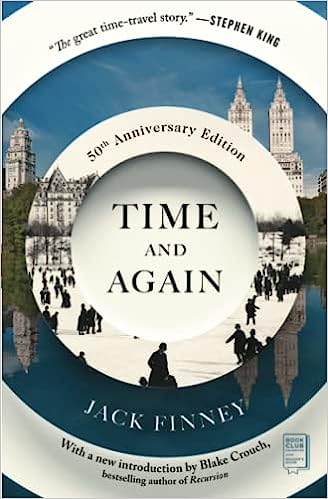
Time and Again (1970), an illustrated science fiction time travel novel by American author Jack Finney, follows Simon “Si” Morley as he is recruited to a secret government time travel project, and succeeds in traveling to 1882. There, Si tries to unravel a possible conspiracy, falls in love, and faces difficult choices between love and obligation, loyalty and ethical duty. This is the first of two novels, with the sequel From Time to Time (1995) published the year Jack Finney died. Finney left the ending open for a third novel that was never written.

Many of Jack Finney’s short stories and novels had commercial and critical success. His first novel, 5 Against the House, was published in 1954 and made into a movie in 1955. He is most famous for his second novel, The Body Snatchers (1955), which became his most commercially successful venture, spawning the 1956 movie Invasion of the Body Snatchers and its many remakes. Five of Finney’s novels and several short stories were adapted for film and television in his lifetime. However, his greatest critical success came with Time and Again, which remains his most highly-regarded work by fans and critics alike.

In the introduction to the 50th Anniversary edition of Time and Again, science fiction author Blake Crouch credits Jack Finney and this novel with starting him on the path to becoming a best-selling science fiction writer. And Stephen King, in the Afterword for his novel 11/22/63, claims it is “in this writer’s humble opinion, the great time-travel story.”

In Time and Again, the main character, Si Morley, works as an illustrator for an advertising agency in 1970s New York City, where he is dissatisfied with his life, and bored at work, with no family and a few lackluster romantic relationships. One day he receives a visitor at work, a man named “Rube” Prien–a Major in the Army, who has come to recruit Si to a top-secret government project: an experiment in time travel devised by Dr. E. E. Danziger.

Danziger, a physicist, believes he has devised a method of time travel: by tricking the brain into believing a person is already in a physical location in the past, one can become detached from their own time, and travel back in time.

Si is skeptical at first, but ultimately agrees to join the experiment if he is permitted to travel to New York in January 1882, to witness the mailing of a letter and unravel a mystery that has been haunting him and his girlfriend, Kate. Kate’s father gave her a letter once mailed to HIS father, Andrew Carmody in January 1882 – a letter that hints at a fire that may destroy the world, and was somehow connected to Carmody’s suicide years later. Si intends to learn who sent that letter and what it really means.

And so Si’s adventures in time travel begin. He travels back and forth between 1882 and the 1970s several times, uncovering a larger mystery than he could have guessed, and accidentally falling in love in the process. In his efforts to solve the mystery of the letter, he will come face to face with complex ethical questions about the limits of scientific discovery, the moral obligations of those in power, the dangers of messing with the timeline, the inevitability of fate, and what it means to find the place where you belong.

This book is widely considered a masterpiece of the time travel narrative genre. It features rich detailed descriptions of New York City in the 1880s that beautifully make the time period and setting come alive. This is aided by Finney’s meticulous use of real drawings and photographs from the time period (which he attributes to his fictitious characters), and even quotes and clippings from newspapers of the time. The characters are complex, with deep emotional resonance, genuine motivations, and rich histories. Finney treats even many of the briefly-mentioned side characters with careful attention and detail.

In addition, the narrative voice of Si Morley (the story being written in first person POV) as Morley relaying his experiences, is intelligent, wry, and humorous. Si’s sarcastic wit is often on display, both in his descriptions and in his dialogue with other characters. And his observations about humanity are thought-provoking and insightful.

Over fifty years later, Time and Again is still as impressive as it was upon its initial release. Despite a few outdated statements, it continues to be philosophically rigorous, utterly fascinating, beautifully written, and highly entertaining. I strongly believe it will remain a high benchmark for the genre for decades to come.

A Brief History of Time Travel

For a recent freelance project, I found myself revisiting some time travel narratives. Years ago I taught an entire course on time travel narratives, and it was fun to have an opportunity to dig up those old lecture notes, and re-read a couple of the novels and short stories I taught in that course. I had mentioned at the beginning of the year that I might like to re-purpose some of that work for the blog, since its become abundantly clear I’m not likely to go back into teaching any time soon and all that work might as well be put to some kind of use.

SO! I’ll be doing a handful of blog posts in a sequence about time travel. I promise not to go on about too long, but I thought it might be fun. I’ll start with a brief overview (here), and then discuss perhaps just a couple of novels and a short story or two, and end with a full reading list (and viewing list as well — since there’s some great time travel stuff in film and television). I hope that sounds like fun! It’s fun for me at least.

So without further ado: A Brief History of Time Travel

Time travel exists as a philosophical concept, a scientific principle, and narrative subgenre. The possibilities and implications of time travel have been explored for centuries and appear in many different cultures. While time travel as imagined in fiction may not be possible, some scientists argue that one-way time travel might be possible through the concept of time dilation in the special theory of relativity.

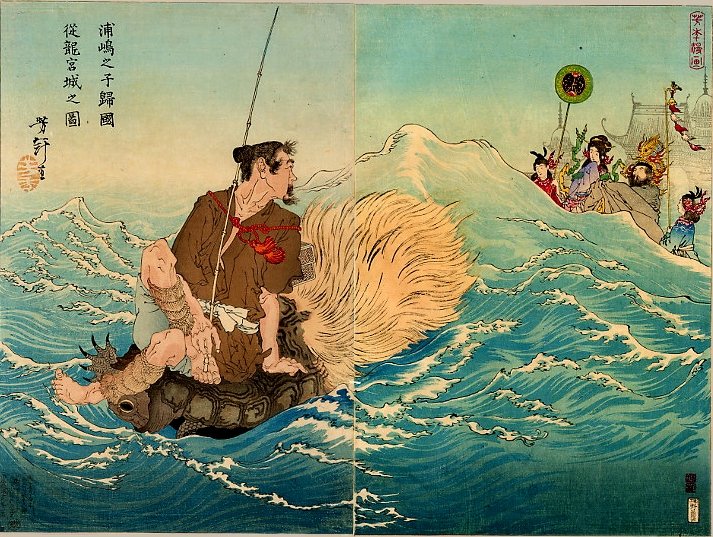
Time travel, as a narrative subgenre, exists in both fantasy and science fiction, but its earliest appearances are in myth and folklore. Two of the oldest examples are “The Tale of Kakudmi” in Hindu mythology. and “The Tale of Urashima Taro” in Japanese folklore.

“The Tale of Kakudmi” appears in several Hindu texts, most prominently the Vishnu Purana (Book IV, Ch 1) — one of 18 important ancient Hindu texts that contain stories of the Hindu gods, kings, and dynasties. When the Vishnu Purana was written is highly contested, but some estimates suppose it to be as old as 1000 BCE. “The Tale of Kakudmi,” briefly, is this:

Kakudmi was a king with a daughter named Revati. Revati was so beautiful that Kakudmi believed no one upon the Earth was worthy enough to marry her. So they went to the Hindu god Brahma to ask for advice, giving him a list of possible suitors and asking which is most worthy. However, Brahma informs them that time moves differently for the gods, and by teh time Kakudmi and Revati return from their visit with Brahma, everyone they have ever known will be long dead. In the short time Kakudmi and Revati are with Brahma, 27 catur-yugas have passed among men (1 catur-yuga = approx. 4,320,000 years according to the Vishnu Purana; so 27 catur-yugas = approx. 116,640,000 years). When Kakudmi and Revati return, they find that no only have the landscape and environment changed drastically, but that the civilizations of men have declined, becoming less than they were in Kakudmi’s own time. Kakudmi states that “he found the race of men dwindled in stature, reduced in vigour, and enfeebled in intellect,” thus making them even less worthy of his daughter than they had been in his own time.

“The Tale of Urashima Taro” is from Japanese folklore, first seen in the Nihongi, the second oldest book of classical Japanese history, and perhaps written around the 6th century. Like “The Tale of Kakudmi,” Urashima Taro is the story of a man who goes to a supernatural location, where time moves differently, so that he experiences only a handful of days while 300 years pass for normal men.

Both of these stories could be considered very early examples of the concept of time dilation, in which time moves more quickly or slowly depending on where you are, based on the theory of relativity that states all perceptions of time differ for different people in different places.

The earliest time travel in stories happened though magical or mystical means: a god, a spell, a mysterious realm. For instance, in the play Anno 7603 by Norwegian poet Johann Hermann Wessel, written in 1781, two men are sent far into the future by a good fairy, where they find that gender roles have reversed and only women are allowed to fight in the military. Then there is, of course, the case of the short story “Rip Van Winkle” by Washington Irving, published in 1918, in which a man mysteriously falls asleep and wakes up decades later without explanation.

The oldest known story of time travel by means of a machine is Edward Page Mitchell’s “The Clock That Went Backward,” written in 1881, though even this story is more magical than science-fictional. It was H. G. Wells’s famous novella The Time Machine (1895) that truly popularized the idea of time travel through scientific and mechanical means; however his short story, “The Chronic Argonauts,” includes a time machine as well, and predates the Time Machine by seven years.

The method used in the highly-regarded novel Time and Again (which will be discussed in my next post) travel is loosely inspired by Einstein’s theories of time, based on the Special Theory of Relativity, combined with the concept of “self-hypnosis.” This method was also popularized in the novel Bid Time Return by Richard Matheson (most famous for I Am Legend and What Dreams May Come), which inspired the film Somewhere in Time starring Christopher Reeve.

Since then, time travel has remained a popular trope in both fantasy and science fiction stories in both print and visual media. Many science fiction stories take great pains to offer detailed explanations for how and why time travel works. But in just as many stories, the how and why of time travel is ignored in favor of the social, historical, or personal consequences of that travel. In some cases, the time travel is merely a trope used to propel another kind of story, such as in the Outlander series (books and tv show), where the time travel elements are mostly used to allow for the romantic drama.

Literature scholar David Wittenberg argues that time travel fiction is a kind of “narratological laboratory” in which the “most basic theoretical questions about storytelling,” as well as philosophical concepts of “temporality, history, and subjectivity, are represented in the form of literal devices and plots,” for the purpose of exploration, through experiments, analysis, and criticism (Wittenberg, David. Time Travel: The Popular Philosophy of Narrative. Fordham UP, 2013).

Some of the most popular themes within time travel narratives include: fears or hopes of changing the past, alternate pasts and alternate futures, observing or communicating with another time, time loops and time paradoxes, time wars, and the prevalence of human emotions such as love overcoming the obstacles of time.

More Queer Joy Books for Pride Month!

I wanted to share some more queer stories for Pride Month, just because I can! I’ve really loved the recent explosion of queer literature. There’s always room for more improvement, and some genres get more representation than others, but overall I’m very excited to see how many more queer books we’re getting across the board: in SFF, in poetry, in literary fiction, and even in YA and children’s fiction. I’ve tried to share some recent titles in a few different genres for today.

To start with, I wanted to recommend some queer poetry! I don’t talk about poetry here much but I’m actually a HUGE poetry nerd, and read a lot of it. And quite a lot of the poetry I read is queer of some kind or another. So! I have a few to share!

Night With Exit Wounds by Ocean Vuong – this poetry collection from Vietnamese-American poet, also well known for his fiction novel On Earth We’re Briefly Gorgeous, focuses on Vuong’s experiences with immigrant parents, being an outsider in American culture, facing anti-Asian racism, and his experiences as a gay man with less-than-supportive parents, and facing homophobia in America on top of the racism he deals with. The poems are lyrical and hard-hitting. Vuong has a second poetry collection out now, Time is a Mother, which I haven’t had a chance to get my hands on yet.

Next, the two poetry collections by Chen Chen, a Chinese-American poet, examine similar issues of race, sexuality, family, and belonging. His collections are When I Grow Up I Want to Be A List of Further Possibilities, and Your Emergency Contact Has Experienced An Emergency (which I wrote a full review for here). Chen’s poetry, like Vuong’s, deals with the experiences of being an Asian immigrant in the US, and the issues of anti-Asian racism that arise from that. He is also a gay man, and examines the homophobia he experiences in American society, as well as from his parents – particularly his mother with whom he has a fraught relationship. Chen’s poetry is more visceral and blunt, with occasionally humorous or explicit language and description, and some experiments with form. His second book in particular, pulls inspiration from and pays homage to a number of other Asian-American poets, including Bhanu Kapil, Jennifer S. Cheng, Justin Chin, and Marilyn Chin.

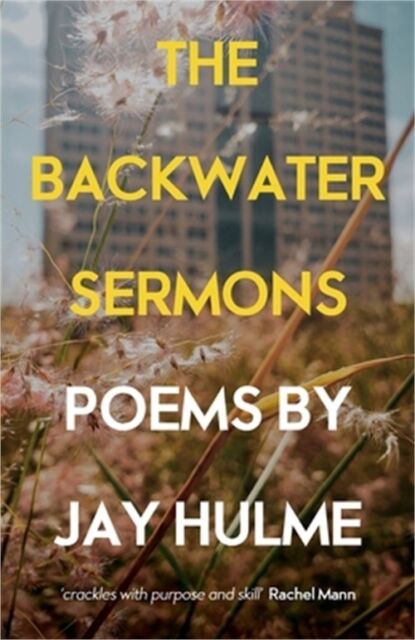
Another queer poet worth checking out is Jay Hulme, with his collection The Backwater Sermons. Jay Hulme is a trans-man in the UK, who is also a devout Christian. Much of his work deals with the complex beliefs and emotions that arise from the intersections between religion and sexuality, particularly in a christian culture where some subsections of the community are very welcoming of queer identity, and other subsections are violently and vehemently opposed. Hulme imagines gentle and accepting Jesus in a dance club, and re-frames saints with queer identities of all kinds. Personally, as a queer woman who came from a Catholic background and now has a complicated and ambivalent relationship with religion writ large, I found Hulme’s poetry and perspective on Christianity touching and enlightening and filled with a hope I have not yet found for myself. Here is one of the poems from this collection: “Jesus at the Gay Bar.”

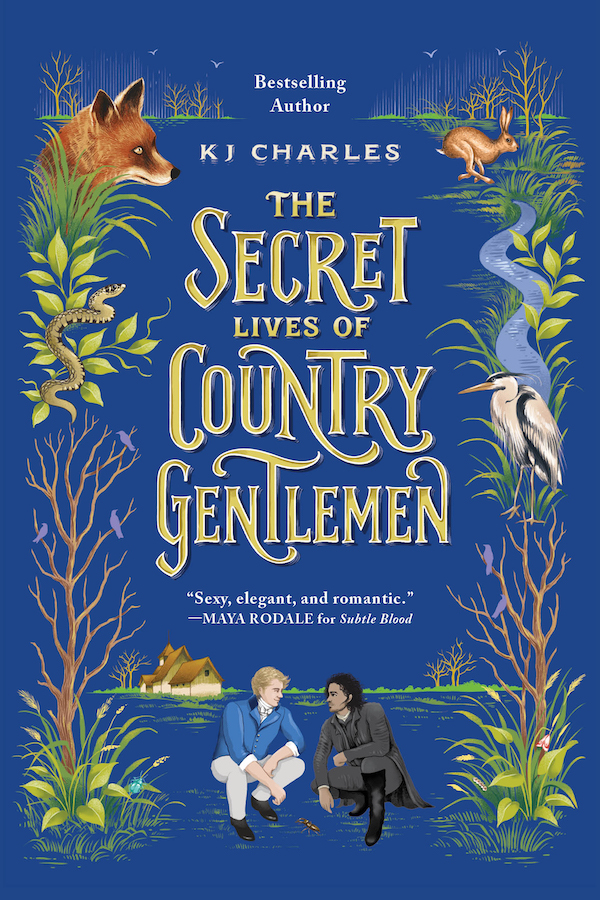
I can also highly recommend K. J. Charles’s newest release: The Secret Lives of Country Gentlemen, which is in the same vein of much of her other work. A queer historical romance, this one is set in Regency England (did I mention this is one of my favorite time periods?), and features a lonely prickly baronet, his former lover – a charming smuggler, and a creepy gothic estate on Romney Marsh. I love everything Charles writes, and this one is no exception. Hopefully, I’ll get around to writing a full review for this one eventually, but in the meantime, you should still check it out!

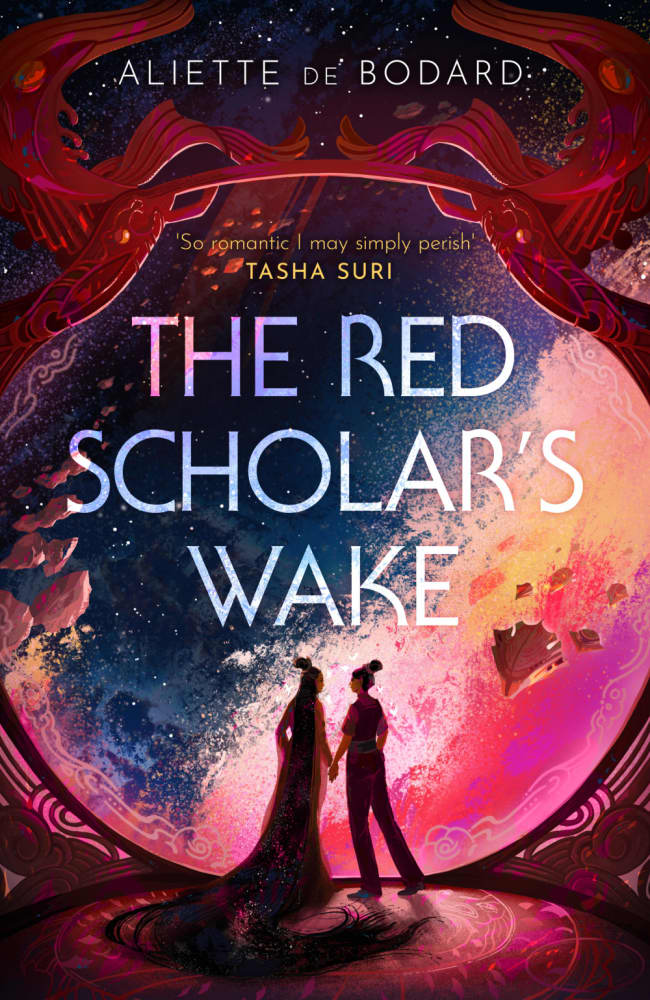
And I’ll stop, today, with The Red Scholar’s Wake by Aliette de Bodard. This one is a sapphic science fiction with space pirates, and a sentient spaceship. It’s been described as Black Sails in space, but with lesbians, romance, and Vietnamese influences. This one came out last year, and I had it on my radar then, but didn’t finally get around to buying until last week. So, I haven’t read this one yet, but it’s at the top of my TBR stack. It sounds amazing, and the reviews have been great, and I have no doubt I’ll love it when I get to it.

Some Queer Joy Books for Pride Month

I’m getting the blog back up and running, and I’m just in time, because: It’s Pride Month! In the face of all the current awfulness in the U.S. (which I’m not going to get into here, because it’s terrifying and rage-inducing and I’m tired), let’s focus on fun things. So, as your resident Disaster Bi, allow me to offer up some Queer Joy books for your reading pleasure!

By happy coincidence (probably not coincidence, they probably did it on purpose), a bunch of books releasing THIS WEEK are happy and gay!

Mortal Follies by Alexis Hall — Alexis Hall of Boyfriend Material fame, returns with a sapphic, Regency-era romance fantasy this time! Which is pretty much my absolute favorite combination of words in the English language. I’ve been a Regency-era nut since I was a kid, and when you combine sapphic, romance, and fantasy together, you put me smack-dab in my happy place. I am SO excited for this one! (I love these trope/tag meme book graphics! I don’t care if anyone else thinks they’re dumb. Also, look how pretty this cover is!)

We Could Be So Good by Cat Sebastian — the newest book from Cat Sebastian (famous for her queer books of mostly, but not only, gay man) sounds like a really great romp. You can always count on Cat Sebastian for relatable characters, engaging plots, and all the gayness. This one is set in 1950s New York, and features a scrappy newspaper writer and the son of a Newspaper Tycoon who grow close in the midst of the very dangerous anti-gay atmosphere of the 50s.

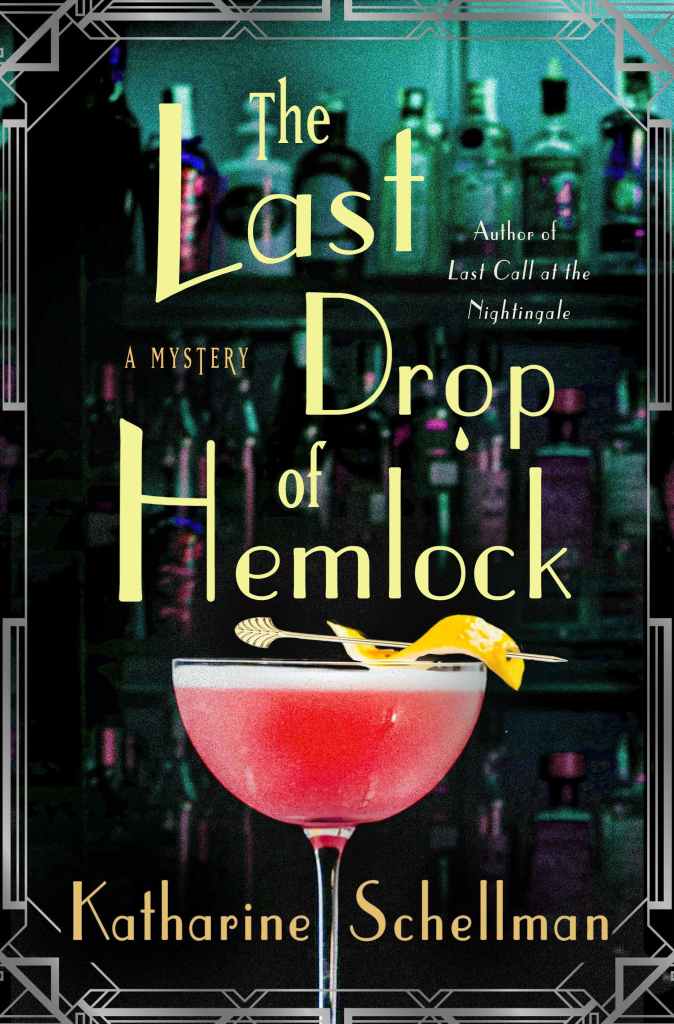
The Last Drop of Hemlock by Katherine Schellman — This book is primarily a historical mystery novel set in 1920s New York (another one of my favorite time periods!). It’s the sequel to Last Call at the Nightingale, for which I wrote a glowing review last year. Like the first, it features my fellow resident Disaster Bi, Vivian Kelly as she navigates her new job at a speakeasy, her attraction to the dangerously alluring woman who owns the speakeasy, and stumbling upon yet another murder (and, okay, this one might stretch the definition of “joy” in “Queer Joy,” as Vivian is really Going Through It, but still…). Katherine Schellman is an instant-buy for me and I cannot recommend her work highly enough! (I couldn’t find a fun graphics version of this cover, alas.)

There are, of course, PLENTY MORE. But all three of these literally released this week so I thought it would be fun to highlight them. Hopefully, I’ll do a second post with even more options. And, of course, I’ve written about plenty of queer books in the past, such as:
“Queer Romances for Pride”
“Queer Romances Redux: The Whyborne & Griffin Series”
“Book Review: Imperfect Illusions”
“Two-For-One Book Review: Marvellous Light and Restless Truth”

Unpopular Opinion: Can we stop with the pearl-clutching, maybe?

Allow me to indulge in what might be a somewhat controversial book take for a moment. We, the book community writ large, have got to stop being so precious (see secondary definition here) and pearl-clutchy about the physical object of the book.

But let me back up for a second.

During my undergraduate Literature degree, I took a class from one English professor who, on the first day of the semester, picked up his copy of the Norton Anthology of British Literature and chucked it across the room. The room gasped and watched in stunned silence as the enormous book flew across the room and landed in a crumpled heap, pages folded and bent.

This professor strode across the room, picked up his anthology, smoothed a few pages down, closed it, and put it back on his desk.

And then he announced to the room that the book is not a sacred object.

The stories, imagination, knowledge, or information contained within the book are certainly sacred, but not the physical object itself. It is merely paper and ink — and usually fairly cheap paper and ink at that. And whatever we need to do to that physical object in order to best access, understand, and appreciate the knowledge within — be it writing in the margins, underlining, folding pages, or even ripping the book in half to make it easier to carry — are all fair game.

That lesson was absolutely invaluable to me. I carried it with me into graduate school, and eventually imparted it to my own students when I taught.

There are, obviously, exceptions. Certainly no one is advocating for beating up first editions, or antiques, or beautifully-printed hardcovers. But your average, standard publication, trade paperback? It is not sacred. Please stop acting like it’s the Shroud of Turin.

This brings me back to where I started.

There have always been people who judge those who dare to dog-ear their book pages, or write in their books, and so forth. And there always will be. It’s a fact of life, and I accept that. And certainly no one is saying you have to do these things to your books if you don’t want to. But in recent years there has been a huge uptick in those who are very vocal in online spaces (as so often happens with the internet), acting as if those who adapt a printed book to their needs is tantamount to the devil. People who rant and rave against someone dog-earring a page, or behaving as if a disabled person who tears a very large book in half to make it easier to hold has just ripped an infant in two and should be executed. It’s absurd.

Not coincidentally this kind of judgy behavior has gotten worse with the rise of book subscription boxes and the craze in recent (last 6-8 years) of more and more “special edition” and “collectible” books. Now. Let me be clear. There is nothing wrong with special editions and collectible books. I have a good handful of beautiful, illustrated, signed, extra-expensive special editions that I adore. They have their own shelf in my office. I keep them dusted, out of harsh sunlight that might bleach the spines, and away from harm. I paid a lot of money for them, and they are absolutely works of art and should be treated that way.

That said, there is a growing trend/attitude in a large number of buyers who will only buy a book if it’s a special edition — with sprayed edges! Exclusive dust jackets! Illustrated end papers! Signed and numbered! And certainly only in hardcover! The book subscription boxes are constantly tripping over each other in the scramble to find more and newer and better ways to outdo the competition with their exclusive perks. More and more the focus drifts away from whether a book is actually good and readable and toward its collectibility and exclusivity.

While this has absolutely been a major boost for some authors, it truly only helps the big names. The buzzy TikTok titles. The authors known for catching the attention of subscription boxes and having a million slightly different “exclusive editions” in various places. I love that some authors are seeing major boosts in sales from these things. But it is also harming the vast majority of midlist authors who never get hardcover releases — only trade paperback, and sometimes only ebook releases. The authors who have been publishing consistently for years, sometimes decades, without ever getting quite mainstream enough for the big flashy TikTok campaign or the special edition from Illumicrate or some other big subscription box. Or the debut authors who weren’t lucky enough to warrant the big initial marketing push from their publisher, or catching the eye of that one BookTok reviewer who could make them the next sensation.

I firmly believe that these two attitudes (the pearl-clutchy sacredness of the physical book, and this obsession with exclusivity) go hand-in-hand. If the book is sacred, only the prettiest, flashiest, most valuable packages are worth buying/reading. And both readers and authors are harmed by this attitude.

I’m not saying we shouldn’t buy (or make) pretty special editions anymore. Or that we must buy every random paperback we see. Or that everyone is required to treat their books with more roughness. I’m just saying maybe we, as a community, need to unclench a little. Stop worrying quite so much about the resale value of a bloody book, and just try getting the fullest out of the content on offer.

(Also, apologies if I got a tiny bit rant-y here. But if I can’t rant a tiny bit on my own blog, where can I?)