Book Review: The River Has Roots by Amal El-Mohtar

A few months ago, I had the pleasure of reading Amal El-Mohtar’s new novella, The River Has Roots (released in March 2025). Amal El-Mohtar is a Lebanese-Canadian poet and speculative fiction author. Though The River Has Roots is her solo full-length fiction debut, El-Mohtar is a prolific writer of speculative short stories and poetry, as well as the editor of the fantastical poetry magazine, Goblin Fruit. She has received the Rhysling Award for Best Short Poem three times, and her short story, “Seasons of Glass and Iron” won the Nebula, Locus, and Hugo Awards in 2016. She released her collection of short fiction, The Honey Month, in 2010, and has a second short fiction collection, Seasons of Glass and Iron, forthcoming in 2026. However, she is, of course, best known This Is How You Lose the Time War, a romantic science fiction epistolary novella co-written with Max Gladstone that swept the awards season in 2019, winning the Nebula, Locus, Hugo, BSFA, and Aurora Awards for Best Novella/Shorter Fiction. That novella is one of the most beautiful and moving pieces of fiction I have ever read, so I knew that picking up The River Has Roots would be a safe choice.

The River Has Roots is based on the traditional murder ballad known as “The Two Sisters.” Murder ballads are a sub-category of traditional folk ballads that tell narratives about crime, murder, and death, usually of a gruesome nature. Murder ballads most often originated in the areas of England, Scotland, and Scandinavia in the medieval period, and usually relayed both the murder and the justice or revenge that follows. In most cases, the murder victim in the ballad was a woman. The murder ballad of “The Two Sisters” originates in England or Scotland, dating to at least 1656. Several variations of the tale exist, such as “The Twa Sisters,” “Binnorie,” “The Cruel Sister,” or “The Bonny Swan,” among others.

The two sisters of the novella are Esther and Ysabel Hawthorn, who live near the town of Thistleford, where the River Liss runs from the Faerie land of Arcadia, carrying the wild magic of “grammar” in its water. Grammar has the power to transform what it touches and is governed by complex rules of meaning and wordplay. The willow trees along the river filter the wild grammar from the water with their roots, making the water safe and the grammar within willow wood usable by humans. Marking the boundaries between Arcadia and the human world is a wild area called the Modal Lands.

Esther, the elder, and Ysabel, the younger sister, are part of the Hawthorn family, who have cared for their grove of willow trees for generations, cultivating and harvesting the willow wood to be used in magical objects. Esther and Ysabel are tasked with singing to the trees, which strengthens them and keeps them happy. As is often the case in such tales, the elder sister is dark-haired and serious while the younger sister is blonde and playful. Yet, unlike traditional folktales, it is the elder sister Esther who captures the attention of a man, rather than Ysabel. The man, Samuel Pollard is wealthy and charming, but Esther will have nothing to do with him. Both because she finds him dull and obsequious and because she already has a secret faerie lover from Arcadia named Rin, a nonbinary shapeshifter who can appear as an owl as easily as they appear as a man or woman. When Samuel Pollard discovers that Esther has becoming engaged to Rin, his jealousy turns violent.

Though there are many variations of “The Two Sisters” murder ballad, the basic components stay roughly the same. The two sisters visit a body of water, usually a river, sometimes a sea, where the eldest sister drowns the younger sister in a bout of jealousy over a man. El-Mohtar’s version, however, defies the patriarchal themes of the original. Esther explicitly comments in the narrative that many such tales pit women against each other for the sake of man, and usually reduce the older sister to a cruel, selfish stereotype. Instead, El-Mohtar imagines two sisters who love and protect each other, placing a controlling and jealous man in the role of murderer.

This novella showcases what is clearly one of Amal El-Mohtar’s greatest strengths, her absolutely stunning poetic prose. Every sentence is so beautiful that I often simply had to stop reading and stare for a minute or two, admiring the skill, burning with jealousy of her mastery of language. There are some stories that I would be willing to make a deal with the devil in order to have been the one who wrote it. This Is How You Lose the Time War is definitely on that list (so are Gideon the Ninth by Tamsyn Muir and The Spear Cuts Through Water by Simon Jimenez, just name a couple). The River Has Roots is also on that list, because holy wow is it gorgeous. The prose is not only elegant and lyrical though. It is also filled with wordplay, puns, and metaphor turned literal, all of which highlight the primary theme of the novella: the power of language to transform human perception and even concrete reality.

Puns and double meanings appear from the first line of the first chapter, including the interplay of the magic of grammar and its etymological origins, as well as the double meanings inherent in the Modal Lands and elsewhere. By imagining grammar as a kind of transformational magic, the narrative heightens the figurative and symbolic power of language into a concrete force that has real, physical impacts on people and their world. Wordplay and puns quite literally have the power to transform Esther into a swan and a harp. There are, however, as many positive examples of the impact of language as there are negative. Just as words can be used to divide and destroy, they can also bring together. Riddles and wordplay facilitate Esther and Rin’s relationship, allowing them to cross the boundaries between their lands and cultures. Similarly, words, particularly riddles and songs, represent (and help create) the unbreakable bond between Esther and Ysabel, which is instrumental to the plot’s conclusion. The narrative proves again and again that language is a powerful force in the world, both literally and figuratively, that can impact lives for good or ill and must therefore be used with care.

Sisterhood is also crucial to the novella. It is the through the power of sisterly love that Esther and Ysabel defy the patriarchal oppression of Samuel Pollard (and the traditional murder ballad), and death itself. Though the romantic love between Esther and Rin is also an important, it is not the central focus. Instead, the narrative gives primacy to the sisterly love between Esther and Ysabel. Esther, in particular, explicitly rejects the formulaic role usually assigned to eldest sisters in folklore. She is not jealous of Ysabel, but protective, and is willing to sacrifice her life and happiness for Ysabel’s sake.

Because language is so crucial to this story, and because I simply could not stop staring at some of the prose, here are a few of my favorite passages (I could highlight the entire novella, but I’ll do my best to just pick a few):

“There was a time when grammar was wild–when it shifted shapes and unleashed new forms out of old. Grammar, like gramarye, like grimoire. What is magic but a change in the world? What is conjugation but a transformation, one thing into another?” (Page 1)

“When people say that voices run in families, they mean it as inheritance–that something special has been passed down the generations, like the slope of a nose or the set of a jaw. But Esther and Ysabel Hawthorn had voices that ran together like raindrops on a windowpane. Their voices threaded through each other like the warp and weft of fine cloth, and when the sisters harmonized, the air shimmered with it.” (Page 7-8)

“Most music is the result of some intimacy with an instrument. One wraps one’s mouth around a whistle and pours one’s breath into it; one all but lays one’s cheek against a violin; and skin to skin is holy drummer’s kiss. But a harp is played most like a lover: you learn to lean its body against your breast, find those places of deepest, stiffest tension with your hands and finger them into quivering release.” (Page 80)

“Rin might have said, The way is a riddle. How would Esther solve it?
They might have said, You sang your way out of Arcadia once; sing your way back in.
Or Rin might have said, If the river has roots, it has branches, too; learn to climb them, and find your sister.” (Page 98)

The River Has Roots packs a powerful punch into a fairly small package—one of things I love best about a good novella. With poetic prose and complex wordplay, the novella tells a haunting story of sisterly love, justice and revenge, and the power and magic of language. It is lyrical, poignant, and makes me insanely envious. Which, honestly, is my favorite kind of book.

College, Cross-Country Moves, and Colds (Oh My!)

Well folks. I’ve done it. I am here. I have officially moved cross-country from Houston to DC. The drive was long but relatively painless, except for the fact that I started feeling under the weather in the last couple days of packing and by the time I reached Virginia I had a full-blown cold. It’s still kicking my ass several days later. My mother and I did the drive together, for which I am very grateful. And I visited the George Washington campus for the first time on Tuesday, with my mom, my dad, and even my stepmother tagging along to follow me around while I gaped at everything lol. I’ve been on a decent number of college campuses by now, but this one is very impressive. And a bit intimidating, as it is right in the middle of DC and just a few blocks away from the White House!

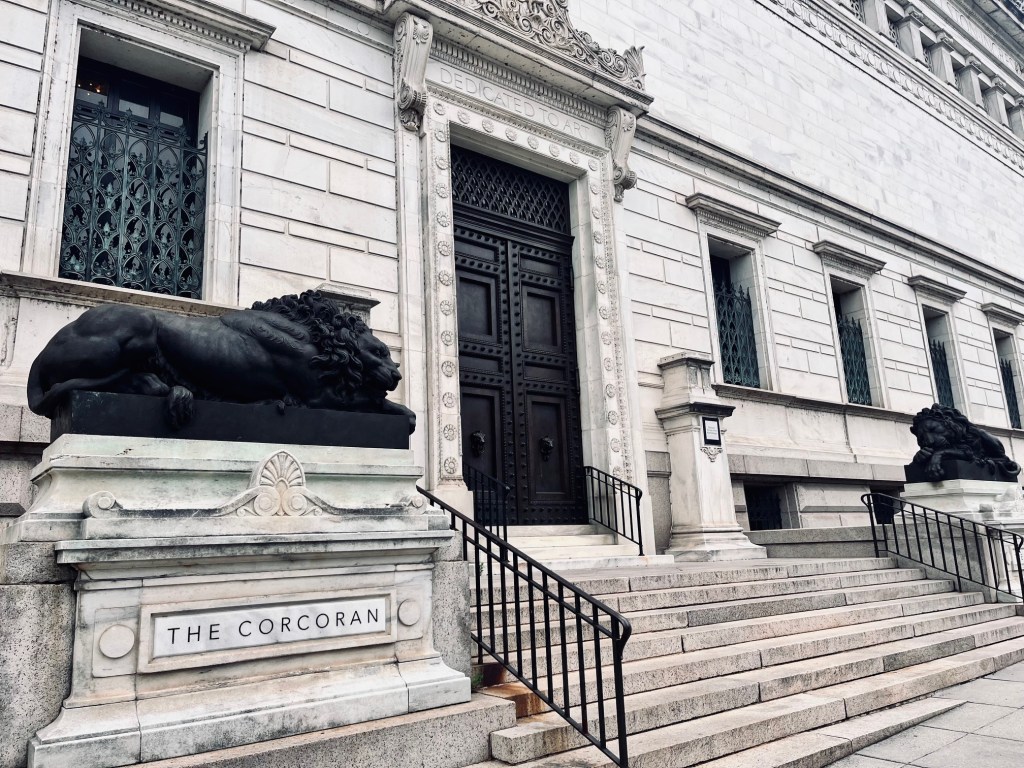
My mother went home yesterday (I feel bad that she had to drive back by herself). And I am currently sitting on campus awaiting orientation. More specifically, I’m sitting in the Flagg building, which was built in the 1890s (I believe?) and houses the Corcoran School of Art and Design. I’m still a little flabbergasted that I’ll be taking courses in this very beautiful old building!

And then classes officially begin next Monday. Unsurprisingly, I am both excited and nervous. Very nervous. People who know me well know that I am an anxious person by nature, so nervous is my default mode. But still. I’ve also chugged like half a bottle of Dayquil (slight exaggeration) to make it through orientation today. Hopefully, I’ll be able to properly rest and recover over the weekend so I’m not a zombie during my first class on Monday.

I’m still very much in a state of confusion right now, with most of my stuff in boxes and an unsettled routine and all that. But once I’ve gotten a handle on the first week or so of the semester and started settling in, I’ll make an effort to get a book review or two written and posted. Lord knows I’ve read enough in the last few weeks. It’s just finding the time to sit down and write about any of it is even more challenging than usual right now.

Reading Romance Through the Apocalypse

Not gonna lie, it really does feel like the world is ending these days. Globally, things look dire. Domestically, I am beginning to lose hope that the U.S. is even worth saving some days. It feels like everything is burn down around us. I don’t want to turn this blog into a political soap box, but as a queer, Asian-American woman with queer, trans, and POC family and friends, I should hope it’s obvious where I stand. I am angry, exhausted, afraid, and grieving for my communities, for my country, and for the millions and millions around the world negatively impacted by this government’s policies.

It becomes a little more difficult every day to do the things I need to do. To work, to write, to take of myself and others. Even reading, my best refuge, sometimes feels too difficult and draining. Dredging up the energy to do anything is hard when the apocalypse is raging around you. My brain and nervous system retreat to a few different hobbies in moments like this. But one of my significant resting places is romance novels. In an average year, I read a pretty good chunk of romance novels (some spicy, some not), but in the last year and half or so, I’ve probably read more romance and erotica than I had in my entire life up to this point. I am basically burning through them. I still read other things as well, but there is a lot of romance happening.

And that’s ok! In difficult times like this, when we are under constant attack, emotionally and mentally, sometimes even physically, we deserve whatever comforts and resting places we can find. That is one of the things romance novels exist for! Generally speaking, you go into a romance novel knowing exactly what to expect. That’s not to say that all romance novels are exactly the same. There is variety and surprise aplenty in romance novels. But romance novels do follow certain genre conventions without which they would not qualify as romances, and that is part of the point. They are intended to be familiar and comforting. I should be able to settle into the story knowing that no matter how dramatic or awkward or angsty the plot gets, I can rest assured that love will prevail and the heroes/heroines will get their happily-ever-after. I need that right now, when happily-ever-afters seem so scarce on the ground for real people.

So! Romance novels it is, then! I refuse to apologize for that.

Generally speaking, I do not believe in “guilty pleasures.” I advocate for loving what you love without embarrassment. And yet, I’ll confess that some of the things I’ve been reading lately, I would not confess to on my death bed. Some romance novels I read are very good quality, with or without spicy scenes. I’ve been leaning heavily into straight-up erotica lately (and, again, there is nothing wrong with that!) A lot of it is very smutty, plot-light, and silly. But I’ll admit that some of it isn’t even very good, it just scratches some itch in my brain. Not to mention, some of them say just a little more about my personal tastes than I really feel like airing publicly (lol).

That said, I thought I might be brave enough to offer a small sampling of a few titles I’ve read that I particularly loved. I should probably add that I tend prefer historical romances and cozy fantasy romances, but I read a handful of contemporary romances as well. I read very little that would lean more into dark romance, but I do have a slightly unhealthy obsession with monster romances.

SOME ROMANCE TITLES:

Laurie Gilmore’s Dream Harbor Series:
This series includes The Pumpkin Spice Cafe, The Cinnamon Bun Bookstore, The Christmas Tree Farm, and The Strawberry Patch Pancake House. I’ve read the first three, but haven’t picked up Strawberry Patch Pancake House yet. And there’s a fifth book coming out in September. This contemporary romance series are set in the fictional ideal New England town of Dream Harbor. They are unbearably sweet, happy, and adorable in a way that I find both incredibly comforting and just a tiny bit depressing in a “I will never have this and am I painfully jealous” kind of way. So I have to be careful of my mood when I pick one of these up, lol. They usually have a handful of spicy scenes. My biggest complaint is they are unrelentingly heterosexual and I would really love some more sappy queer couples.

On the Same Page and The Next Chapter by Haley Cass
Speaking of sappy queer couples in contemporary romance, I also really enjoyed On the Same Page by Haley Cass. Haley Cass is beloved for her sapphic romances and this one was great. It is pretty spicy, featuring a lingerie model/fashion influencer, and a great friends-to-lovers plot. I am a sucker for friends-to-lovers and much prefer it to enemies-to-lovers (which may account for my reluctance to read a lot of current romantasy?). I will say a few scenes in On the Same Page really triggered my painfully-sensitive secondhand embarrassment. Just FYI for anyone who suffers from that the way I do. The Next Chapter is a sequel to this one, but I haven’t read it yet.

Travis Baldree’s Novels:
In the realm of cozy fantasy romance, I read a lot. I imagine at this point most people have at least heard of Legends & Lattes, and its sequel Bookshops & Bonedust by Travis Baldree by now. Those are both great. So cozy and wonderful and happy, even when the fantasy plot elements get serious for a bit. And they’re sapphic, which makes me extra happy. I am so excited for the third book, Brigands & Breadknives, coming out later this year!

Megan Bannen’s Hart & Mercy Series:
I also highly recommend The Undertaking of Hart and Mercy by Megan Bannen, and its sequels The Undermining of Twyla and Frank, and The Undercutting of Rosie and Adam. These are fantasy romance set in a fictional world with some absolutely incredible world-building details! And the romances themselves are wonderful. As I mentioned above, I don’t generally care for enemies-to-lovers, but the relationship in The Undertaking of Hart and Mercy really makes it work and I loved it. While the main couple of each book is straight, there are some background relationships that are queer. I haven’t read the third book in this series yet, but its on the TBR list.

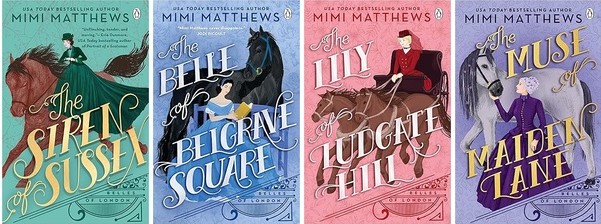
The Belles of London by Mimi Matthews:
For historical romances, my recent favorite has been Mimi Matthews’ series The Belles of London. There are four books in this series set in Victorian England, following the romances of four women who become friends and bond over their shared love of horseback riding. The four books are: The Siren of Sussex, The Belle of Belgrave Square, The Lily of Ludgate Hill, and The Muse of Maiden Lane. These books speak to my soul and I love all four of the friends. It’s really difficult to choose one, but I think Lily of Ludgate Hill might be my favorite (maybe?). I am devastated that this series is now complete though. Historical romances set in either Regency or Victorian England are my faves.

Haven Ever After Series by Hazel Mack:
I’m not going to share too much of the monster romance I’ve been reading, because let’s be real… these are mostly straight-up erotica and the specific ones I gravitate to cut just a little too close to the bone. I will, however, mention one of the series I’ve been reading pretty consistently: Haven Ever After by Hazel Mack, the first of which is Getting It On with Gargoyles. There’s 7 or 8 in this series now, and I think the author is still going. In addition to being very spicy, these books are also just really sweet and fun. They mostly feature straight couples (my biggest complaint with basically all monster romances in general), but there is one poly pairing that was f/m/m (Slaying with Sylphs) that was really good. I’m hopeful that Hazel Mack will branch out into more queer couples if she keeps going. But, yeah… monster romances generally skew pretty heavily straight. (The selection of queer monster erotica is pretty slim, and I’ve probably already read it if it’s out there, but if you know of any good titles, PLEASE DO DROP ME A LINE. I need my fix.)

Boldness Is All: Some Thoughts on Murderbot

Now that the first (but thankfully, not last) season of Apple TV’s Murderbot series has wrapped up, I thought it would be fun to chat about it for a bit. For those not in the know, the Murderbot TV show comes from showrunners Paul and Chris Weitz (who have directed and/produced many films and tv shows both together and separately) and stars Alexander Skarsgard in the title role. The show is adapted from the science fiction novella series, The Murderbot Diaries by Martha Wells. The first season specifically adapts the first installment in the series, All Systems Red.

Spoiler Warning: As I am speaking in broad terms about the whole season of Murderbot AND the book series to some degree, this is going to be very spoiler heavy. Continue at your own risk.

The series follows the self-named Murderbot, a construct (part organic, part tech) Security Unit (SecUnit) who comes from the dystopian-ish Corporation Rim, a series of aligned systems, worlds, and corporate entities that control much of the galaxy. In the Corporation Rim, SecUnits and other constructs are considered objects to be owned, not sentient beings with lives and rights. SecUnits are leased as equipment. If they do not obey orders and fulfill their contracts, they can be punished, erased, or dismantled. And they are controlled by Governor Modules built into their systems. But Murderbot has secretly hacked its Governor Module, meaning that it is no longer forced to follow orders. What does it do with this freedom? It keeps doing its job anyway, and spends its free time consuming media (television dramas, music, etc.). In the first book, All Systems Red, Murderbot is leased on a contract to a team of researchers on an alien planet. This research team, PresAux, comes from a non-corporate-aligned free world called Preservation Alliance that is, basically, a socialist democratic utopia. The group becomes entangled in a conspiracy of coporate espionage and murder, requiring Murderbot to save its human clients from death while trying to hide the fact that it is, in fact, a rogue unit. Shenanigans ensue, of course.

Murderbot in full armor in fight mode.

The novella series is hugely popular. I’ve been reading them almost since the beginning (I think I picked them up when the third book was a new release? But I don’t really remember). I love these books with all my heart (I keep shoving them at people, including my best friend, my mother, my brother, etc). And I was so ecstatic when Apple TV announced their adaptation. That’s not to say there wasn’t some worry. There always is when a beloved book is adapted for screen. The process does not always go well, and often distorts the original work out of all recognition. Still, I was hopeful because Apple TV has a good track record with their science fiction properties, giving them good budgets, good actors, good marketing, and usually at least a few seasons (unlike the other big streaming entity… cough Netlfix cough).

As the show’s release got closer and more news was revealed bit by bit, some fans were concerned about the choice to cast Alexander Skarsgard in the lead role. Murderbot is very explicitly non-gendered and uses it/its pronouns. Some felt that Skarsgard was too blatantly masculine for the role. I was particularly intrigued by the discussions on Reddit and elsewhere between fans arguing over whether Murderbot was canonically more masculine or feminine presenting in physical appearance. A number of fans professed that the always pictured it with more feminine features. This has fascinated me because, while Murderbot is genderless, or nonbinary, the cover art on the books give Murderbot (at least to my eyes) a masculine-leaning body type (which Martha Wells approved). And the characters around Murderbot describe it as tall and intimidating, which to me generally means at least nominally male (obviously women can be tall and intimidating too, but still). Additionally, the novellas are all written in first-person narration, from Murderbot’s perspective, and the audiobooks are narrated by Kevin R. Free. A masculine voice (which Martha Wells approved). I think, for better or worse, there is a common image in people’s minds that being nonbinary or non-gendered means, by its nature, being androgynous. But a person can look physically very masculine and still be nonbinary, or agender.

Murderbot without its helmet, watching its media feed.

Suffice to say, some fans were concerned.

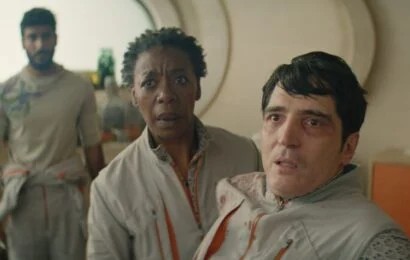
Dr. Mensah (Noma Dumezweni) and Gurathin (David Dastmalchian)

I believe that Alexander Skarsgard allayed all those concerned by the end of the first episode of the series. And then blew them all out of the water in the subsequent episodes. All of the acting is excellent, of course. The basically unanimous opinion is that Noma Dumezweni as Ayda Mensah, and David Dastmalchian as Gurathin, were particularly amazing in their roles. But, perhaps unsurprisingly, the standout performance comes from Skarsgard, who absolutely knocked it out of the park. Skarsgard perfectly captures Murderbot’s awkwardness and social anxiety. One of the things that I love about the character in the books is Murderbot’s disdain for emotions, its constant insistence that it absolutely does not feel things like concern or caring or attachment for its soft, squishy human clients even as its actions prove the opposite. Skarsgard’s facial expressions, his use of his eyes in particular, is subtle and effective, wonderfully portraying Murderbot’s efforts to pretend it does not have emotions while actively displaying them.

In addition to the acting, I feel the design work really stands out. The design and look of the sets, the technology, the worlds, the alien animals, and so on was really phenomenal. It felt appropriately SF-ish and space-opera-y, but also solid and real and lived-in. The designers, writers, and so forth really paid attention to the fine detail work, and that often makes all the difference.

Socially anxious Murderbot facing the wall. (You and me both, Murderbot).

For the most part, I also feel the show captures the vibe of the books, which are SF adventure with a deeply comedic edge to them, due primarily to Murderbot’s dry, self-deprecating and sardonic first-person narration. The show tried to tread a careful line between action-adventure and comedy. While some complained about the voice-over narration, I personally feel that you could not have Murderbot without the voice-over narration. Basically the entire book series is nothing but voice-over narration, as Murderbot recounts its adventures to a log. And I felt the Skarsgard’s delivery of Murderbot’s commentary, all dry wit and heavy sarcasm, was absolutely spot-on.

That said, I do feel that the show’s efforts to balance the comedic tone was not always successful. At times, especially in the first half of the season, it sometimes felt too sitcom-y to me. The human researchers were just a bit too bumbling. A bit too silly. The gags and pratfalls were a bit too over-the-top. Even as the story turns more serious by the end, the human characters (particularly Ratthi, Pin-Lee, and Arada) were just a bit too cartoonishly naive. Mensah and Gurathin have some weight and complexity. The others, not so much. To be fair, the first book does not flesh them out in immense detail either. That happens slowly over several books. Still, in an effort to craft characters with minimal material to work from, the show leans far too heavily on the idea of Preservation Alliance as a space-hippie commune gag and makes the characters appear more like clueless idiot children, rather than naive but still perfectly competent professionals. These are, after all, all scientists and researchers (well, Pin-Lee is a lawyer, but same idea).

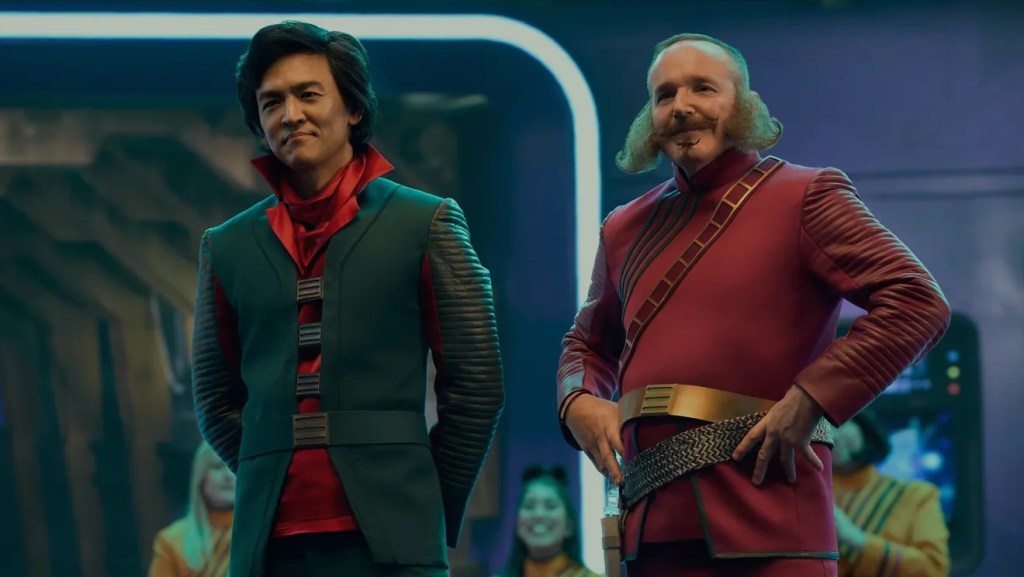
I had some other minor quibbles with some writing/directing choices in the show, but that was my one sort of major complaint. And, clearly, it wasn’t so damning an issue that I stopped watching. I did not love all the choices and changes made. I recognize that every book-to-screen adaptation makes changes. That is the nature of the game, and I am generally pretty good at separating the two. Some changes are necessary because of format differences, or because some things simply do not work as well on screen as they do in written form, and vice versa. Some changes happen to fill in details. After all, All Systems Red is a short novella. The world-building details are limited and strategically placed for maximum effect. But by its nature, a visual media requires far more detail. So the showrunners, writers, and designers have to make up a lot to fill in all the gaps. And for the most part, I think the Wietz Brothers, et al, did a phenomenal job of doing this. For instance, the addition of scenes from the in-universe Rise and Fall of Sanctuary Moon show was hilarious, glorious even (John Cho and Clark Gregg are having way too much fun in those scenes). But some changes just felt… odd and unnecessary. Not required by either the format or the narrative. For instance, the LeBeeBee character was strange and, to me vat least, really annoying (I recognize that quite a few people on the Murderbot Reddit that she was amusing). But again, these complaints are fairly minor, all things considered.

John Cho and Clark Gregg as the main characters of Sanctuary Moon

On the whole, I really enjoyed the series. It was fun and high-energy and entertaining, with some really great film work and some phenomenal acting. I was excited for the new episode every week, and I am ecstatic that it has been confirmed for a second season. I’ve watched every episode 2-3 times now. And I suspect a book series re-read is in order soon, at which point I will probably go through the season again with new eyes. And in the meantime, I am already enjoying the lively discussions in fandom spaces about what Paul and Chris Weitz will do with the second season. One thing I am particularly curious about is how they will address the fact that none of the PresAux team appear in books 2 and 3. Will they stay true to the books and portray Murderbot’s solo adventures? Or will they rework the material somehow so that they can keep the current cast of characters involved in some way. Given the love almost every fan has professed for Gurathin in particular, I honestly would not blame them if they did keep him around somehow. It’ll likely be a year or two before we’ll find out, but I can’t wait to see!

Every Loss A Blow

I believe I have mentioned at some point in the past that my mother and I rescue animals. Strays, fosters, and even two dogs literally on the slate to be euthanized for no other reason than because their owners surrendered them and the shelter had no room to take them in.

At the height of our rescue efforts, we’ve had living in our home six dogs and twelve cats at one time. Yes, the house is a zoo. I don’t always love it, but we do what we can.

One of the hardest parts about rescuing animals so consistently (besides the immense amount of daily work) is that sometimes we lose several in quick succession, a long string of losses, one right after the other. The average pet owner with one or two or even three pets usually has long breaks in between losses, but when you live with so many animals, the losses seem never to end. It’s been especially bad the last few years.

Mieko in 2016

In September 2019, We lost two of our cats, my mother’s beloved Mieko to cancer, and my girl, Bobbi very unexpected to a brain aneurysm, just a week apart from each other. We lost a dog, Lady, to cancer in late 2023 (she was one of the two we had rescued from euthanasia at the shelter in 2019, so at least we gave her a few more years than she would have had otherwise). In Spring 2024, we lost our sweet middle-aged cat, Freiya, to kidney failure. A few months later, in December 2024 (just before Christmas in fact), we lost our oldest cat, Grady. His loss we at least expected. He was not as old as some cats live, at 14, but he had thyroid problems and had been in slow decline for awhile, so we were somewhat prepared.

Eilonwy in 2022

Now, not even a year later, we’ve lost two more quickly. My youngest cat, my baby girl, Eilonwy, died very unexpectedly on May 26th. She’d eaten a piece of string that strangled her intestines. She had emergency surgery, but could not recover. She was only four years old. Her death was a blow I’m not sure I’ll recover from any time soon. And, just yesterday, we had to let our oldest dog go. Like Grady, this was not unexpected. Abbey was 15, or possibly 16 (a stray we rescued off the road, thus her name, a reference to the Beatles album, Abbey Road). She lost the use of her back legs a little over a week ago. The vet was trying some treatments to help mobility but they weren’t working. And on Thursday and Friday, she stopped eating. She was a very tired old lady, who lived a good long life, and she was ready to rest. On Saturday, we let her go.

Abbey in 2021

Still, knowing its coming never really helps that much. Especially not for my mom. Abbey was her dog primarily. They loved each other very much. While I am sad, my mom is inconsolable. I understand, of course. The one loss that still lingers the hardest for me was a long time ago now. My cat Sebastian, my love, my boy, who I had from six weeks old until his death one week shy of 18th birthday. Most of my life. He died in 2014, and it still aches like a new wound some days. Grief is strange like that.

We all take these losses hard. Some days I wonder how many more such blows we can handle, and we have so many more animals that we love and cherish and will one day lose. It is our duty as pet owners to care for our animals up to and through death, no matter how painful it is. And there are so many benefits from having a loving cat or dog in your life. Yet, part of me wonders if the pain becomes too much at some point, the losses too many. I sometimes think that as we lose more to illness or old age in the future, I might stop bringing new pets into the house. My heart is tired.

My boy, my first love, Sebastian

In Defense of Pixar’s Elio

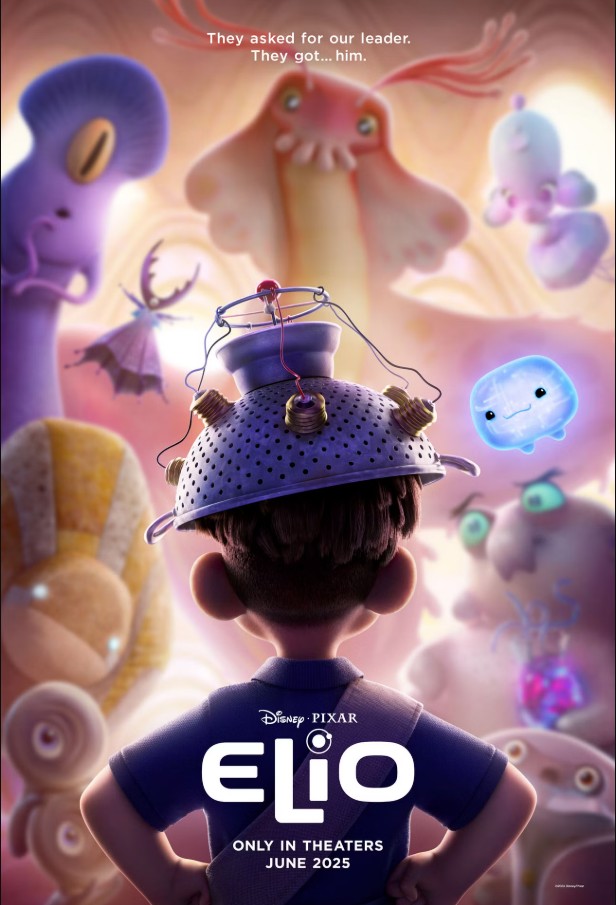
The next Disney/Pixar movie, Elio, released on June 20th and by all accounts had dismal first weekend earnings. This can be attributed to several things, no doubt. For one, I’ve seen many complaints about the lack of marketing. I’ll be honest, I saw a decent amount of marketing for the movie, including internet ads and the trailer. But I suppose I’m not a good sample because I am chronically on the Disney+ app or watching reruns of Phineas and Ferb and The Owl House on the Disney Channel. In other words, I’m a massive Disney nerd and I always know about every single new release they have. On the other hand, apparently the average adult movie goer did not see much marketing and was barely aware what Elio was, let alone when it was releasing.

This has been a problem with a lot of media lately. Not just from Disney, though it is a major problem at Disney, which has seemed lately to be reluctant to market its Pixar releases. But its been a problem with a lot of recent productions, both film and television. I think, for instance, about a lot of Netflix releases that have come and gone almost without any notice at all. Netflix makes something, refuses to market it in the slightest, and then complains that it did not perform well. Almost as if they are trying to tank some titles.

Anyway, that is certainly a contributing factor. However, as SF author John Scalzi very effectively argued in a thread on BlueSky, this has often been the case for animated science fiction movies. Many excellent animated SF movies have underperformed in the box office through no fault of their own, for reasons I really cannot guess at.

So, for those who maybe weren’t aware this movie existed, or did not feel another underperforming Disney/Pixar movie is worth your time, let me just say: ELIO IS VERY GOOD, ACTUALLY.


I don’t always love what Disney has been doing lately, creatively or politically or economically. For instance, I’ve seen reports that Disney execs made significant last minute changes to Elio to remove a queer character. I hate that. But I’m not surprised by it. In the last few years, Disney has been backtracking the very LITTLE progress they had made in LGBTQ representation very quickly. I don’t like it, but I’m used to it. And while that frustrates me, I do not believe it takes away from the ways in which Elio was genuinely very good. It is beautifully animated, emotionally resonant, and just plain fun.

The basic premise is this: middle-schooler Elio’s parents have recently died (in an unspecified accident). Elio has gone to live with his aunt who works for the Air Force as a space debris analyst and hopes one day to join NASA. Elio is… an odd child, a quirky loner. His aunt feels overwhelmed and conflicted. He feels unwanted and alone. After sneaking into a museum exhibit about the Voyager Space Probe (narrating, to my delight, by Kate Mulgrew, Captain Janeway of the starship Voyager in Star Trek), Elio decides that aliens exist and will surely want him if no one else does. Thus launches his quest, aided by ham radio, enormous rock signals on the beach, and much mischief, to get himself abducted. To everyone’s shock, he succeeds! He makes contact with a group of alien ambassadors who mistake him for the leader of planet Earth. A series of misunderstandings, well-intentioned lies, and general shenanigans ensure. Elio makes friends, his aunt learns to appreciate his quirks, and several crises are averted.


Much like Lilo & Stitch (the original, not the abysmal live action), this movie is about the value of family, the importance of being yourself no matter the opposition, and learning not only to accept but to celebrate diversity, individuality, and general WEIRDNESS. It’s also about the wonder and potential of exploration and space flight, and the endless possibilities of life elsewhere. (It would also be amazing if the movie reignited interest in ham radio, as Contact a few decades ago, lol).

It was a delightful and joyful movie. I got uncomfortably emotional at parts (largely pertaining to wanting to go into space; see my review of Atmosphere for a similar discussion… In fact, the weird resonance between the two was unintentional and surprising). I really hope that people (particularly families) sit up and take notice before its too late.

Book Review: Atmosphere by Taylor Jenkins Reid

I recently picked up Taylor Jenkins Reid’s new release, Atmosphere (released on June 3rd 2025), and read it in two afternoons. Reid is known for her literary historical fiction with prominent romantic subplots, and her two most recognizable and highly-regarded titles are The Seven Husbands of Evelyn Hugo and Daisy Jones and the Six (which was made into a television mini series). I haven’t read her work before, but I’d seen that her historical settings are generally well-researched and her romances tend toward the sapphic. What sold me on Atmosphere, though, was how uniquely targeted it was to me specifically, almost as if by design. It is about a woman named Joan who is an astronomy professor at Rice University in Houston, who joins the NASA shuttle program in the 1980s and (of course) falls in love with a fellow women astronaut candidate named Vanessa.

Considering that I am a queer woman who lives in Houston, have (briefly) worked on the Rice University campus, was once long-ago a Physics major in college (closely related to astronomy) and I am a massive NASA nerd who has visited Space Center Houston on many occasions… well, this book was basically written FOR ME.

Atmosphere is told primarily from the perspective of astronomer Joan Goodwin, a brilliant accomplished woman who, in addition to her work, takes care of her sister, Barbara, and her niece, Frances (who would suffer from serious neglect without Joan’s presence). Unlike Barbara, who has spent her life flitting from man to man and getting herself into trouble, Joan is serious, self-controlled, and never shown the slightest interest in romance. She doesn’t even particularly like kissing. She has watched her mother’s personality subsumed by her father’s—even despite the fact that they genuinely love each other—and vowed never to let that happen to her. Instead, she devotes her life to her love for astronomy and pursuit of knowledge.

When, in 1980, NASA opens astronaut candidate applications to women for the first time, Joan, who has spent her life dreaming of the stars and believing she would never be able to reach them, leaps at the opportunity. She finds herself among a small group of women accepted into the program. Over the course of two years of training and preparation with her candidate cohort, she befriends many fellow astronauts, and finds herself falling inexorably in love with one, Vanessa Ford, a mechanical engineer and pilot. For the first time in her life, Joan understands what all the fuss is about. However, the two women must be enormously careful, for this is the 1980s, and anything labeled “sexually deviant” could get them both fired from the program.

The novel is told out of sequence. The first chapter opens in 1984, as Vanessa takes her first shuttle flight while Joan works in Mission Control, having already experienced her first flight mission a couple months before. The chapter ends just as an emergency situation on the shuttle places Vanessa and the rest of the crew in serious danger. The novel than jumps back to 1980, when Joan first learns about the new application process. From there, chapters jump back and forth between Joan’s experiences from 1980 through 1983, (as she joins the program, completes her training, and falls in love with Vanessa), and the unfolding catastrophe on the shuttle in 1984 which finds Joan having to talk her lover through a potentially deadly situation without revealing the depth of her feelings to the rest of Mission Control.

The research details of the novel are impeccable. I recognized the locations mentioned around the greater Houston area with an amusing and disorienting sensation (I do not often see books talking about my own neighborhoods). And the details about the NASA shuttle program, the training, the operations in Mission Control, the design of the shuttle and equipment, were all accurate (at least to my amateur enthusiast’s eyes) and helped ground the love story in its time and place. The love story itself unfolds in a slow, careful way that felt organic and lovely. And the character of Joan was complex and real. Even more than her relationship with Vanessa, what sang to me the most was her relationship with her sister and her niece, which grows increasingly fraught as the story progresses. Those moments in particular felt real and important and painful to me. By the time the novel reaches its emotional payout in the end, it feels earned.

This book hit me with surprising force a few different ways. For one thing, I see an uncomfortable amount of myself in Joan. In her relationship with Barbara, the way she bites her tongue to keep the peace and allows her (selfish, manipulative, narcissistic) sister to run roughshod over her life. I too have done that with family far more often than I would like to admit. I also see myself in her fear of inadequacy, in her work, among her peers, and especially within romantic entanglements. She has a hard time believe she’s even allowed to want these things, let alone have them and be good at them. I get that feeling. These are all feelings that I think the book wants people to feel, to identify with, to absorb. And I absolutely did. So job well done.

Somewhat embarrassingly, one of the aspects of the novel the hit me the fastest and the hardest was an element that is probably pretty minor to the average person. The thing that got me crying only 22-23 pages in. The thing that kept me crying for a good chunk of the book. It was the moment Joan got the call that she had been accepted into NASA to begin with. I had to put the book down. I started to sob. I had to talk to my best friend so he could help me calm down.

You see, I wanted to be an astronaut. I know, most children wanted to be an astronaut at some point in their lives. But for me it was a serious goal for a time. The first three years of my undergraduate degree, I was a physics major. I had a plan. I was going to get my physics degree, join the Navy science program, and work my way into NASA. But that didn’t happen. I ended up getting a Bachelor’s and a Master’s degree in Literature, and taught for nearly ten years, and got most of my way through a PhD as well. There were a lot of reasons for that that I won’t dig into here. No one cares about hearing my entire life story, and it’s all rather tangled together.

Suffice to say that despite my love for literature, I look back and regret the decision not to pursue that path to this day. There are times in your life when you stand at a fork in the path, with multiple options. No option is wrong or right, just different, each equally valid in some way, representing some aspect of your personality or your ambition. But each option requires closing down the others forever, no going back and trying again. I made a decision. I often fear it was the wrong one. To this day, I cry every time I watch Apollo 13, or a space documentary, or visit Space Center Houston. And when I read the sentence in Atmosphere, on page 23 when Joan first learns she has been accepted into the training program, I burst into violent sobs. Such is life, I suppose, that we all must live with our choices and swallow our regrets. This novel just happened to stab right at the heart of one of mine.

Atmosphere is not only about two women falling in love, or about the trials and tribulations of the space program. It is about the unfairness of a society that continually and remorselessly dismisses at women, consigning them to the background and scoffing at their ambitions and accomplishments. It is about the long and painful struggle of every woman who has had to kick and scratch and fight to claim a place among men that she has rightfully earned and deserves. It is also about the unfairness and cruelty of a society that forces queer people to hide who they truly are and deny the people they love for the sake of safety. And it is about importance of love and family and true belonging, even if that family ends up not looking like the traditional, idyllic image in a magazine. And its also about the smallness of people and the bigness of the universe, and interconnectedness that encompasses everyone so that even the smallest person’s value rivals that of the whole universe. It’s genuinely, a really beautiful, empathetic, hopeful book.

Here We Go Again

Hello all! It’s been quite a long time since I touched this site or posting anything new to the blog. I have no illusions that I will be able to start actively updating the blog on a regular basis again, though I keep telling myself I should, and want to. That said, I felt it was time to update a few things and make an effort to at least drop a line from time to time. As such, please indulge me while I share some news of my life.

First, I am about to embark on a new adventure. I have been accepted to the Master’s Program in Museum Studies at George Washington University beginning in Fall 2025. I will be moving from my home in Texas, where I have lived now for nearly 17 years, to Washington, D.C. to attend graduate school full-time. Again. I am both excited and nervous to be returning to grad school and an academic environment nearly 7 years after I left my PhD program and adjunct teaching position to work in the private sector. Ok, terrified. The word is ‘terrified,’ but it’s a good kind of terrified. A “getting out of my comfort zone”/”going on an adventure” kind of terrified. It is my fervent hope that this new degree path will lead to work in the museum field, though where specifically I will end up is anyone’s guess.

Due in part to this new adventure, I have made the difficult decision to start phasing out my freelance editing services, with plans to officially close shop at the end of August. This is not an easy decision, but a necessary one. In addition to returning to school, this decision is influenced by the rise AI and decline meaningful work. While I had some mild success working with self-publishing authors, and certainly enjoyed what I do, in the last year the work has dried up primarily due to the rise of AI options. I am against all forms of generative AI in writing, editing, or artwork, etc, and not only because of the threat to my own work. I firmly believe use of AI is unethical. It is theft of others’ art and intellectual property. And the quality is sub-par anyway. On top of that, it is enormously damaging to the environment.

That said, I can’t control if other writers choose to use AI for their writing or editing needs. It is certainly much cheaper (though you get what you pay for). I and many other freelance editors have seen a drastic drop of available work and a concurrent increase in potential clients who willfully misunderstand what kind of work editors do and what a fair price is for their services. In any case, I’m waving the white flag. I will continue taking on new projects through the end of the summer, with completion dates no later than end of August or early September. After that, I will be closing shop.

My third bit of news is that, in addition to my freelance work and preparing to return to grad school, I also completed revisions of the novel I’ve had in progress for some time, The Supernaturalists. I am now officially querying with agents in hopes of traditional publication. It’s taken me such a long time to get to this point and I am hopeful that I will be able to pursue publication while working on my new degree. (Fingers crossed). I am already hard at work writing the sequel, and I’m about halfway through the first draft. I hope to have a finished draft by the end of the summer, before the Fall semester starts. I also have a couple short stories out on sub with literary magazines and will share news if/when either of them are picked up for publication.

THE SUPERNATURALISTS:

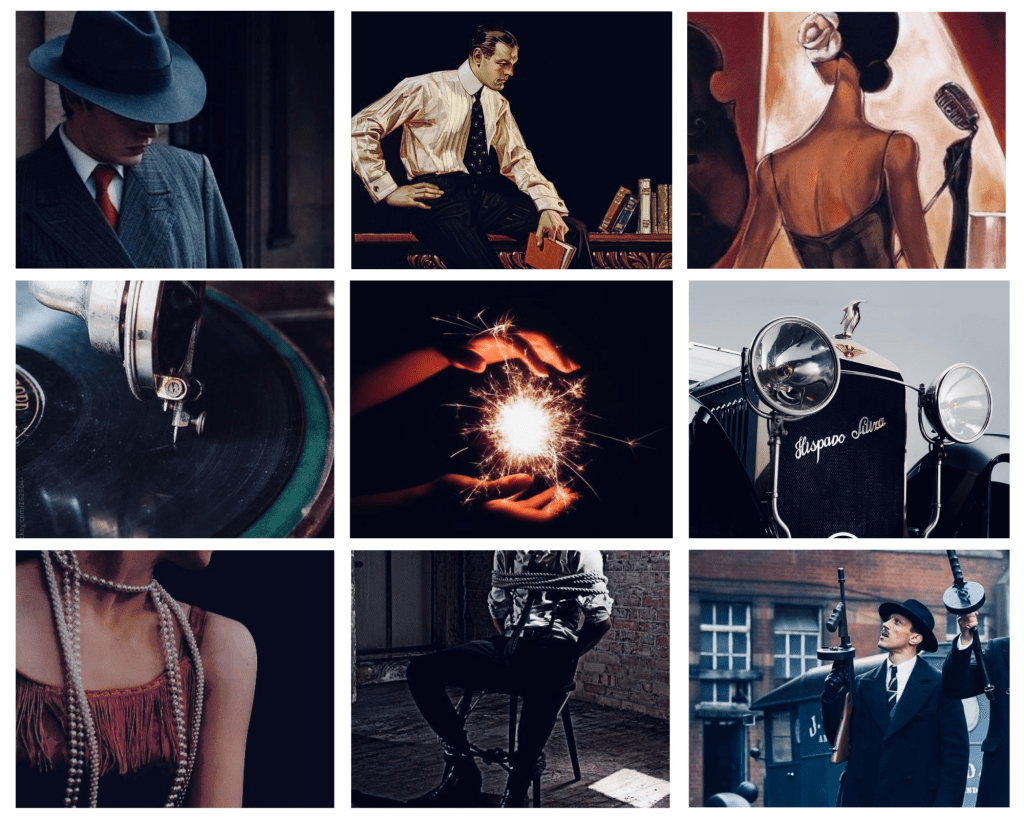
In 1920s Cleveland, empath Thomas wants to be left alone with the ghosts of WW1. Former spy Sebastian needs to find the Wall Street bomber. When mobsters & magical terrorists throw them together, they’ll need to find the line between trust and attraction if they want to survive.


FEATURING:

☀️grumpy/sunshine
💔MC suffering w/ depression & PTSD
🕵️ex-spy love interest
🔥slow burn = insta-lust/slow trust
🌉literally burning bridges


Of course, my life has been strange and busy the last couple years and there is much more I could (and may later) talk about both good and bad. But these are the big life developments I wished to share for now. While I know myself well enough to realize I will not be able to keep up any kind of regular blogging schedule, I currently plan to post at least a couple things in the new future. First and foremost, I wanted to share some of the best things I read in 2024 and the first half of 2025. My main goal has always been to talk about books, so I want to do that! From there, we’ll see how things go!

Movie Review: BARBIE

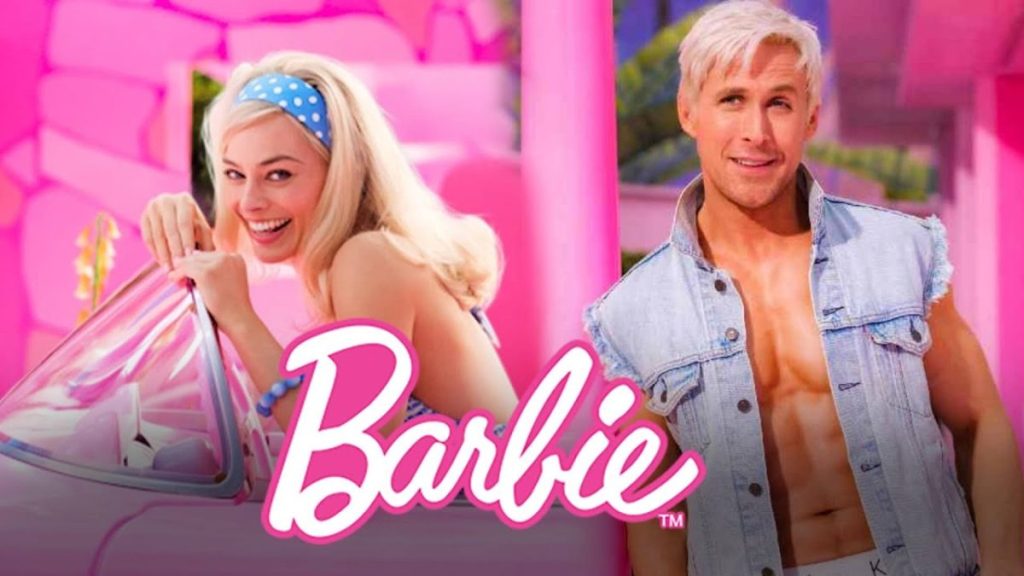
Official film poster

The Barbie movie from director Greta Gerwig and lead actors Margot Robbie and Ryan Gosling, was actually shockingly good. I remember being amused by the trailers, and increasingly excited by the reviews (including the whiny male-tears reviews which made me cackle), but I wanted to go into the movie without too high of an expectation. I’ve been disappointed by hype before. But in fact, it was a bit better than I was even expecting.

Visually, it’s stunning. The set, prop, and costume design were impeccable. I don’t know how they made everything really look like giant life-size versions of plastic toys, but they did. The colors are amazing. And even in the switch from “Barbie Land” to the “Real World” the cinematography remains bright and light, even while giving way to more realistic color palettes and lighting choices.

opening scene of Barbie movie, with 2001: A Space Odyssey homage

It was also, frankly, hilarious. I laughed so much, folks. So much. I want to talk about this without giving too much away (but it has been out for a few weeks now so I feel some spoilers are inevitable). Let me just say, the movie opens with a sequence that references (nearly shot for shot in some places) to 2001: A Space Odyssey, with Barbie as the black monolith. I immediately cracked up. That was all I needed. The movie had me from that point on. But it kept getting funnier. One thing I appreciated was the layering of humor. There were parts that were clearly meant to be funny to kids, and some sequences that even straight (well-adjusted) men could find amusing. And then there were all the bits that felt like they were just for me. For left-leaning, adult women who grew up with Barbies and understood the dozens and dozens of references that would go right over the heads of younger girls and were probably too niche for other adults. I was probably the person in the theatre laughing the loudest (this is a fairly common occurrence for me, to be fair. I was by far the loudest laugher in the theatre when I saw The Emperor’s New Groove, for instance).

I also think the movie was very smart and genuine. Earnest even, underneath all the jokes and slapstick comedy.

I’ve been paying attention to a lot of the criticisms and complaints about the movie. Obviously, there’s all the conservative straight (mostly white) men so entangled in their own toxic masculinity and patriarchal power, and crying their pathetic man tears over the awful man-hating “woke” movie. And I have nothing to say to or about those people. I’m not wasting my energy on that. But there have also been critiques from the other side of the aisle, from leftist feminist women complaining that the movie is too simplistic, or dumbed-down, or doesn’t push far enough, etc. And that actually bugs me a little.

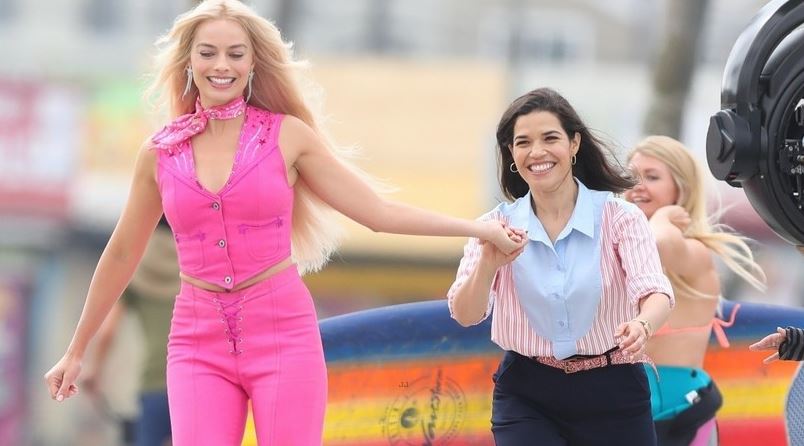
Barbie (Margot Robbie) and Ken (Ryan Gosling)

Is the movie particularly nuanced? Of course not. It’s not an academic article on gender theory by Judith Butler. It’s not out here trying to be the next Feminine Mystique, or break new ground in feminist thought. It’s a big-budget summer blockbuster aimed mostly at kids and young women, about a toy, paid for by Mattel. But looked at from that angle – from the angle of a movie built largely to make money, produced by MATTEL – than you have to admit that it’s shockingly smart, with a genuinely good argument/message, and that Greta Gerwig et. al. got a way with a lot. I mean, A LOT.

I mean! There’s a scene where Barbie is shocked to discover the CEO of Mattel is a man, and that there are no men in positions of power in the company. To which the CEO responds (I’m paraphrasing here): “I love women! I’m the son of a woman! I’m the… nephew of an aunt! Some of my best friends are… Jewish!” Clearly highlighting the way he’s so busy trying to defend himself for doing/saying something offensive that he’s forgotten which (of many, no doubt) offensive thing he’s done this time that needs defending. I died laughing.

I’ll also add that while the focus of the movie and the messaging is clearly (and rightfully) on women, their struggles, their pain, their gaze, the movie also still manages to convey the idea that patriarchy and toxic masculinity are just as damaging for the men. None of the men in this movie (least of all Ken) is happy within this system. And the movie is clearly pointing out that they don’t have to feel that way, or live that way!

Barbie (Margot Robbie) and Gloria (America Ferrara)

But America Ferrara’s speech in the last third of the movie was genuinely powerful, and moving, and absolutely stole the show. I saw this movie with my mother, and she absolutely cried during that speech. And she’s a boomer!

Even my brother, who was by far not the target-audience and only came with me out of boredom, admitted that it was funny and enjoyable. Truly, the only demographic who are really not going to like this movie are the thin-skinned white men who are happy to remain in the chokehold of toxic masculinity and enjoy the unjust power that patriarchy has given them. And, frankly, if that’s you, I’d be shocked you’re reading my blog at all. Otherwise, I feel fairly confident that you’ll find the movie at least amusing, if not outright amazing.

(Side note: also, all the memes have been GLORIOUS online.)

Book Review: The Last Drop of Hemlock

Title: The Last Drop of Hemlock
Author: Katharine Schellman
Release Date: 6 June 2023
How I Got It: Bought print copy
Rating: 4 Stars

Last year I wrote a review for Katharine Schellman’s book Last Call at the Nightingale, which is a Jazz Age-set historical murder mystery. You can find that first review here. The sequel to that book came out in June, so of course I had to get it. I’ve mentioned before (I think) that Schellman became an instant-buy author for me the minute I read her debut novel, a regency-era mystery called The Body in the Garden, which came out in 2020 and which I wrote about here. I am so happy I found this author. I have loved everything she’s published so far, and this newest book, The Last Drop of Hemlock, is no exception.

The Last Drop of Hemlock picks up a couple months after the end of Nightingale (you will need to read the first book to get some reference and know who all the main players are). Our resident disaster bi (and my personal mascot) Vivian Kelly (Viv) is getting used to her new job working at the Nightingale, the speakeasy owned by the dangerous woman she is dangerously attracted to, Honor. As she did in the first book, Viv quickly finds herself entangled in a murder: this time she has promised to help her best friend Bea find out who murdered her uncle with poisoned whiskey. This investigation leads her to asking for favors from Leo, whom she has indecisively kept at a distance since learning of his deception at the end of the first book. She also has to make deals with mobsters, gets attacked, uncovers a bizarre plot of threats and blackmail, and steals a priceless dress covered in gems.

In the midst of this, she finally convinces her straight-laced sister, Florence, to come to the Nightingale where Honor’s right-hand man, Danny, takes an immediate liking to her and the two begin a (truly sweet and adorable) flirtation. For reasons Viv can hardly explain even to herself this budding relationship makes her strangely jealous. It’s not that she has any designs on Danny for herself. It’s more that she is lonely, stuck and confused by her attractions to both Honor and Leo, and hurt by Honor’s decision to push her away despite acknowledging that the attraction is mutual. So, even though she is happy that her serious sister is having fun, becoming more joyful, she is also afraid of losing her place in Florence’s affections, and she’s jealous that she has not likewise found someone who makes her happy the way Danny seems to make Florence happy.

I would say this installment is not quite as good as the first, which I absolutely adored. But it’s still a ton of fun. The murder mystery in this book doesn’t shock me the way the first one did. The way all the pieces fall together in the end is still very satisfying, but I did actually figure it out ahead of the characters this time, which I did not quite manage in the first book.

As with the first book, the research and attention to historical detail is impeccable. As someone who is trying (and mostly failing) to write a 1920s set historical fiction novel, I know how much work that takes, and I am duly impressed. Schellman really does a great job building the setting with rich detail. This version of Jazz Age New York feels real and lived in. The Nightingale in particular comes to life with technicolor and Dolby surround sound. And even the streets and shops and Chinatown and the various incidental characters that live there all feel real and alive.

There are many things I love about the series in general. First, of course, is Viv. As a disaster bi myself, I have a lot of fellow-feeling for Viv. For her chaotic tendencies, her attractions to two very different but both wildly appealing people, her confusion, her need to get lost in the smoke and the sweat and the music at the speakeasy. This is a character I know and understand. One of the things about this installment was getting to see/learn more of the other supporting characters, especially Bea, Florence, and Danny.

I also really liked some of the small bits of social commentary threaded throughout the plot. As Danny shows Viv and Florence his home in Chinatown, they (and we as the readers) learn more about the way the Chinese immigrant community lived in the 20s, and the kinds of racism and obstacles they had to face when they arrived in New York. These books (both of them, but especially this one) also do not shy away from examining the huge gaps between the wealthy and the working class during this time period. So often, Jazz Age stories focus on the wild lives of the rich, but this book stays with the working class and the poor. The ones living in cheap, rundown tenements, who are struggling to scrape by. And in these spaces we see the ways these working class communities supported each other and helped each other in times of crisis. This is one of the biggest strengths of the book in my opinion.

Was this book on quite the same level as the previous one? No. But that is a common issue with the follow-up to a strong opener. That said, I did still really enjoy it and recommend it. And I am looking forward to the next installment. The ending of the Last Drop of Hemlock does, of course, wrap up the big mystery plot of the novel. But it opens up new possibilities for Viv’s personal/romantic life that I am very excited to return to. I am also interested in seeing how the budding romance between Florence and Danny shakes out. Obviously, I don’t know for certain that there will be a next book, but mystery novels like this tend to be popular in long-series form, and provided this one does well enough it seems a safe bet to assume there will be a follow up.

In the meantime, Murder at Midnight – the next book in Katharine Schellman’s other series, the Lily Adler Mysteries, is due out in September. As I said at the top of this post, the first Lily Adler book was Schellman’s debut and I loved it so much that she became an instant-buy for me based on that single book. The third book in the series came out last year, and while I absolutely enjoyed it, I felt strongly that it suffered from missing Lily Adler’s staunch supporter, Captain Jack Hartley. It seems like he should be back in the next book and I am SO excited for it. Yes, I swoon over this character. So sue me. (Don’t actually sue me, I have no money.) If you read these books you will probably understand. And in all fairness, I’m also swooning over Lily the entire time too. And in the grand tradition of many murder mystery series, this one appears to be a Christmas installment!

So, you will no doubt be getting another Katharine Schellman-centered book review in September.